a day ago
What will the world be like after the coronary?
Periskopi(6 years ago)
(6 years ago)Mankind is now facing a global crisis. Maybe the biggest crisis of our generation. The decisions people and governments will make within the coming weeks will surely shape the world for years to come. They will form not only our healthcare systems, but also our economy, politics and culture. [...]
Mankind is now facing a global crisis. Maybe the biggest crisis of our generation. The decisions people and governments will make within the coming weeks will surely shape the world for years to come. They will form not only our healthcare systems, but also our economy, politics and culture. We must act quickly and decisively. We should also consider the long-term consequences of our actions. When choosing between options, we should ask ourselves not only how to overcome the immediate threat but also what kind of world we will dwell on after the storm passes. Yes, the storm will pass, mankind will survive, most of us will still be alive, but we will reside in another world.
Many short-term emergency measures will become a part of life. This is the nature of emergencies. They advance historical processes. Decisions that may require years of debate in normal times are adopted within hours. Premature and even dangerous technologies are put on the ministry because the risks of not doing anything are greater. Whole countries serve as cables in large-scale social experiments. What happens when everyone works from home and communicates only in distance? What happens when all schools and universities go online? In normal times, governments, businesses, and educational boards would never accept such experiments. But these are not normal times.
At this time of crisis, we face two particularly important choices. The first is between totalitarian oversight and empowerment of citizens. The second is between nationalist isolation and global solidarity.
Surveillance Under Skin
To prevent the epidemic, the entire population must follow certain instructions. There are two main ways to accomplish this. One method is for the government to monitor people and punish those who violate the rules. Today, for the first time in human history, technology makes it possible to monitor everyone all the time. Fifty years ago, the KGB couldn't track 240 million Soviet citizens 24 hours a day, and the KGB couldn't even hope to effectively process all the information collected. The KGB relied on human agents and analysts, and simply could not deploy a human agent to follow every citizen. But now governments can rely on omnipresent sensors and powerful algorithms, instead of blood and flesh spies.
In their battle against the coronary epidemic, some governments have already employed new means of oversight. The clearest case is China. By closely monitoring people's intelligent phones, using hundreds of millions of cameras that recognize their faces and forcing people to control and report their body temperature and medical conditions, Chinese authorities can not only quickly identify their alleged coronary carriers but also track their movements and identify anyone with whom they have come into contact. An entire range of apps on mobile phones warn citizens of their proximity to infected patients.
This type of technology is not limited to East Asia. Israel's Prime Minister Benjamin Netanyahu recently authorized Israel's Security Agency to use surveillance technology, usually reserved against terrorists, to track Corleone patients. When the relevant parliamentary subcommittee refused to authorise this move, Netanyah put it into effect with a “emergency <x0). You can argue there's nothing new in all this. In recent years both governments and corporations have used increasingly sophisticated technology to track, monitor, and manipulate people. However, if we are not careful, the epidemic can mark a crucial milestone in the history of oversight. Not only because it can normalise the deployment of massive surveillance tools in countries that have so far refused them, but rather because it means a dramatic transition from monitoring “above skin”, to supervision “under skin”.
So far, when your finger touched your smartphone screen and clicked a link, the government wanted to know exactly what was clicking your finger. But with the coronary, the focus of interest moves. Now the government wants to recognize your finger temperature and blood pressure under its skin.
Pudding emergency
One of the problems we face working on where we're under surveillance is that none of us know exactly how we're being watched and what may result in the coming years. The surveillance technology is developing at extraordinary speeds, and what seemed to be science fiction 10 years ago, today is old news. As for one idea experiment, consider a hypothetical government that requires every citizen to wear a biometric bracelet that monitors body temperature and heart rate 24 hours a day.
The resulting data is collected and analyzed by government algorithms. The algorithms will know that you are sick even before you know it yourself, and they will also know where you were, and whom you met. Infection chains can be drastically cut and even eliminated altogether. Such a system can prevent the epidemic within days. Sounds great, doesn't it?
The other side is, of course, that this would give legitimacy to a new system of overseers. If you know, for example, that I click on a Fox News link and not on a CNN link, that might teach you something about my political views and maybe even my personality. But if you can monitor what happens with my body temperature, blood pressure and heart rate while watching the video clip, you can learn what makes me laugh, what makes me cry and what really makes me angry.
It is essential to remember that anger, joy, frustration and love are biological phenomena, like fever and cough. The same technology that identifies cough can identify laughter. If corporations and governments start using our biometric data massively, they can know us much better than we know ourselves, and then not only can they predict our feelings, but they can manipulate our feelings and sell us anything they want, whether they're products or politicians. Biometric monitoring would make Cambridge Analytica data theft tactic look like something from Stone Age. Imagine North Korea in 2030 when each citizen must wear a biometric bracelet 24 hours a day. If you listen to a speech from the Great Leader and the bracelet collects signs of anger indicators, you are done.
You might object, of course, saying biometric surveillance is a temporary measure taken during a state of emergency. It will be removed after the emergency is over. But temporary measures have a bad habit that lasts beyond major emergencies, especially since there is always a new emergency waiting on the horizon. My country, for example, declared a state of emergency during the 1948 Independence War, which justified a series of provisional measures, from press censorship and land seizure, to special regulations for making pudding (I'm not kidding). The Independence War has long been won, but Israel has never declared an end to emergency and has failed to abolish many of the otherwise temporary “ ” measures in 1948 (the powder code was abolished in 2011).
Even when coronary infections drop to zero, some hungry governments for data may argue that they need to maintain biometric surveillance systems because they fear a second wave of coronary, or because there is a new kind of Ebola that evolves in central Africa, or because. Make your choice. A great battle has been fought over our privacy in recent years. The coronary crisis could be the peak of the battle. Because when people are given a choice between privacy and health, they will usually choose health.
Soap Police
Ask people to choose between privacy and health is, in fact, the essence of the problem. Because this is a false choice. We can and should enjoy both privacy and health. We can choose to protect our health and stop the Coronavirus epidemic, not by creating total surveillance regimes, but rather by empowering citizens. In recent weeks, some of the most successful efforts to stem the coronary epidemic were orchestrated by South Korea, Taiwan, and Singapore. While these countries have used several tracking applications, they have relied much more on broad testing, fair reporting and the willing cooperation of a well-informed public.
centralized monitoring and severe sentences are not the only way to get people to respect useful guidelines. When people are told scientific facts and when people trust public authorities to convey these facts to them, citizens can do the right thing even without a Big Brother looking over their shoulders. A self-motivated and well-informed population is usually much more powerful and efficient than an ignorant, policed people.
Consider, for example, washing hands with soap. This has been one of the greatest advances ever to take place in human hygiene. This simple action saves millions of lives each year. While considering it good, only in the 19th century did scientists discover the importance of washing hands with soap. Previously, doctors and nurses even went from one operation to another without washing their hands. Today, billions of people wash their hands each day, not because they fear the soap police, but because they understand the facts. I wash my hands with soap because I've heard about viruses and bacteria, I understand that these little organisms cause disease, and I know soap can eliminate them.
But to achieve such a level of compliance and cooperation, you need faith. People have to believe in science, trust public authorities and trust the media. In recent years, irresponsible politicians have deliberately undermined belief in science, public authorities, and the media. Now the same irresponsible politicians may be tempted to take the path to authoritarianism, arguing that you simply cannot trust the public doing the right thing.
Normally, faith that has been eroded for years cannot be rebuilt overnight. But these are not normal times. In a moment of crisis, even minds can change quickly. You may have bitter arguments with your brothers and sisters for years, but when an emergency occurs, suddenly discover a hidden reservoir of trust and friendship, and rush to help each other. Instead of building a regime of oversight, it is not too late to rebuild the trust of people in science, public authorities, and the media. We also have to use new technologies, but these technologies have to empower citizens. I am completely in favor of monitoring my body temperature and blood pressure, but those data should not be used to create a powerful government.
Rather, this information should allow me to make more informed personal choices and also be held responsible by the government for its decisions. If I could control my medical situation 24 hours a day, I would learn not only if I have become a danger to other people's health but also what habits contribute to my health. And if I had access to and analyzed reliable statistics on the spread of the coronary, I would be able to judge whether the government is telling me the truth, and if it was adopting the right policies to fight the epidemic. Whenever it comes to monitoring, remember that the same monitoring technology can usually be used not only by governments to monitor individuals but also by individuals to monitor governments.
The epidemic of coronary is thus a major test of citizenship. In the coming days, each of us must choose to trust scientific data and health care experts, rather than baseless theories of conspiracy and politicians who serve only themselves. If we fail to make the right choice, we can find ourselves signing our most precious freedoms, thinking that this is the only way to protect our health.
We need a global plan
The second important choice we face is between nationalist isolation and global solidarity. Even the epidemic itself and the resulting economic crisis are global problems. They can be effectively resolved only with global co-operation.
First and most importantly, to defeat the virus we must share information globally. This is the great advantage of humans over viruses. A coronavirus in China and a coronavirus in the United States cannot exchange suggestions on how to infect people. But China can teach the U.S. a lot of valuable lessons about the coronary and its treatment. What an Italian doctor discovers in Milan early in the morning can save lives in Tehran until the evening. When the U.K. government is involved among certain policies, it may receive advice from Koreans who had already faced a similar dilemma a month earlier.
But for that to happen, we need a spirit of interaction and global faith. Countries should be willing to share information openly and humbly seek advice, and should be able to trust the data they receive. We also need a global effort to produce and distribute medical equipment, especially testing pounds and respiratory machines. Rather than each country tries to do it itself and maintain whatever equipment it can take, a coordinated global effort can accelerate much production and ensure that life - saving devices are distributed in the right way. Just as countries rule the major industries during a war, the human struggle against coronavirus may require us to re-enlist “humanize” the core production lines. A relatively wealthy country, with few cases of coronary, should be willing to send needed equipment to a much poorer country, believing that if and when there is a need for help, other countries will be helped.
We can consider a similar global effort to gather medical personnel. Countries currently less affected can send medical staff to the world's most hit regions in order to help them at their hour of need, but also to gain valuable experience. If the focus of the epidemic is later shifted, help may begin to flow in the opposite direction.
Global co-operation is just as necessary on the economic front. In view of the global nature of the economy and supply chains, if each government does its own thing in the absence of full respect for others, the result will be chaos and a deepening crisis. We need a global action plan, and we need to do it quickly.
Another requirement is to reach a global travel agreement. The suspension of all international voyages per month will cause tremendous difficulties and make the fight against the Coronavirus difficult. Countries must co-operate in order to allow at least one essential amount of travelers to continue crossing borders: scientists, doctors, journalists, politicians, businesses. This could be done by reaching a global agreement on passenger control from their country of origin. If you knew that only health - controlled travelers are allowed on a plane, you would be more willing to accept them in your country.
Unfortunately, in these moments countries are not doing any of this. A collective paralysis has engulfed the international community. It seems that “does not have an adult in room”. Normally, an emergency meeting of global leaders had to be expected for weeks to come up with a common action plan. G7 leaders managed to organise a videoconference only this week, and did not result in any such plan.
In earlier global crises like the 2008 financial crisis and the 2014 Ebola epidemic. The United States took the role of global leaders. But the current US administration has given up the leadership's work. It has made it very clear that it cares for America's greatness far more than mankind's future.
This administration has abandoned its closest allies. When it stopped all travel from the EU, it did not bother to announce the European Union in advance and let it consult the EU on that drastic move. It has scandalized Germany by offering $1 billion to a German pharmaceutical company to buy the rights monopoly of a new vaccine for Covid-19. Even if the current administration finally changes and employs a global action plan, few would follow a leader who never takes responsibility, who never admits mistakes, and who constantly takes all credit for himself, while guilt always leaves others.
If the gap left by the US is not met by other countries, it will not only be much harder to prevent the current epidemic, but its legacy will continue to poison international relations for years to come. However, each crisis is also an opportunity. We should hope that the present epidemic will help mankind to understand the acute danger posed by global division.
Mankind must make a choice. Will we travel the path of inequality, or will we take the path of global solidarity? If we choose division, it will not only prolong the crisis but will surely result in even worse disasters in the future. If we choose global solidarity, it will be a victory not only against Coronavirus but against all future epidemics and crises that could attack humanity in the 20th century. / “FT weekend” World.al
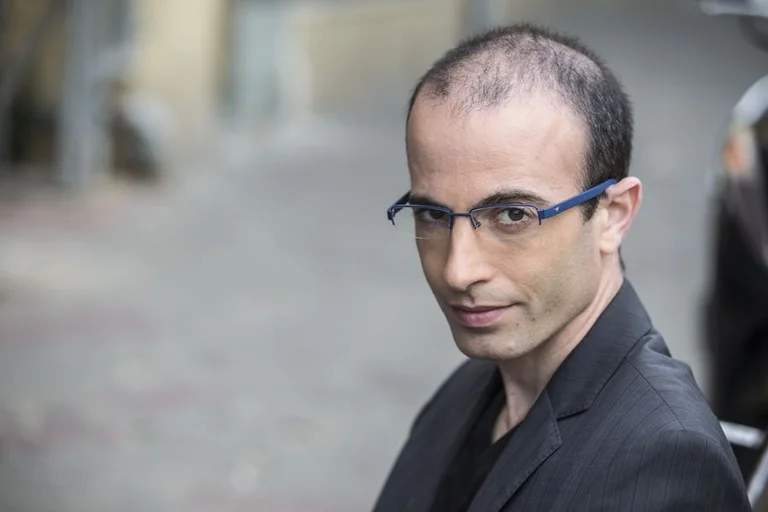
Youval Noah Harary is author of books: “Sapiens”, “Homo Deus” and “21 lessons for 21”