4 days ago
Infomia, Fear in Coronavirus ' Time
Periskopi(6 years ago)
(6 years ago)A host of media interventions contains all typical components of the epidemics: charges, plots, exploitation, unclear interests, few people trying to calm too much and many demanding cooperation and rationality in the face of complex scenarios. Along with the epidemic, fear spreads and grows steadily. It's not a innovation, it's actually a constant one that [...]
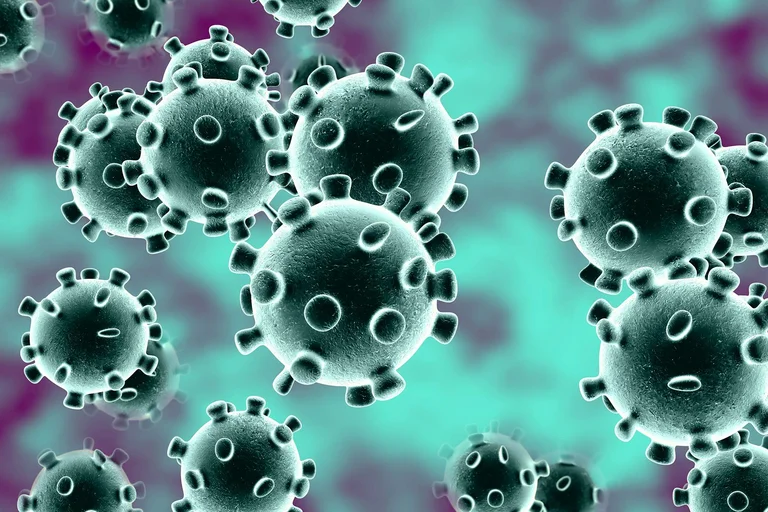
Along with the epidemic, fear spreads and grows steadily. It's not a innovation, it's actually a constant thing to do mainly with infectious diseases, while it's very small about non-infective diseases. The reason lies in the theory of risk communication, found in the history of public health, and is confirmed by the current history of COVID-19.
A host of media interventions are all typical components of the epidemics: charges, plots, exploitation, unclear interests, few people trying to calm too much and many who seek cooperation and rationality in the face of complex scenarios (which in some way, no one can know depletionally).
The fears experienced even in the distant past (the plague), the nearest (freedom), and never forgotten. One by one, elements that characterize the perception of danger that should be considered to manage danger communication in a conscious way appear. They allow you to understand the differences between infectious diseases and uninfected diseases.
The role of many social, cultural and contextal factors affecting the perception of risks is evident. As Andrea Cerase writes in his book “Risk and Communication. The theory, model, problem” (2017), “The results of the entire study have allowed to reveal some key characteristics to explain risk perception and their impact on decision taking: familiarity, control, volunteer exposure, catastrophic potential, equality, risk and level of knowledge”. According to this approach, the perception of danger is the subjective judgment that people develop regarding the characteristics, severity, and the way the danger is managed. One of the main elements is a sense of anger and indignation that provokes danger, anger, rigid trust in people / control organs, and familiarity of the context. Rysk is proposed as a danger product (hadard) and anger.
The danger is perceived as a probabilistic assessment (designed between the probability of the event happening and the weight of possible damage). This assessment of opportunities is influenced by anger, a key element of risk assessment, which has to do with the nature of danger and management.
What are the elements that increase and highlight fear:
Vulnerability: If the danger is voluntary, it seems lower, if imposed by others, or you are not able to control it, it is perceived as greater. It is clear that this of COVID-19, like all epidemics, is not only involuntarily, but obviously uncontrollable by individuals, and it seems to be difficult to control even by authorities.
I knew: A new danger is more frightening, and that of these times appears as a completely unknown and antiviral virus. A danger from natural causes is less frightening than someone's cause, and the theories of the plot increase concern. A lingering danger causes less fear of a risk that cannot be undone, and if there is a danger, but has priority, it may also be acceptable. But in this case we see how everyone has disadvantages and fears of death, which he constantly insists on, hangs on all the infected (Despite the mortality rate).
Faith: If you trust those who manage danger, you don't perceive it as high. But in this case, there are many voices, even in an opportunistic way, to undermine the credibility of health institutions. And once we've lost faith, it's very difficult to find it. Divergents in the scientific world in an emergency situation can be devastating because they impose choices on the ground rather than increase knowledge and trust.
Understandably, the attention given to evolution of this epidemic is not comparable to that given to nontransmittable diseases, especially those caused by environmental pollution.
The first element of the difference is that fear of disease with a defining mechanism, that is, live transmission (contact determines infection), is very different from fear of disease with a probabilistic mechanism in which an exposure (to pollution) corresponds to an increase in the probability of getting sick. In more official terms, infectious diseases have a single necessary cause, while noncommunicable diseases have numerous causes (genuies of causes), which are usually neither necessary nor sufficient.
COVID-19 is no exception to all of this. Fear is natural in its characteristics and is not fully manageable, much less with genetic reference to dominate fears, as a surplus of public concern for managing such a complex problem cannot be avoided.
In the name of the task of informing and right to know, all media and social media offer direct updates for the number of infected and any new deaths, coupled with the number of citizens subject to control measures. Each death receives great weight and increases fear and confusion.
In reality, WHO issues daily reports with the level of details needed to assess not only the overall extent of the phenomenon but also its progress.
These reports show the resident population, the number of confirmed cases (according to O's definition BSH is daily and accumulated, the number of deaths a day, and the death toll accumulated daily, as well as other information, including suspected cases and cures of the epidemic. The estimated mortality rate, using no sick cases, but all cases infected as denominators (who, luckily, are or will get sick in part), provides interesting information about the different time periods of epidemics in China and other countries.
Since February 23rd, the mortality rate in China is about 3.2%, while in other countries it is about 1%. In Italy, given the fact that the epidemic is on the rise, mortality rates vary between 2% and 3%, but attention has focused solely on the increase of the infected and the dead - very small, absolute numbers, but that produce a huge fear.
In this way, a macabre information dance is activated that is not found in any other area of health.
It doesn't happen for abnormal “ ”, which causes over 6,000 deaths from direct and indirect causes. This is a mortality rate of about 1 to 1,000, which, despite being much lower than that of COVID-19, given the very high number of infected people, produces a considerable number of deaths.
No comparison is made with deaths because of air pollution, more than 100 a day in Italy (according to conservative estimates), or twice as much as the European Environment Agency estimates, but less attention is given because they are considered random by mistake.
Thus, breathing or swallowing a dangerous virus, such as COVID-19, stirs a different fear and usually greater than breathing or swallowing an ultrasound particle laden with carcinogenic substances.
Another element distinguishing infectious diseases from non-transmitting is the possibility of the content of the problem: on the one hand isolation, closure of areas and functions to prevent people from transmitting the virus, in turn actions to reduce exposure to widespread pollutants, with heated debates on the effectiveness of the masses (e.g. The debate over stopping Euro cars x).
The combination of transmission mode, disease generation mechanism, risk management and internal fear exceeds the extent of the impact on health.
This is a very different fear from what Hans Jonas predicted, under which responsibility for the future means a “reduced fear”, a fear that would be recovered from our biological luggage, to learn how to use it as a means that leads to maturity. / Scienza in Rate World.al