2 days ago
Albania's Albin Kurti Programme Funny and Conversant Promises as Prime Minister
Periskopi(6 years ago)
(6 years ago)This declared government programme clearly seems filled with ridiculous proposals that do not match Kosovo's circumstances, as well as internal contradictions and incoherence towards electoral proposals. This is understandable because LVV competed only by dealing with the past, not by proposing vision for the future, [...]
This declared government programme clearly seems filled with ridiculous proposals that do not match Kosovo's circumstances, as well as internal contradictions and incoherence towards electoral proposals. This is understandable because LVV competed only by dealing with the past, not by proposing vision for the future, that is, by demonizing The PDK and previous governments, not by planning a concrete programme for the incoming government.
From the beginning, the presentation of the programme starts with a failure to respond to the election promise by forming a government with 15 ministries, not 12 as much as was much promoted. In addition to this, however, the most manipulative in this government program is the fact that the smallest number of ministries is being sold as if it were a significant savings, while the Ethiopian proposals for this program have nothing to do with saving. Rather, the programme's plans speak of super-expensive political action with the government budget.
Thus, expensive projects are mentioned, such as the Development Fund, the Fund for Cremation Constance, the Fourth Home Government Grant, the Credit Fund for School, the coverage of interest for enterprises, government payments for poor families with less than 5,000 euros a year, doubling the wages of private employees through state cash coverage, increased farm subsidies, construction of social residences for new households, the National Fund for Science, the Fund for Education, mass highway investments, etc. All of this is clearly megalomian promises to spend state budget money in a way like “bujare” with no real planning or analysis. How can all these government plans be financed by Kurti, which require at least 5-6 billion euros to be realised while this year's Kosovo budget is only 2.5 billion euros and when he plans to deliver it to only 3 billion in four years?!
Many points of this programme presented clearly show that they constitute a shallow attempt to formally borrow re-united social policies of Western European countries without caring for Kosovo's economic-Social context and without counting budget opportunities to finance all these salt projects. It should be added here that this approach to lure the electorate with material promises from the budget is nothing but clientelelysm. With clientelelymism it means taking political power and keeping through exchange of favors with voters. So in exchange for vote governments often offer subsidies; public investments; grants and soft loans; infrastructural construction; fiscal relief; tolerance or amnesty for abuse, smuggling and tax evasion; and other forms of favors billed to the state budget.
In the same customer line goes another promise to change the Kosovo Privatisation Agency ( AKP, to shut it down and transfer it to an agency within the government. The move is nothing other than the “capture of the state” and “politicisation” of independent institutions, which goes completely against Vetevendosje's attitudes and propaganda in opposition. Currently, this institution has a elected and accountable board before the assembly, while in this move it is required to be placed entirely under the control of the ruling party. It stands to see how possible this change will be in conditions when it is known that the AKP is a constitutional category and the qualified majority is required to vote, but what is important to note is the appetite to devour independent institutions to gain political control.
When it comes to hypocrisy, there is also a remarkable disregard for the government program with concrete actions undertaken by the new political majority. So for example, the newly elected prime minister declared: “We will be government for Mergata. They are our inexhaustible wealth that financed the liberation war that maintains social peace.” But it has actually proven otherwise by neglecting the Ministry of Diaspora, which served to revive, maintain and consolidate connection with the diaspora, co-ordinate government policies related to Kosovo citizens living abroad, and to maximumise the potential of members of the diaspora for the good of Kosovo. There are over 30 countries in the world that have dedicated diaspora ministries, and Kosovo has much more reason to have this ministry when it is known that there is one of the highest rates of migration in the world. Moreover, it is a major dishonesty and betrayal of Vetevendosje against the diaspora, which has been crucial to its electoral victory, not only by funding it as no other party, but also by voting it in mass. Not only did the LVV receive the majority of votes coming from the diaspora, but it is estimated that more than 20 thousand immigrants have entered the election weekend designed to vote. The same hypocritical attitude is in the statement that “we will be governments for information technology”, while eliminating the Ministry of innovation and entrepreneurship.
Another ridiculous proposal has been the eight-hour working program that resembles Marxist ideas of the 19th century mass industrialism rather than a suitable solution to currentity. The prime minister proposes only 40 hours a week for workers by adding the number of job inspectors to 400, as if Kosovo were filled with factories and plants worthy of descriptions of Charles Dickens' books of Jack London. The reality is quite different, today in Kosovo where the huge majority of employees are employed in family businesses or are simply self-employed. What's the point of these inspectors going to these kinds of businesses to ask them to shut down their shop or their afternoon workshop so they don't spend eight hours. Moreover, the tourism sector, coffee and restaurants, are among the most massive employers in the private sector, and these inspectors seem to be asking locals to expel guests who are still eating and drinking because they are eight hours old.
In the course of absurd proposals, there is also the construction of the Gjakova-Gorder road axis, which is somewhere at 15% in Kosovo's territory and 85% in the territory of the Republic of Albania. Furthermore, over 150km of the potential Qafe-Morine Shkodra route would have to be built from scratch on a rugged mountainous terrain of the Republic of Albania. Not to mention then the fact that Albania has been broke with a high public debt, it has not yet closed construction of the Nation's road, which was launched 12 years ago, and there is no mention in the medium- to long-term strategic plans for building this road axis. Under Kosovo's authority for the project, there are only 22km of existing roads on the soft terrain mainly in the field. This would mean that Kosovo's new government is promising a road axis that is entitled to be financed and built almost entirely by the Government of the Republic of Albania.
Another internal contradiction in the programme is also the <x0 claim. We will support the development of entrepreneurship overall with particular focus assistance to small- and medium-sized enterprises and production industries.” How will these private ventures be supported when the new government is proposing to enhance the government's role in the economy by capitalally interfering? So on the one hand you're promising help, and on the other hand, it proposes that I'm going to penalise them with fixed working hours, I'm going to add the cost of their labor force by putting pressure on private sector wage growth and minimum wage increases, and it's likely to add to the tax that, otherwise, there is no way to finance the promised large expenses. When it speaks of rising labor-power costs through increasing minimum wage or pressure for doubling the wages of private employees, it simply has to force companies to invest more in automation to reduce the number of employees, so by increasing unemployment.
It is also indiscreet to say that “will apply to households with incomes under 5,000 euros in the year”, while “in Kosovo today has more black and grey market”. So such a reimbursement proposal is just going to motivate and stimulate more families to hide income add black economy to profit without merit from the state budget.
In addition to absurd initiatives, the only reasonable initiatives mentioned in the government's programme-proposal are actually existing initiatives. Concretically projects such as the Health Insurance Fund were simply on the verge of finalisation for the start if the government hadn't broken down. The same could be said of the transfer of TVSA's collection from the border to the inside of the territory for which the studies were conducted and the legal basis has been prepared that in the previous government remains simply to be realised. Also, projects like Vettingu or the Fund for Agricultural Insurance are already talked about, reviewed and prepared much earlier, and do not represent any innovation or spirit of change.
Recently, but not out of importance, the biggest incoherence of this programme with attitudes, statements, the current promises of Vetevendosje, is obviously the lack of “National Union” on this programme. Despite being counterproductive to this establishmental political organisation, when LVV has come to power there is no concrete support proposal to draw Kosovo closer to Albania. There is only one faint and fleeting mention of the type “we will create Kosovo's common energy zone- Albania to achieve components in energy production”, which has been talked about at previous meetings between the two governments and overlaps with other international initiatives for regional energy integration and increased interconnection.
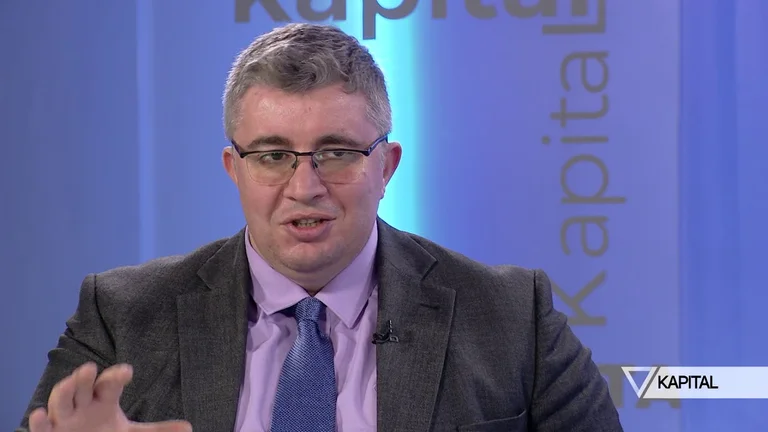
(Adri Nurellari is a researcher, adviser and columnist engaged mainly in the field of politics and media)