a few seconds ago
Why is the U.S. “Grandview taking place in Albania and Kosovo

Periskopi(7 years ago)
(7 years ago)What started as random meetings of US Assistant Secretary of State Mathew Palmer and other American diplomats in the Western Balkans seem to have already turned into a real diplomatic offensive towards the region. While a senior U.S. State Department official has landed in Tirana today for the solution [...]
While a senior U.S. State Department official has landed in Tirana today for resolving the political crisis that has plagued the country for almost a year, two American senators have also been launched towards Kosovo to return the latter to dialogue tracks with Serbia.
This unexpected attack by the United States of America in the Balkans was confirmed by the appointment of US diplomat Mathew Palmer as a special envoy for the Balkans and appears to be intensifying over the coming months.
For some experts, these efforts are a signal for the return of the US to the region after years of bypassing by senior American officials, at least since intensive efforts made to end deadly conflicts in the 1990s.
US envoys have long called for the Albanian government to sit down in dialogue and resolve disputes with the opposition. In the dialogue, according to the White House, Kosovo must also return, which has been asked to normalise relations with Serbia permanently. But why has the US decided to boost its engagement in the Balkans and will this turn of American diplomacy put an end to political markets in the region?
The visits of American but German officials have no doubt had the start of resolving the political crisis in Albania. The new director for Central and South Europe to the UN, David Kostalancik, who is holding meetings with all political parties in Albania, is a very good connoisseur of Balkan affairs, and his visit is a signal that American diplomacy is fully invested to solve the Albanian crisis.
Kostelic's visit and Palmer's appointment as a special envoy to the Balkans will undoubtedly bring other US factor commitments to overcome political tensions in Albania.
In several interviews following his visit to Tirana on April 9th, Palmer made it clear that the only thing the US will not negotiate between the government and opposition is reform in justice. The American state's investment in this reform, their logistical support, but especially that realisation, is probably the biggest investment the United States has made for Albania during the transition period and at this point, Palmer seems to not make any concessions.
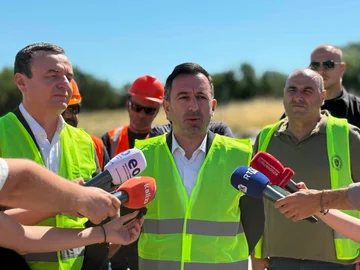
But the biggest changes in American engagement seem to be felt in Kosovo, where two US senators Chris Murphy and Ron Johnson will meet with Kosovo political leaders, including President Hashim Thaci and civil society members, to discuss the upcoming elections and resume dialogue with Serbia.
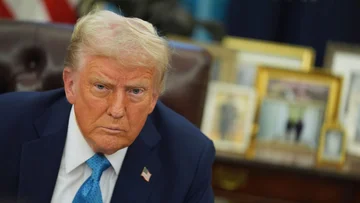
Various experts say the reason for the recent US movements is the US presidential election, as US President Donald Trump needs a triumph in foreign policy and the Kosovo-Serbia agreement would constitute a significant victory for the head of the White House.
On Tuesday, Serbian Foreign Minister Ivica Dacic has indicated that dialogue is expected to resume at the end of this year, in December. After a meeting at a summit in Slovenia, with Mr. Palmer, the head of Serbian diplomacy said he expected US involvement in the Balkans in the coming months to be enhanced.
Dacic said Pristina and Belgrade should hold more intensive talks from December, adding that he expects greater US pressure towards Pristina to remove the tax and create conditions for continuing dialogue.
And the pressure exerted by the U.S. appears to have brought the first effects Tuesday. Responding to Kosovo Foreign Minister Mr Behgjet Pacolli's request for Kosovo visa liberalisation, Dacic voiced his support for this official Pristina request for both the opening of accession negotiations with Northern Macedonia and Albania.
The US's “expectations are for these talks to intensify. We are now in a transitional period in the European Union, so American inclusion is very important”, Dacic said.
Days ago, the White House appears to have called to a meeting Serbian President Aleksandar Vucic, who met with US Secretary of State Mike Pompeii.
As reported in German media, Pompeo has strongly pressured Vucic to recognise the independence of the Republic of Kosovo. According to the Berlin media, Pompeii has made clear to the Serbian president that the US expects a solution to be found by the summer of 2020.
Among these efforts, Slovak Euro-depute Edward Kukan raises concern that the idea of exchange of territories or correction of borders may be restored to the negotiating table.
“I expect that the issue of recognition of Kosovo in exchange for the idea of exchange of territories will be brought back to the table, despite the fact that it cannot destabilise Bosnia and Herzegovina's” neighbours, Kukan said during the forum held in Slovenia.
Dialogue with Serbia has also brought CDU deputy Peter Beyer to Kosovo, who called for the resumption of talks, reiterated that Germany is fundamentally against the idea of border correction.
Beyer commented on the US decision to appoint a special representative for the Balkans, saying it would be good for the European Union to appoint such a representative that would only deal with Kosovo-Serbia dialogue. (Gazeta Si)