a minute ago
Negotiations for President Left Over Government

Periskopi(7 years ago)
(7 years ago)Talks on the future president of Kosovo are overshadowing negotiations on forming the future ruling coalition between the Vetevendosje Movement and the Democratic League of Kosovo. As both parties in the negotiations say they will continue efforts to reach the agreement, political analysts on the other hand stress that along with the president's position, the question [...]
Talks on the future president of Kosovo are overshadowing negotiations on forming the future ruling coalition between the Vetevendosje Movement and the Democratic League of Kosovo.
As both parties in the negotiations say they will continue efforts to reach the agreement, political analysts on the other hand stress that along with the president's position, the key issues for reaching the agreement are two ministries in which, according to them, they are insisting to have the two parties in negotiations. It's about the Ministry of Internal Affairs and Justice.
Without agreement on these issues, analysts are not seeing opportunities to reach the agreement on Kosovo's new Government.
Politologist Ramush Tahiri, speaking of Radio Free Europe, says that for a more important government are the governing programme and transparency rather than leadership positions.
The presumption of programmes [during the election campaign] is now emerging that this has only been the form to win votes, while the main issue or major issue is the division of positions of power, now not only those for which elections have been held, but all, in this case, the position of President”, Tahiri said.
He emphasises that the impasses over the division of office are a kind of disappointment, as since, according to him, the change is not only about changing positions, but, he says, the change is about new concepts.
“The LDK and Vetevendosje in the period of government creation or government agreement are talking more about the division of general power, in all segments, what's wrong, and on this basis they're talking about the position of the president who is now at all present and is not important”, Tahiri said.
Meanwhile, Artan Muhhaxhiri, connoisseur of political developments in the country, speaking of Radio Free Europe, estimates that political parties that are negotiating the future government's creation are claiming that with the ministries leading or positions they take to strengthen political parties themselves in the future.
When the power sharing is in question, even the rhetorical bubbles fall down, so even Vetevendosje and LDK want as much power as possible in the next government, so that they can in one respect guarantee even a priority for future elections. So it's not just about the new government, it's about what's going to happen next to it”, Mujahir said.
Muhariri thinks the president's post case should not be discussed under these circumstances.
The president's “Post is not as important as the specific government dictatorships for which the real battle is being fought”, Mujariri said.
Disarrays over the division of key positions in the leadership of new institutions, as well as political clashes from the past, according to political analysts, can be seen among the reasons why the Vetevendosje Movement and the Democratic League of Kosovo are having difficulty finalising the agreement for the new ruling coalition.
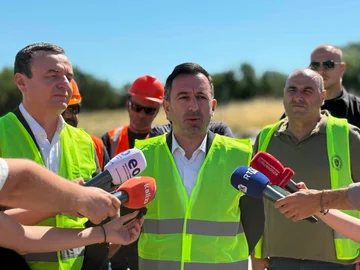
Although both parties have already declared 100 percent decorated for the governing programme and the number of ministries, the moment Vetevendosje leader Albin Kurti and the Democratic League leader Isa Mustafa began negotiations on the division of leadership positions, the talks ceased.
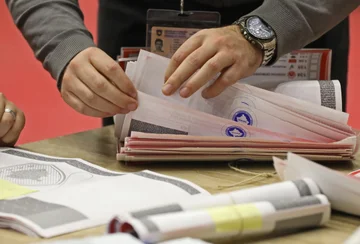
Elections held on 6 October have issued the Vetevendosje Movement as the winning party, followed by the Democratic League of Kosovo.
These two political parties, during the past term, were in opposition, while are now negotiating about the ruling coalition.
Meanwhile, parties in power are expected to pass into the mandate of new institutions to be formed, to be formed, into opposition.