21 hours ago
Bismarck Wisdom Revenge

Periskopi(6 years ago)
(6 years ago)The theoretical literature and political discourse have long circulated the definition of politics as the art of possible. Maybe that's the most controversial and popular definition of all. Its author is said to be Germany's first Chancellor, Otto Von Bismark, whom we know most [...]
The definition of Bismark is two-dimensional: it finds the essence of this phenomenon called politics and simultaneously contains a advice for all who want to have a job with this phenomenon. And this advice suggests always considering the ratio between possibilities and ambitions. Ambitions should reflect possibilities. If they do not, they are destined to end up in failure and despair, and in many cases, even with serious consequences to society.
The power - hungry Demagogs and populists who appeal to group prejudices and emotions are the first to ignore the wisdom which contains the definition of Bismark. They begin by laying out ambitions that go beyond their means, and politics turns it into promise of the impossible. This ensures them temporarily, the support of the masses, but the next day of their coming to power, another world unfolds before them - that of small opportunities to put great promises into existence.
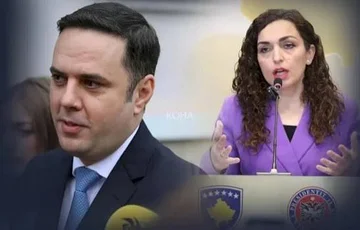
Throughout the time of their involvement in politics, Albin Kurti and his followers have walked this classic path of populism. They have promised to change the world, and now, with the election won, they are not able to give life to even a government, which is to manage the poorest 2 billion-euro budget in Europe.
They promised the impossible, and now they're not able to confirm what's possible.
On behalf of the state effort, they have put red lines of co-operation with the PDK and the AAK, and now when they failed to negotiate with the LDK, they do not know what to do: kick their promises not to cooperate with those who until yesterday called traitors to the destructive nation of state, or hand over the mandate received by voters and admit failure?
For their political morality, each of the two variants is worse than the other.
On behalf of the sovereignty of the state, they have pledged not to co-operate with the Serbian List, which is conducted by Belgrade's autocrat, Serbian President Alexander Vuciq. More and more often, it is heard making prudent statements about this list, and more and less frequently the earlier strong statements in which all those meeting with Serbian officials labeled Esat Pasha Toptan as descendants.
In my opinion the situation they are currently in is even more serious than that at the time of the rift, when 12 deputies and the best-known figures of Vetevendosje came out of it. It is more serious, because Albin Kurti's entire political capital is based on the consistency of strong positions against Serbia and domestic political opponents. If this coherence now breaks down, then his political credibility with him and all he's likely to be left behind is Kurt as a common politician, among many. Further survival in the community of ordinary politicians requires adaptation to the rules of this community.
Among these rules shines forth the rules of machiatestism, under which the main thing politicians deal with is to try to ensure power for themselves and their followers. The people, meanwhile, must continue to wait until a new political prophet appears on the horizon to repeat the cycle of failure of grand promises, failure that always comes from ignoring the wisdom of Bismark.