a day ago
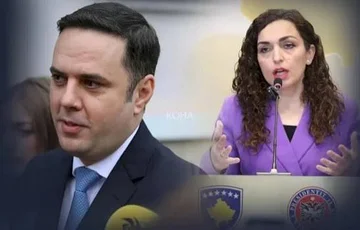
Vjosa Osmani as statesman

Periskopi(7 years ago)
(7 years ago)A few days ago, LDK's frontrunner in the last elections, Vjosa Osmani, had given a long interview for radio “Free Europe”, where she had spoken as a real statesman. Without taboos, confident in itself, but with caution and great restraint, as a lady fully aware of the historical responsibility [...]
A few days ago, LDK's frontrunner in the last elections, Vjosa Osmani, had given a long interview for radio “Free Europe”, where she had spoken as a real statesman. Without taboos, safe in itself, but cautiously and carefully, as a fully aware lady of the historic responsibility she would take within weeks before the nation and country, she had touched on the main challenges facing the winning LV coalition V- The LDK, which this coalition has already begun to face.
My general impression, after reading this interview, is that Vjosa Osmani knows these challenges deeply, is realistic in their assessment and has vision of their solution. It is expressed with a visible political talent and I am already full of hope that, along with Albin Kurti, it will constitute a leadership tandem capable of marking a new and successful page in the history of the state of Kosovo, or, in its words, to mark the “change expected in the future of Kosovo”.
Vjosa Osmani looks very organized in her mind. It sets matters in line and speaks calmly about the talks being held between the two parties, in preparation for the formation of the new government, setting as the primary goal of these <x)> the construction of the trust report” between them. For the sake of truth, it must be said that the last two years are the only period when we have seen some co-ordination of opposition action between LVV and LDK, which Vjosa Osmani brings to public attention as a value during her interview. But, for good reason, even without making history, it clearly suggests that it is enough to erase a long history of antagonism between these two political forces, an antagonism where LVV has repeatedly exceeded the natural means of political war in democracy. Vjosa Osmani well knows that images of these collisions, not so beautiful, are stored not only in television archives but also in the memory of the Rugovians, one of whom I am, even though not voters in Kosovo. Vjosa Osmani, as a mature statesman this time, is clear about the need for a genuine and lasting trust between LVV and LDK, to govern together in the name of Kosovo's major interest, as it is also clear that this trust is not achieved through the political statements of both parties' leaders. Such trust cannot be a matter of words.
The work, through which this trust can be reached, is the drafting of a 100 percent government program harmonised”. From Osman's interview, we learn that this is where the negotiations are focused. Achieving this “harmony” is not an easy task and not simply because of the past. Vjosa Osmani cites as the main challenge the fact that both parties belong to different ideological spectrums. The LDK has been part of the European People's Party for years. LVV is known as left, not so close to center left. The two parties have held an electoral campaign with programmes based on its ideological platforms to make “changing”, which Kosovo needs vitally. The will of the people of Kosovo brought them now to sit wisely to draft a joint government programme, in which, of course, should reflect the most essential electoral promises of one and the other.
Is such symbiosis possible in light of differences?
Vjosa Osmani seems certain that it does, which means it also knows the way to achieving this symbiosis, which is just one: the way of concessions and reshapes on both sides. Because, in recent words, both parties have won an equal number of votes, which constitutes a strong reason to be understood towards issuing from both sides. Neither has true electoral superiority over the other. I hope that the same democratic awareness and political culture of Vjosa Osmani and LDK will show during these talks Albin Kurti and LVV. Otherwise, this ruling coalition would receive water from the foundations, causing great disappointment.
In the interview I also noticed a detail that I think should be noted as the value of Vjosa Osman. It had delicately avoided mentioning concrete aspects, where there are programmary dyvergences between the two parties and which will certainly be ironed out during the talks. Marketing these dyvergences, right at this very stage, would certainly damage the negotiation process to the common middle, which is the appropriate measure of building an ambitious and realistic government program. Recognising the trend of Albanian politicians in general to make room for protagonism, such restraint by Vjosa Osmani shows that it does not have this habit and deserves warm praise. Even when the journalist tries to push it towards protagonism, asking what position it will take for herself, it avoids political intelligence, to bring forward a healthy principle: “We are talking about the governing programme and not the governing positions”.
Exhausted as we are by protagonist politicians, just like in all Albanian space, showing a profile like this Vjosa Osmani brings me respect and especially confidence. And, I enjoy thinking about her young age. In my image, with its abundant energy, with its authority and example, Vjosa Osmani will be able to influence the creation of a new culture in exercising power throughout the Albanian political scene.
In the interview in question, Vjosa Osmani reveals many thoughts and concepts, which help to understand what it will be like tomorrow as a statesman. One of them that deserves particular attention is also its vision of the opposition's involvement in resolving the country's thorniest problems. She, therefore, does not view the opposition as an enemy. You don't even see it out of responsibility for the country's fate. Taught by the practice of harsh conflict between the majority and opposition, we hope that Vjosa Osmani and the team, where it will be an important part, will perhaps be able to bring us a new experience. This, of course, will depend on the will of the opposition. We pray that this opposition, long taught in power, will respond positively to this will for cooperation.