a day ago
European security catalyst

Periskopi(7 years ago)
(7 years ago)Russia's Crime Reporting and continuing threats against Ukraine are a reminder for Eastern European countries, and especially for Balkan countries, that NATO represents the main axis of national and European security. But effective exploitation of NATO capacities requires deeper engagement with and among the most sensitive allies [...]
Russia's Crime Reporting and continuing threats against Ukraine are a reminder for Eastern European countries, and especially for Balkan countries, that NATO represents the main axis of national and European security. But effectively exploiting NATO's capacities requires deeper commitment with and among the most sensitive allies to threats.
If there is a country that understands the value of such a commitment to the Alliance, it is Albania. Before the fall of the Berlin Wall 25 years ago, Albania boasted of support in its forces on the one hand and, on the other, based on a ruthless propaganda, tried to convince Albanians that the country was surrounded by enemies. Only after the fall of the Iron God did the Albanians realise that the world had not spent decades plotting Albania's conquest. Over three hundred thousand bunkers that would repel the imaginary West invasion, more than evidence of the ability to defend themselves, seemed to be signs of a similar mind that had crossed the limits of the paranoid.
Similar transformation suffered, Albania's perception of NATO: The imperial aggressor turned into a champion of democracy, individual freedom and rule of law. Albanians realised that through collective protection, the Alliance maintained Europe's peace and security.
After the collapse of the Soviet Union, the storms of decay hit the Balkans. In 1995, NATO intervened to establish and preserve peace in Bosnia; four years later, it was NATO that prevented genocide in Kosovo. Since then, the transatlantic Alliance has spent three rounds of expansion ever eastward with Albania and Croatia as the newest members, five years ago.
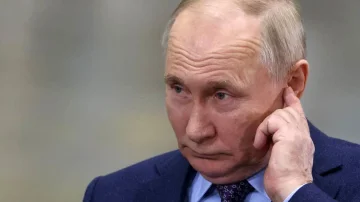
Despite such achievements, there is no time and place for self - fulfillment. Russian President Vladimir Putin's indictment of Crime, carried out in flagrant violation of international law, has turned Europe's security to the top of the agenda of global issues, serving as a grim reminder that a free, co-operative and at peace, the dream of many Europeans since the years dealt with a distant prospect remains.
Even more disturbing is the fact that commitment NATO in the Western Balkans remains insufficient, which increases the risk in a still unstable part of Europe. Despite numerous regional co-operation mechanisms, the commitment of Western Balkan countries to each other leaves to wish. As long as EU membership remains far apart for these countries, neither Europe nor NATO should ignore the challenges facing the countries of the Western Balkans.
The question is that the “black theft” of security in Europe is getting dark and deeper. This, coupled with the pursuit of conflicting enlargement agendas, brings us to the conditions where international law and fundamental democratic principles can be violated without punishment as opposed to Putin's actions in Ukraine clearly testified. Not only are Europe's security interests threatened but its very values.
It is time for NATO to accept its irreplaceable role, not simply as a safety cover, but as a security catalyst in Europe. This requires that the Alliance respond to concerns about existing security gaps, many of which are producing serious social and economic consequences. Postponing difficult decisions regarding the Alliance's future capabilities and role, or a mecca co-operation, are not the answer.
On more general lines, Alliance members must acknowledge that NATO-protected territory has become an area of competition in terms of security. Adapting to this new reality will be the main challenge of the NATO Summit in Wales this September.
Fortunately, the Alliance seems to be moving this way. Not far, after an emergency meeting in Brussels, US President Barack Obama said that a “NATO regular admission” would be located in Eastern European member states sensitive to developments in Ukraine a significant step towards increasing NATO's role in the region.
However, much remains to be done. For starters, NATO must work on its policy of “openers”, under which the Alliance will welcome every European country capable of carrying out membership commitments and obligations, with the goal of further institutionalisation of its relations with Eastern Europe.
Albania has repeatedly expressed support for the open door policy, viewing it as vital to promoting democratic development and good neighbourly relations, and thus increasing national and regional security and stability. In a region that has not yet been fully anchored in structures such as NATO and the EU, ethnic, territorial or religious divisions could have catastrophic consequences. The deepest NATO integration achieved through a credible commitment process and not through short-term guarantees will help reduce this risk.
Today, NATO, the EU and the Western Balkan countries agree on the need for more full co-operation mechanisms rich in rules that must be implemented. These mechanisms should be responsible for political, economic and military security elements, and should be supported by the necessary commitments both in terms of instruments and in financial burdens. No effort should be spared when it comes to NATO empowering. Otherwise, the prosecution of Crime by Putin's Russia will only be the beginning. world.al
This editorial was first published as a contribution to Project Synditate: