a day ago
Ademi Demach Institute

Periskopi(8 years ago)
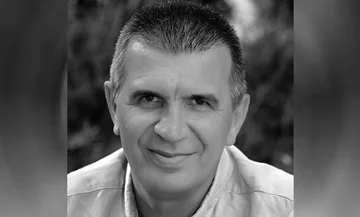
(8 years ago)Baci was a man in love with freedom. This love has remained faithful to him to the end. He was steadfast, unstopperable, unkempt; and this love has been able to make him contagious. He has caused thousands of Albanians, trampled and mutated, inspired by his love of freedom, to fall in love with them [...]
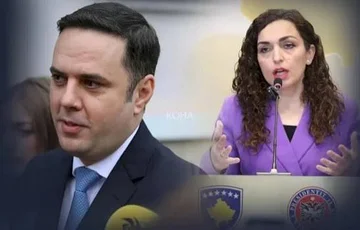
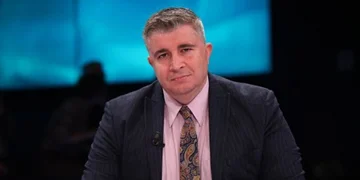
It says: Valon Murati
- Each nation needs to have such figures that exceed the physical being and that become institutions that are reference points to it. Those institutions are stripped of everydayity, errors, and weaknesses and remain orientation points for the nation and mankind. No doubt they are and remain human. Being human, they can become institutions. As is true of the martyrs. The particular part of these people is that they, with their lives, engagement, work, and opinion, are able to inspire others, instruct and mobilize. Not all have known the positions of Mandela or Porata in their work have raised thousands of people in the function of achieving freedom. We Albanians, too, should be proud to have given the world such a figure. We must be proud to give the world to Adam Demach.
- Adem Demaci was an institution of the Albanian nation. Writer, journalist, activist, political prisoner, politician, humanist, rebel and, above all, the central figure of the Albanian freedom movement in its lands under Yugoslavia. It can easily be said that he was a man in love with freedom. This love has remained faithful to him to the end. He has been unmovable, unstopperable, unkempt, and this love has been able to make him contagious. It has caused thousands of Albanians, trampled and muffled, inspired by his love of freedom, to fall in love with freedom. And love is also a dream. And there is hope. And ideal. But she can also become reality. He believed in love of freedom as a reality, even though he put us in the form of hope, dream, and ideal. There were times when it seemed that this “wrestling did not spread as much as he wanted, but that was her secret. It spread secretly, kept within our families, especially the youth that became the successor of this love. And when it got dark, nice and slow, after the 1981 demonstrations, after mass prisons, after peaceful resistance and especially after the KLA uprising, love of freedom became not only public, but the backbone of our liberation movement. The greatness of the inspired institution, Adem Demaci, was that it was not limited to Albanians. He believed in the universality of freedom, and was willing to sacrifice from his authority, to fight for the freedom of Serbs, Roma, Bosniaks and all who live in Kosovo. He believed in mankind's freedom.
- He was unconventional. He said what he thought. The thought was correct in his tongue. At times, we didn't like it. At times, he didn't hit it. But a person with thoughts about everything was also allowed to make an appreciative mistake. In tactical assessments he could also err, in strategy never. Implicit on the path of freedom, deliverance and at crucial moments, always in the right place and in the right way. And it peaked not only with support, but also with incubation in the KLA. And in this vital commitment, it came to a logical end. Because he had never erred in an assessment: Freedom is necessary. That it should be sacrificed, because otherwise it will remain in captivity and under Serbia. That for our country, for the nation, and for mankind we must all be soldiers. But soldiers, not one service, but the rest of their lives. He was a eternal soldier of freedom, of homeland, nation and humanity. A model freedom fighter.
- Respect and love for him are popular. Of course, there are those who did not love him or who hated him. Especially because he was sincere and said what he thought everywhere. But they're few. More may be those who disagreed with him but respected him. However, Adam Demach had great love in what might be called the sacrificial arm of our liberation movement. Being among those inspired by the work of Bacci, I have kept the torch of freedom even when I did not agree with him. Being part of the illegal liberation movement ( The LKKK and later the KLA can find without hesitation, that it has been a central moral figure, for mobilization, organisation, resistance and armed struggle. I've witnessed this love within the KLA. Among the KLA soldiers and commanders, he has been the undisputed figure of a spiritual and political leader, without any powerful leadership position. I have witnessed as all soldiers, most of the most famous commanders, whom we love today and do not love, who in opinion may have a voice for evil and for good, who were or sold hard, humbled themselves before him. They were able to lower their heads, be like the children in front of their father, and I'm symbolically saying, they were able to put up with a slap of this “little man, who they considered to be an indisputable figure and unassistable to them. So within the KLA, except one, there's never been any such authorities. That was Baci. That was Adam Demaschi.
- Intermex. In May 1999 we were very poor with food supplies in the Lyp Operative Zone, in the Mall of Gollak Mountain, where Brigade 153 “Hyzri Talla”. Along with Pristina guerrilla boys “BIA”, Deputy Commander Bahri Gashi, we decided to enter Pristina, on some of their bases to create several supply channels. At the same time, we also decided on co-ordination with Commander Remi, Fatrmir Humolin, Agim Kulten, and so on, to make efforts to get out of Pristina, Bacin Ademi. I took along another co-worker of the LKCK and KLA, Driton Hysen. After we entered Pristina, Driton, who could also move publicly through Pristina, always at great risk, went where Baci lived. Every attempt he made to extract Bacci was futile. My greetings to Remy and Fatmir don't work. “Driton, Bacit, I've decided to die” He told Driton. What to speak to the man who has decided to die - the last limit you can scare someone with? He had decided to die because he had already entered the Pantheon of the nation to live forever.
- How will history treat it? What will future generations say about him? What about the political lines that were his opponents? On the horizon of the timing, it will certainly extend as one of the most undisputed central figures in the history of the Albanian people's struggle for freedom. It will be treated as an orient pillar, as a fan. An unstoppable man for the greater good. In the future, objections and political conflicts will be seen as part of a normal political debate. His great work will remain. His love for freedom will remain. The fact that he kept the hope of freedom alive for all people and “infected him with a love of freedom. It will be remembered that he was able to forgive, to reconcile both his political opponents and those on the side of those who imprisoned him. Always in the function of national unity and reconciliation of future generations. It will be remembered that he was willing to reconcile both with other peoples and with Serbs. Once again in operation of freedom and life in peace and freedom of future generations. Adem Demach will also take place in human history as a warrior to extend human freedom by delivering his people and the people who kept his people captive.