a day ago
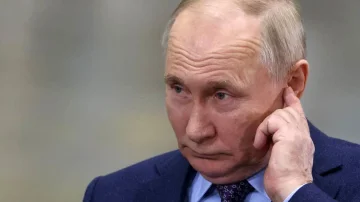
Putin showed how easily he can hurt America

Periskopi(8 years ago)
(8 years ago)Facebook ads bought by Russia during the 2016 campaign and published by Congress this month reveal the clear purpose of slaughter in the United States and should make Americans cautious and feel ashamed. They also sent a clear message to Americans about compliments [...]
Facebook ads bought by Russia during the 2016 campaign and published by Congress this month reveal the clear purpose of slaughter in the United States and should make Americans cautious and feel ashamed.
They also sent a clear message to Americans on Russian President Vladimir Putin's compliments: You mess with me, I'll mess with you.
We have allowed ourselves to be vulnerable to such exploitation of social media by failing to control our easily manipulated passions and our own awareness. And President Trump's continued pressure on the legitimate media and inadequacy of his base to embrace this message, certainly serves Putin well and his employees.
Infilting within America's mind was not as genius as easy. The Russian model was essentially Trumpian: Hear what people are concerned about, then cast fire upon it.
If immigration bothered you, you might have seen a Facebook ad presenting a “sign. No Invaders Allowed”. Or, if racism is close to your heart, you could have seen a coffin with the flag saying: “Another terrible attack on police by a movement activist (Black Livings Matter)”. If you believed that a victory by Hillary Clinton would lead to a nongodless society, you could have seen an ad describing Satan wrestling with Jesus. If I win, Clinton wins! ”; Not if I help! ”
Without leaving his chair, Putin was able to penetrate American psychology, reinforce prejudice, and promote sufficient rhythm to create a base, or possibly a mob. He no doubt tasted that power.
While Putin really doesn't like Clinton, it's not clear whether he likes Trump in one way or another. A Russian plot? Of course, but it seems increasingly that, in addition to some amateur efforts by Trump's men to cast dust against Clinton, conspiracy was mainly among the Russians.
And obviously in retrospect that when hackers entered the Clinton campaign and the National Democrats Committee and took over their contents, Putin was letting Clinton understand what he could do: If resolved, she would take it seriously.
Meanwhile, Istanbul und Drang of Americans vs Russia has a sense of reflection towards it.
“Hatred against Russia is like riding a bicycle,” said smiling Nina Khrushevo, niece of former Soviet Prime Minister Nikita Khushchev and professor of international relations in New York. She has argued since Trump's election that Russia was trying to uncover America's weakness and demonstrate how easily Putin could exercise his power without having to use anything.
Like his US colleague, Putin is not that complicated. A small experience with psychinalism helps, but history helps more.
Don't stop me if you've heard this before: a story President George W. Bush told me it happens again. Putin had invited Bush to Russia after his visit to Crawford, Texas, where both rushed around the farm in W. I've got a picture of both of you sitting side by side, grinning like guys just bypassing school.
Putin had noticed the Scottish territory of the Bush family, Barney, and wanted to show the President of the United States his dog. As Bush indicated, a giant animal (a Labrador) came toward him and began to roll. After several laps, Putin smiled and said, “larger, stronger, faster, worse than Barney”.
Bush understood this moment and allowed him to guide him in his relations with the Russian president. He realized that Putin was hungry for respect, which he wanted to be known as an equal power, if not greater than what Bush directed. Although Bush gave Putin respect-confidence, his successor did not.
President Obama's distance to Putin, combined with Clinton's sentence for Russia's election as secretary of state, probably gave Putin the incentive to fight back in its own way.
In Khrushcheva's view, Putin does not think he did anything wrong. As for the regular Russians, they find this story quite entertaining. Khrushcheva notes that her former countrymen either love or hate America, with little light in the middle. However, the overwhelming majority do not understand why Americans continue to rely on their historical emergency.
Many countries have seen us lying and interfering with their affairs. They've seen us invade nations and install military bases. Our great pride in the superiority of our goodness may be viewed by others as presumptuous boasting. At the end of the day, everyone wants respect, nothing more, apparently, than unjustly elected dictators and presidents like Putin.
Carefully, we observe that they will do anything to get it. /The Washington Post read.al
Lekturi: Periscope