a day ago
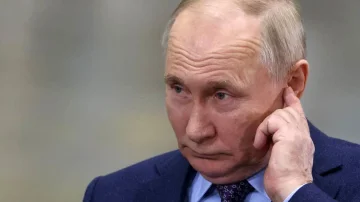
Is Vladimir Putin a CIA agent?

Periskopi(8 years ago)
(8 years ago)President Trump's steadfast in saying anything negative about Russia is so surprising that a former director of national intelligence, James Klapper, once noted that Vladimir Putin managed Trump as if we were a “wealth” of Russian intelligence. But if I were a Russian citizen, I would [...]
President Trump's steadfast in saying anything negative about Russia is so surprising that a former director of national intelligence, James Klapper, once noted that Vladimir Putin managed Trump as if we were a “wealth” of Russian intelligence. But if I were a Russian citizen, I would ask this question: Is Putin a US agent?
Why? Because Putin has taken so many actions in recent years that have contributed to the weakening of Russia's economy and human capital that you have to ask yourself whether he is secretly on the C's salary list. I.A.'s.
Starting in 2007 or 2008, Putin appears to have decided that Russia's reconstruction by feeding its extraordinary human talent and strengthening the rule of law was very difficult -- it would require power sharing, holding real elections and building a unified and innovative economy.
Instead, Putin decided to seek dignity for Russia in all the wrong places: by arranging his oil and gas wells, not his people; by strengthening the Russian army instead of the rule of law; and enriching himself and his circle of oligarchs while wrapping in a cloak of Russian Orthodoxy and Russian nationalism, which penetrates its base.
Les Echos, France's leading business daily, recently cited a Russian technology worker who noted that “just Microsoft registers more patents than all Russia!” The Russian technology market is not only weak, but also “corruption in the judicial system... makes it difficult to protect your case in court when a predator takes control of a business start up“.
Despite all recent talks about how Putin is trying to be a successful authoritarian, I have a question: Why is Putin so uncertain of his true popularity in Russia that even after nearly 20 years at Russia's helm, he was afraid to allow a single, independent candidate to run against him in the last presidential election?
This is real truth: Putin constantly acts like a farmer selling his most valuable calf in exchange for sugar cubes. That's because he wants short-term sugars to increase his popularity in the nationalist base because he's insecure, and he pays for it by giving up the real calf, leaving Russia weaker in the longer term.
Sugar meat is a bad trade
For example, in 2014, Push Crime Putin attacked eastern Ukraine with Russian masked troops to obtain short-term sugar increases with the Russian electorate and in return, he had to live with long-term economic sanctions imposed by the West that help slow Russia's growth.
In 2015, to prove that Russia was still another sugar superpower for its base, Putin sent advisers, Russian Air Force aircraft, special operations teams and rocket batteries to Syria to prevent the collapse of Russia's Cold War ally, Syrian President Bashar al-Assad. Putin's support, along with Iran's help, barely kept Assad at the helm, but Putin is currently stuck in Syria and cannot be released, otherwise Assad will fall and Putin seems foolish.
That is how a veteran Russian foreign policy expert, Vladimir Frolov, described Putin's intervention in Syria in an analysis of March 5, 2018 in The Moscow Times:
In Syria, Russia is discovering that winning war can be easier than gaining peace. Whenever President Putin announces victory or announces a withdrawal of Russian forces, as he did in December, fighting erupted with new intensity and Moscow is required to fly in reinforcements ... Moscow is now struggling to improve its military profits in an internationally legitimate political agreement that would help Russia regain its investments in the conflict. For the time being, Syria remains unstable and divided into feudals run by regional players with their interests”.
Putin's recent meat sugar trade was his evident command to use the military nervous agent, produced only in Russia, to poison former Russian spy Sergei V. Scribal and his daughter Julia in the English city of Salisbury. The Western response has been what British Prime Minister Theresa May described as the largest collective deportation of alleged Russian intelligence officers over 100 out of more than 20 countries.
Whether it was timed or coincidenced, the attack on poisoning and the western reaction helped Putin reach the total vote in his recent fake presidential re-election another sugar. But after breakfast, Putin's Russia is more isolated than ever. Also, Putin's friends and other Russian oligarchs whose game is to make a lot of dirty money in Russia and then take them to London, where they can be cleaned up for conservation are now being controlled more than ever by British authorities.
And then comes Putin's long-term strategy to bet against Mother Nature, human nature and Moore Law, all at once. He's betting against Mother Nature that the world will remain dependent on oil and its gas in an era of divisive climate change. He has placed bets against human nature that his young people will not want to be free to realize their full potential, not just to live with memories of sugar of historical greatness. And he's betting against Moore law that sustainable technology growth will not empower Russia's youth to connect and cooperate, and to look through his tricks.
Putin's problems are not something I enjoy. I was against NATO enlargement; I wanted Russia to be integrated into the family of European democracies. Poor, isolated, and humiliated Russia is a dangerous animal. But to thrive in the long run, Russia needs a “start-up” and can only come from the inside, but Putin will not press the button.
With no reform, there is little reason to be optimistic about Russia's long-term growth trend, given its poor demographic profile, weak institutions, and a major failure to diversify its economy, despite having an extremely talented and creative population”, Kenneth Rogoff, Harvard University economist, wrote in The Guardian last year. “If the world continues to move towards a low carbon future, Russia will face an inevitable choice: initiate economic and political reforms or face continued marginalisation, with or without Western sanctions”.
It is sad to see a place that Tchaikovsky, Tolstoy, Spassky, Sackharov, Stravinsky, Shiski, Dostoyevsky, Solxensensyn, Pushkin, Nureyev and the cofounder of Google Serge Breen, become best known for the world donation of Novicho, the deadly nervous agent used in Britain; the newly-green <x0 men, the masked Russian soldiers who invaded eastern Ukraine; and Gucci, the Russian National Democratic Agent who took revenge on 2016.
It's just a beef for sugar and this is Putin's legacy. / The New York Times Read.al