a day ago
Machine teachings from the state killings

Periskopi(8 years ago)
(8 years ago)Some five centuries ago, Nikolo Makiaveli offered diabolic advice aimed at helping the rulers to develop “into the cruel and ruthless world of state art. His advice to the “Prince”, were particularly prominent, coming from a man who was expelled from his hometown, Florence, and imprisoned [...]
Some five centuries ago, Nikolo Makiaveli offered diabolic advice aimed at helping the rulers to develop “into the cruel and ruthless world of state art. His advice to the “Prince” was particularly remarkable, coming from a man who was expelled from his hometown, Florence, and imprisoned and tortured for his politics. “Rulers should aim to arouse more fear than love in the people, and look beyond the standards of traditional morality in the interest of ensuring power, and ensuring broader stability for the state. The way people live, it's far from how they have to live, whoever abandons it, must follow its fall, not its preservation”.
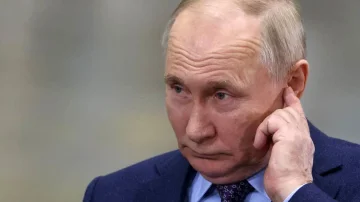
Special citizens were free toʹte gave priority to personal virtue over the needs of the State; yet a prince did not. Whether Russian President Vladimir Putin ordered either the chemical attack on Sergey Scripal or Saudi Arabia's prince Muhamed bin Salman sent a task force group to kill Jamal Kashogin, these rulers clearly share Makiaveli's view of politics as a harsh and often deadly battlefield. And they did not hesitate to use brutal tactics in Chechnya, in the eastern province of Saudi Arabia, and elsewhere. In their eyes, human nature and the foundations of the international anarchic system have not changed since the time of Machiavell and the oppression of enemies without any remorse is often a necessary part of effective government, despite a ruler's personal preferences.
A modern Makiavelist would not object to their basic view of contemporary politics and the international system. But the world has changed in other ways since the 16th century, which have profound implications for today's <x0-princes”, as these aim to win, maintain and exercise power.
What advice of an XXI-century Makvelist might suit the debate over the murder of dissidents around Russia and Saudi Arabia? To begin with, modern Makiavelist would not in principle reject the concept of the state-sponsored murder. There are cases, he can argue, when state security requirements require it, however destabilising that move may be.
Israel and many other modern states have not hesitated to undertake such operations when necessary. Even the United States, a country that has long stood by the implementation of liberal values in its foreign policies, has used the killings as a tool of counterterrorism.
And in a world where a terrorist for one country is a freedom fighter in another country, the line of separation of what is morally justifiable, from what is morally hated, is more unstable than many would like to think. However, underground operations in the era of sophisticated monitoring and social media systems are much more difficult to implement than at any time in human history.
Not long ago, intelligent service organizations could create successful narrates for secret officers, send them abroad under different disguises, and allow them to operate more or less in secret. In a world where almost everyone has a personal history on the Internet, stories like a cover become problematic.
The increased use of biometric control systems at airports and train stations around the world makes travel under a false identity a greater challenge. More and more, cities of modest size around the world, covered by video surveillance systems, following people's movements on every square or street, and facial recognition software, make a huge challenge of acting in secret.
The spread of smartphones has turned citizens worldwide into amateur photo reporters documenting events. As events involving Kashogin and Scripal show, it is most likely that the murder operation will be publicly exposed. What is associated with this major exposure risk is the fact that public tolerance over the killings of civilians is less than in the past.
By the time of Makiaveli, it was generally understood that politics could be a bloody issue, and the public was more concerned if a ruler guaranteed security and prosperity than if he lived according to general ideals of personal virtue.
Today, even the non-Western public is less willing to take a blind eye to political killings. The growing opposition to such actions is in part a function of gradual expansion, though unevenly liberal values from the West to other political cultures, and partly reflects standards created by new technologies, allowing the implementation of more precise goals of military personnel and objects, with reduced side damage for those who are not part of the conflict.
Popular opposition to Scripal and Kashog's operations stems from less anti-Russian or anti-Saudian prejudices than from the real revolt against horrible crimes, which require condemnation. When such actions are exposed, their denial and the taking of counter-accuses only makes your problems worse.
When Saudi and Russian governments strongly denied any connection to the Kashogi and Scripal cases, and tried to plot stories of distant and unreliable plots to avoid guilt, they only reinforced suspicions that their leaders ordered operations.
In “the world opinion”, the governments involved appeared not only bad but not competent. This increased the damage caused by initial action. Finally, in an environment
Globalized business and information, tactical operations may have harmful strategic implications.
Rulers can view secret operations, such as <x0 spy games”, aimed at addressing national security threats, which the public cannot understand and shouldn't intervene. But the media, business and banking world can behave differently.
Key contracts, partnerships and investments could be lost with or without incentives from foreign governments. One ruler has very little in his power to isolate his country from the fiction of these international flows, without turning the country away from the major vectors of economic growth and prosperity in the XXI world.
A wise ruler will consider the broader strategic implications of tactical killings before taking such a step. And foreign governments, weighing the reactions of homicide policies, should consider not only their justified moral anger in punishing such actions but also the potential impact that turns into an important strategic relationship may have on critical national interests.
Even in the 20th century, there are times when murders will be considered necessary for acquiring and preserving power and security. The cost to be paid for such operations has increased and has become less avoidable.
A ruler should use political killings only in more unusual and existential situations. In this context, the 2018 Makiavel may be said to be the unwary political murder is worse than a crime.
Note: George Bibi, director of the Centre for Intelligence in <x0National Interest”. He previously served as chief of analysis on Russia at the CIA, and as special adviser to Vice President Dick Chen on Russia and the former Soviet Union.