a day ago
DYANET: Erdogan's Islamic Machine in Kosovo

Periskopi(8 years ago)
(8 years ago)The table with the picture of a mosque with four Osman-style minarets and Turkey's flag is located at an important location in downtown Pristina, Kosovo's capital. With less than 2 million people, Kosovo, which declared its independence from Serbia in 2008, is home to over 800 [...]
The table with the picture of a mosque with four Osman-style minarets and Turkey's flag is located at an important location in downtown Pristina, Kosovo's capital. With less than 2 million people, Kosovo, which declared its independence from Serbia in 2008, is home to over 800 mosques. The Islamic Community of Kosovo is now building “Great Jasmine” at a cost of $335m-40m.
Turkey's Religious Affairs Directorate (Diyanet) is the sponsor of this project, which has also supported the construction of a similar mosque in a 10,000 square metre space on George W. Bush in Tirana, the biggest mosque in the Balkans, as has built dozens of other mosques in neighbouring countries.
Turkey's president, Erdogan, has put two state organisations, Dayannet and the Turkish Development Agency (TIKA) into operation as state machinery through which Turkey is investing in the Balkans to boost Islamist ideology.
Dayannet is the official state institution whose role is to, “-execut works regarding the beliefs, worship and ethics of Islam, to illuminate the public for their religion, and to manage the sacred places of worship”. Dayenet is also responsible for the religious affairs of the Turkish diaspora. In Germany alone, it manages over 970 imam mosques trained by this organization.
Austria was the first country to realise that mosques built with Erdogan's money are used for political purposes and to promote his Islamic agenda. In June 2018, Chancellor Sebastian Kurz ordered the closure of seven mosques built by Diyant and deported 60 imma and their families as part of the fight against political Islam.
In February 2016, it was found in Germany that clergymen from the Diyant organization were involved in spying on Gülin's followers. Two years ago, “Cumhuriyet”, Turkey's independent newspaper, reported that Dayenes was very active in intelligence collection, especially in the activities of Glilen's sympathisers in 38 European countries, including Germany and the Balkans. Spy charges from the organisation have existed since the 1990s, but these findings pointed to a much wider operation than previously thought.
Meanwhile, Dayannet has expanded its religious programme to countries that consider the restoration of Ottoman influence, thus building over 100 mosques outside Turkey.
Diyannet President Ali Erbaş has confirmed that they have exceptionally strong relations with Balkan countries, underlining that their co-operation will continue in the future, especially in terms of religious education, services and publications. He has stressed the importance of Turkey's influence in the Balkans. “Balkan has a special place for us. Our historical ties will continue as they were in the past. ”
Ironically, while most Balkan countries suffer from unemployment, lack of foreign investment and poverty, Erdogan's investments are concentrated in mosques and religious institutions at a time when the unemployment rate in Kosovo alone is 30%.
Lulzim Peci, former Kosovo ambassador to Sweden and Executive Director of the Kosovo Institute for Research and Development of Politics (KIPRED), is one of the most critical voices in Kosovo against Erdogan's Islamic political scheme. He says the mosques for Erdogan are not only shrines, but political instrument to postpone his Islamist agenda. “In the case of Kosovo and Albania, building tens of millions of mosques also has to do with the symbol of Turkish non-religious but political influence, says Peci.
Erdogan's major investments in Ottoman symbolism are designed to influence the mentality of the population in Kosovo and to boost pro-Turkish-Islamic sentiments in the present and future generations.
Islamic idealology promoting Dayannet also caused widespread indignation in Turkey. Daynet said that girls could get pregnant and get married at age nine and that boys could get married at 12.
Thus, concerns about Dayannet's activities are not limited to building mosques, but to its cultural and social influence based on radical Islam.
A day after the failed coup in Turkey, crowds of Albanians and Bosniaks in Macedonia, Bosnia, Albania and Kosovo demonstrated in support of Erdogan and his government. It clearly visualizes the potential and mechanisms it has in the Balkans and Diaspora, which it capitalizes and uses whenever it wants”, says Xhemal Ahmeti, historian and expert on Southeast European issues.
Unfortunately, Albanian mosques thus confirm the Swiss Islamists' thesis, Saida Keller-Messahli, in her book ʹIslamic Centrifuge in Switzerland, where it says Albanian mosques are the radical centre serving the Islamic agenda for radicalisation of Albanian Muslims in favour of Erdogan's politics “, Ahmeti says.
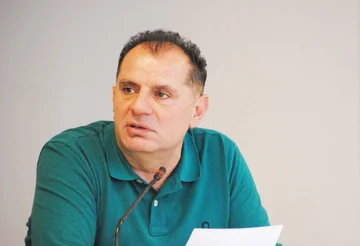
Visar Duriqi, Kosovo journalist specialising in religious matters, says the Turkish-funded mosque construction project sends a clear political message from Erdogan for control he has over this region. “Kosovo is a country that does not need more religious buildings”, Duriqi has said. Glasses are increasingly being used to spread political ideologies.
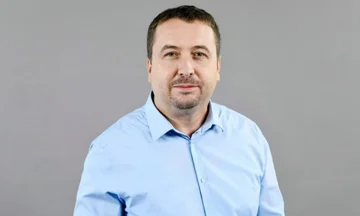
“is no longer a matter if these objects are necessary, because the goal is to build as many of these objects as possible to strengthen political influence from the Middle East countries and Turkey of Erdogan”, says Xhelal Neziri, an experienced journalist from Macedonia.
He says that in majority Christian countries in the Balkans, such as Serbia, Macedonia and Croatia, Turkey is investing in major development projects, while in Albania and Kosovo investments are mainly directed at building Islamic religious objects. The most powerful and sustainable influence in this region, especially among Albanians, is shown right through the instrumentisation of religion”, Nezir says.
The Balkans should have it clear that anyone who pursues Erdogan's ambitions no matter how hard Erdogan may escape the conclusion that the Turkish leader had a specific and articulated agenda of Islam, which he is determined to instill in the psychics of the people of Southeast Europe, building mosques and appointing imams that follow his doctrine. It is part of Erdogan's vision to restore elements of the Ottoman Empire under his leadership.
Erdogan himself and many other Turkish officials have spoken openly about their dream that by 2023, on the 100th anniversary of modern Turkey, the country will enjoy as much influence as it once enjoyed from the Ottomans. Erdogan thus uses Dayannet as one of his main vehicles for that purpose.
For Balkan states, this will surely turn into anxiety, if they do not prevent Erdogan from reducing their <x0-shfaro” their identity in the name of Allah, lowering Islam in service of its long-term threatening plot.