2 days ago
Special Act on Skenderbeu after Kadri Wessel's adviser

Periskopi(8 years ago)
(8 years ago)Since I like minimalism I'm naturally irritated by extravagants. Even as a child, when I saw various programs performed in extravagant studios, with unnecessary furniture, I felt pain and irritability. I don't know why. Many things made the eye and mind weary. And they ruined the meaning. On a Kosovo television known for studio extravagant, [...]
Since I like minimalism I'm naturally irritated by extravagants. Even as a child, when I saw various programs performed in extravagant studios, with unnecessary furniture, I felt pain and irritability. I don't know why. Many things made the eye and mind weary. And they ruined the meaning.
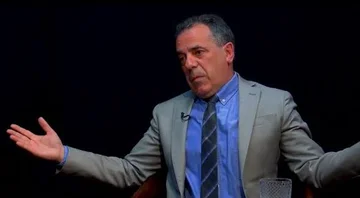
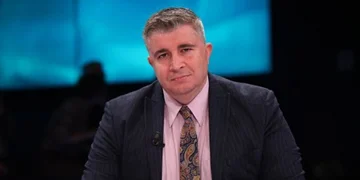
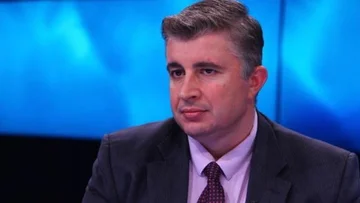
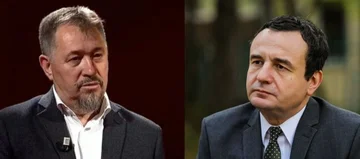
On a Kosovo television, known for the studio surplus, Blerim Latifi, my philosophy professor and adviser to the Speaker of the Parliament, was invited. Every time I see him, I feel a bit humiliated. He had been established as my authority, whereas he had accepted Kadri Wessel as authority. Anyway, the good news is you're always missing. The interview was taking place in a television studio that contained some high platform to which you had to climb through the stairs accompanied by the showmaster. This kind of platform was so high that it didn't date anything. No podium or meaning. Maybe this reflects just the taste of the show director, or his tendency to put his guests up.
Another studio on this television is clearly associated with boxing rings. Its fence with the ropes of these rings. I thought it was absurd. To satisfy my thirst for functioning things a few months ago, a drama was produced in which debateors were beaten. The fist had been held at one point for the section that served as a fence, functioning and making sense to it. Once and for all.
Anyway, let's get back to studying with the top podium. I missed half of the interview because I wanted to understand why that stage was set. Why were Blerim Latif and Baton Hagi on that platform? Was he strong enough to carry, since both of them had to pass the two hundred-kilograms? I was hoping so. They both got their name with B, and I had the impression that this would humiliate that letter. I had the impression, completely unsupported, of course, that people who get their name started with B tend to respect and love each other. And that, all in one way or another, are fat.
I learned about Skenderbe since yesterday it was five-five-fiveth the anniversary of his death. I remembered Skenderbe in the square. He too stood on a platform with his horse. Platforms are common to statues placed in squares. This can be seen better and farther away. Or that they should be bodilyly planted over mortal men. But why would a platform so high when people see where the camera is set? And besides, since you're alive, you still turn into the same technical space at the same level as others. I don't know.
Anyway, it was about Skenderbe. And like two people whose name started with B, they never crashed for anything. This show director has the impression that he thinks every guest starts with B, since he respects and cares about everyone. Despite their positions of power and their responsibilities. He's a media dealer, that's a mediator, a member of the media, who sees all people on the side of power as people who get their name started with B. This is not for ordinary citizens, or powerless people.
Skenderbeu and Special, these were the two themes on this thirty-minute show. Influenced by suggestive questions and the show's kind face, Blerim Latifi said something strange: “U n The CK was built on the tradition of Skenderbe, and therefore, the Special Court would judge the tradition of Skenderbe and Skenderbeu himself. ”
So, according to my philosophy professor, the KLA commanders had intended Skenderbe when they fought what Latif called brutal crime.
It seems to me that when you make statements you have to get a little tired and support them somewhere. It also seems to me that she is arrogant and ignorant of such an approach. So you lose critical sense of giving way to fan behavior. It's like watching television with nonsense and unnecessary things. In late medieval English, extravaganza means inappropriate and abnormal. That's what I find a conclusion from the Councilman of the Parliament regarding Special and Skenderbe. And so it seems to me that his entire position on that podium, higher than Skenderbeu's placed in the square.
However, I know Latif's attitudes on the national issue and national figures. He is a romantic nationalist who resists the critical sense of examining national figures: Adem Jashar, Skenderbeu, etc. But I invite you to read an aphrodisiac from Nietzsche, which I think is essential to each one as a cure to the opinions that are on your mind from time to time. Read it carefully:
The first option that comes to mind when we are asked suddenly about one thing is not usually ours, but it's just that of our register, position, origin; our personal opinions rarely surface. ”
Back to Skenderbe and Special.
Skenderbeu was a common character of an extraordinary historical period. The extraordinary one, or great one attributed to him, is actually completely related to the spirit of that time that created other similar characters. In the 20th century, the relationship of political powers with religion and religious morality became too complex and conditional. As far as the Ottoman Empire was concerned, Islam had been driven away from the influence of the Sultans ' war for power. It was institutionalized for the brother - in - law of the sultan to prevent the creation of new branches - the failure to allow the empire to be divided and weakened. This affected Skenderbeu to kill his relatives who risked his power in Crewe.
Its romanticization, and then nationalism, is extremely absurd and easy to break down. Latifi did not explain whether the image of KLA commanders for Skenderbe was that of a Romanticised leader as portrayed in the famous film, or the image of this Skenderbeu I described. If they were inspired by this Skenderbe, then since we want to build a democratic and liberal order that is essentially different from the one in which the medieval hero was part of, they would really have to be tried. Skenderbe could not institutionalize justice, so he could not leave revenge on Hamza and other fornicators in his power. But Skenderbeu would have no place in any democratic society the same as the national figures of other peoples, although it was an extraordinary war strategy.
Most of his references, Makiavell, to the famous work Princizão, are in the very developments that took place during the century we are talking about. Politics was moral, as long as the latter served her. So is religion. It was at the end of this century, or twenty-four years after Skenderbe's death, that Pope saw the most corrupt and unwanted man of Rome, Alexander the 6th, father of the famous Caesar Borja. That period produced other atrocities, such as Spain's Isabel, who expelled and slaughtered thousands of Muslims and Jews in order to strengthen her power. Even the first of Spinoza are expelled for that meal to Portugal and later the Netherlands. That period was made by Caesar Bordjan himself. Then Alfonso of Naples. Other corrupt popes. And powerful political families in Italy that did not submit to religious morality. The wealthy Medici family cursed in the Florence Square by Savonrolla, the Sforca family, Mehmet Master, the First Selim, Vlad Dracula, and many others.
Skenderbe's similar relationship with religion is noted in the fact that he was originally Orthodox, then became Muslim, and eventually Catholic. While at the top he held a strange pagan symbol. Skenderbe, then, used religion as did those mentioned earlier - in order to strengthen his own power. He made an alliance with Hungary's Huniad, willingly submitted to the pope, Venice, and Naples. His Crewe was administered by the Venetians from 1451 to the end because that is how he concluded. It is impossible for the disfigurement made to his image by the reborn, which made the hero useful for all powers in Albania and Kosovo, to continue today. Even to be acquitted before Kosovo public opinion of possible acts that could be identified by the Special. Perhaps the platform can be strong enough to support your body weight but not enough to carry the load of stupidity and in each person's imagination to look like you fell from it.
Skenderbeu cannot be a hero of Muslims because it disagrees with Muslim morality. Thus, in a secular society, all who have no good opinion of it must be understood. Yet, he was neither a hero of Christians because he does not agree with the morality of this religion. And all in the end, neither the hero of today's Albanians, because it has nothing to do with the conception of a public morality that is used for constitutionalising a rule of law. So neither Caesar Snow nor Dracula nor Isabel can be used for the respective nations. To Caesar's father, Pope Alexander VI, German philosopher Friedrich Nietzsche spoke with admiration, saying that at that time only corruption and corruption, St. Peter means Vatican, flourished.
The cruelty was terrible, and it was all around at that time. Cruel were Ottoman sultans, cruel was the pope, cruel was the Dracula (council of Skenderbe, widely known for something like this), cruel to Alfonso, and cruel was Skenderbe. He also killed and slaughtered many villages that would disobey his sword. And the tendency to acquit yourself at the expense of Skenderbe is unforgivable. That's because Skenderbeu lived at a completely different time. And there is no Skenderbean tradition. Nc.
You don't have to be medievalist to understand Skenderbe as a character. It is enough to know that as a national hero, we have a man who today's measures would call him corrupt, power-making man, immoral and harmless. Skenderbeu may be hero of Makiavell and Nietzsche, but not of a society that believes in a rule of law, in a state that tries to build public morality.
Skenderbe is a hero of solitary men who are not enslaved by any beliefs, no religions, no principles. He, along with his contemporaries, is in the embryo of what we call individualism. In other words, he is no one's hero and being such, after death, was used by everyone.
Something very basic should be learned once and for all: Skenderbeu did not breathe cut off from his contemporaries and formally attached to today's Albanians. This concept is funny. Skenderbeu was the product of his circumstances.
Fleeing from the Special behind Skenderbe is funny. Just like the visual spaces where people's opinions build up. Where the meaning is lost, the word goes out. Where there's a stupid overdose.