3 minutes ago
Steinbaum: Obama insisted on Special Court, as Russian political concession for deal with Iran
Periskopi(an hour ago)
(an hour ago)How did the CIA drop charges of organ trading before the U.S. Congress? How did President Obama's administration change its position about the Special Court, as a political concession to Russia's involvement in the deal with Iran about nuclear weapons? How did American pressure start on the Kosovo leadership for Special Court approval? How did Congressman Engel regret taking part in diplomatic pressure on Hashim Thaci for the establishment of the Court?
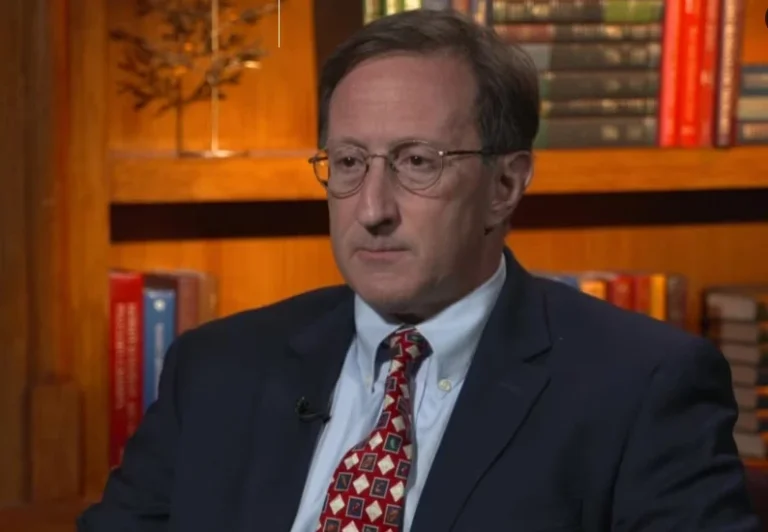
A recent opinion on Kosovo's Specialised Chambers provides exclusive information about the history and manner of creation, the mandate and legitimacy of this international court in The Hague. The author of the script published at the “Bridges of Mmary”, dedicated to transitional justice and history, is Jason Steinbaum, former Director of Staff at the U.S. Congress Foreign Affairs Commission, who for 30 years was also Congressman Chief of Staff Eliot Engel and, as such, the deeply connoisseur of all processes involving American interests in the Balkans, but also the Albanian ones in Washington DC.
The author in this writing argues that the tribunal is the product of mainly American political pressure and not of an internal justice process in Kosovo, and that its structure represents a profound deviation from Kosovo's needs for justice, but also of institutional ownership.
Steinabum, who is also a professor at American University in Washington DC, says the original position of American governments over war crimes claims by the KLA was that they were minimal: the UN's “government saw the accusations against the Kosovo Liberation Army (UÇK) as the minimal repeatedly. The rebel force that fought for Kosovo's independence during the 1998 1999 war. American officials generally admitted that no army is perfect, especially in the fog of war, but insisted that, overall, The KLA had behaved reasonably. ”
Steinbaum says even the most serious accusations of terrorism or organ trafficking, “had been dismissed in a CIA report, drawn up in response to a convention amendment Eliot L. Engel, a staunch supporter of Kosovo who later became chairman of the House of Representatives Foreign Affairs Committee. ”
In his authorial writing published today as an answer to a dialogue with former Minister of Foreign Affairs Petrit Selimin, Jason Steinbaum also explains the details yet unknown for the intervention of the US State Department and Embassy with Congresswoman Engel to pressure Kosovo. Steinbaum recalls that “for several years, the US State Department granted little or no credibility to Marty's claims, even after the Council of Europe resolution. Then, almost overnight, the United States changed its attitude. American diplomats went from ignoring Marty's report to the insistence in 2015 that an international court was needed to investigate his charges. “The main threat to Kosovo was that if Kosovo did not do so, the UN would establish it, according to Steinbaum: “If Kosovo did not create the Court, it would be created by the UN Security Council, although, of course, this could not happen if the US used its veto. Most importantly, Kosovo was told that it should act without delay, because the United States, its strongest and most stable ally, were asking for read: it was being imposed on it to do so. ”
Here Steinbaum gives the context and reason for this change of American attitudes: “a U.S. superpower has many global interests and sometimes those interests clash with each other. As Marty's accusations boiled in Europe and were largely ignored by Washington, the Obama administration was following its top priority in international politics -- a nuclear agreement with Iran. Almost every other foreign policy target went into second in the face of those negotiations, and the preservation of the international coalition supporting them was essential. ”
Steinbaum claims that as a countervalue for co-operation over the big deal with Iran, “very much believe that Russia -- and perhaps even some European interests -- urged the United States to pressure the new state to establish and prosecute those charges.
From President Obama's point of view, a Kosovo court consisting of international and dedicated judges, at least apparently, to higher legal standards, would likely suit its formation and sense of justice. To him, that was a slight release. The guidance went down to the American Embassy in Pristina and throughout the State Department: Kosovo had to do this. ”
So the reason why the United States demanded the creation of Specialised Chambers, according to Steinbaum was “not primarily to advance justice or accountability for organ trafficking or other alleged KLA crimes, but to serve a whole other goal: securing the nuclear agreement with Iran. ”
Steinbaum explains further that “unexpected, American diplomats in Pristina received new instructions: they pressure the Kosovo government to establish the Court and refuse to accept “jo” in response. Senior officials visiting Kosovo were told the country had to act, otherwise it would face serious consequences. I experienced this myself during a visit with conventioner Engel, for whom I have worked for 27 years. Ambassador Tracy Jacobson surprised us not only with the immediate change of American politics but also the urgency that the U.S. government devoted to the establishment of the Court. ”
Jason Steinbaum, who was among the most experienced Balkan officials in the entire U.S. Congress, said Congressman Engel repented of the pressure put on Kosovo: “As many others, we later repented of the attitude we took and of the sad and disuseable mess in which the Court” has become.
Steinbaum further concludes that the “court was not created just for the wrong reason. It was also created in the wrong way, on the basis of a deeply flawed law.” After explaining how American experts stripped Kosovo of its participation in drafting the statute and establishing, he expresses deep indignation at how the special court priorities are completely overturned: “given the serious crimes committed against Kosovo Albanians, the establishment of a court to judge and punish their wartime leaders seemed overturned. In fact, Kosovo's Specialised Chambers can be unique: a court designed to prosecute victims and winners of a war, instead of the defeated lead authors and aggressors. ”
Steinbaum also deeply analyzes the strange change in the initially promoted mandate: the court's “mandate becomes even more bizarre when compared to its original purpose. It was created to investigate claims of Marty's report, which focused mainly on organ trafficking. However, the charges do not mention organ trafficking at all. Instead, they focus on command responsibility for revenge attacks committed by actors of lower levels. In other words, the main reason the Court was created is no longer the one who runs its procedures.”/ Periscope.