20 minutes ago
Europe warns of August <x0m warmer than normal”, what is causing high temperatures?
Periskopi(an hour ago)
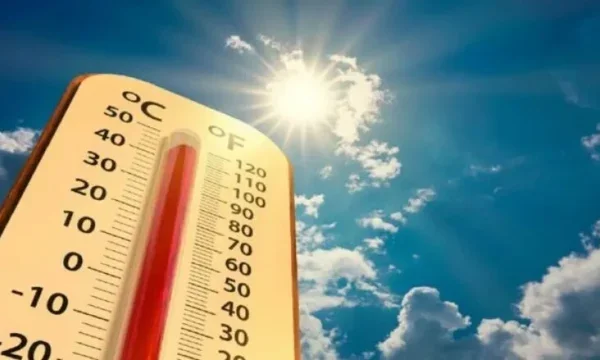
(an hour ago)Europe is preparing for August <x0m warmer than normal” after a series of waves heat one after another.
Most of the continent has had difficulty coping with this situation, as temperatures rose to over 40 °C in recent weeks, creating ideal conditions for fires that have destroyed large parts of France and Spain and caused the evacuation of hundreds of thousands of citizens.
But the chances of much needed relief from high temperatures seem impossible, as early predictions warn that other heat waves are possible, Television broadcast.
Will Europe still be hot in August?
“From their early issues of July, seasonal updates point to all chances towards a warmer August than normal across Europe and agree that the strongest and safest heat signal is above the Mediterranean and Southeast Europe”, says Euronews Earth, Ioanna Vergini, founder of the WFY24 weather forecast.
This includes “repeat heat groups” such as Iberia, Italy, Greece and parts of the Balkans.
The extremely warm Mediterranean Sea is leaving traces on the ground, and in some places it appears at night instead of the afternoon”, Vergin adds.
WFY24 forecasts for the first days of August predict that Naples, Barcelona, Rome, Valencia, Nica, Thessaloniki, Split and Athens will carry over 20 °C every night.
This is classified as a tropical night, which can increase the risk of severe stress from heat especially among vulnerable populations.
Even farther north, scorching temperatures are on the horizon. The U.K. Meteorological Office warns that the maximum temperature of 35 °C is expected in August, while intensification is intensified.
“The temperature will probably be above normal, and several hot weather periods and hot waves are possible, especially in the south body”, adds its long-term weather forecast.
How do scientists know if climate change is behind extreme weather?
Progress in weather and climate data has made it easier for scientists to assess the impact of global warming on extreme events such as heat waves and floods. This is often called the object of extreme events.
Since there are many interoperative factors, including natural promoters like El Niño, studies of extreme events do not require whether climate change directly caused a heat wave, but how heating temperatures have affected events.
This is often done by comparing how often an extreme event occurs today compared with how often it would have occurred in a world without man - made climate change.
Researchers will also explore how climate change changed the characteristics of an extreme weather event such as if a heat wave got warmer because of gases blocking heat.
For example, a rapid analysis of the World Weather Attribution (WWA)'s surveillance and projected temperature data to analyze the hottest three-day period in a large area of Europe that was covered by scorching temperatures at the end of June.
Scientists concluded that both maximum temperatures during the day and during the night would have been subx0 reasonably impossible to occur at this time of” until 1976, just 50 years ago.
The analysis also found that a similar heat wave that took place 50 years ago would be 3.5 °C colder than last month's.
Scientists have what is called “high trust” when it comes to extreme heat, due to the amount of data and understanding we now have on climate change.
The ongoing editions of fossil fuels are directly responsible for the divisions people are experiencing in their homes, schools and jobs”, says Dr. Keeping.
The speed of change is shocking. Every few years we're looking at a break in Europe heat records. This year has been a consecutive” month, he added.
For weather risks such as tornadoes and hail, the data is less complete. This makes it harder to attribute their event to trust.
Attribution studies are also used to show the consequences of extreme weather caused by climate.
An analysis by the Imperial College London, the Meteorological Office of the United Kingdom and the London School of Hygiene and Tropical Medicine recently used weather data, climate patterns and research on excessive mortality during heat waves to measure the impact of the last two heat waves.
Researchers estimate that maximum temperatures during the day were 3 °C to 4 °C higher than they would have been without global warming by resulting in 10,000 deaths.
Overwhelming quality is breaking records across Europe, and science is very clear about why: climate change is spreading rapidly, caused by the world's dependence on coal, oil and gas”, says Simon Stiell, UN Executive Secretary for Climate Change.
What other factors affect extreme weather?
Many reports of extreme weather, especially heat waves, focus on the atmosphere model after the event . . instead of the cause.
For example, in May, France's Maétéo-French weather agency blamed 40 °C temperatures on a <x0kupole heat”>
This happens when a high - pressure system develops into the upper atmosphere, causing the air below to drop and compress, increasing temperatures in the lower atmosphere.
As the hot air expands, it creates an swollen dome that blocks the heat inside.
Winds are normally able to move high pressure around them, but because of the extent of the heat domes in the atmosphere, the weather system becomes almost fixed.
However, a 2025 study published in Procedings of the National Academy of Sciences found that weather - blocking atmospheric patterns, such as heat poplars and floods, have almost tripled since the 1950 ' s because of the climate change caused by man.
An analysis by the Climate Central in 2023 also found that a heat dome that caused temperatures at 48 °C in parts of Mexico and the South became at least five times more likely because of climate change.
What effect does El Niño have on the heat?
El Niño (in Spanish for '%s') is a natural phenomenon that can cause extreme weather. Earlier this year, the US National Oceanic and Atmospheric Administration (NOAA) stated that El Niño conditions are officially under way in the tropical Pacific.
El Niño occurs when sea temperatures in the eastern Pacific Ocean become extremely warm and usually disrupt the tropic regions. It often relates to extreme weather events, even though experts warn that it is being used as a “concentration” from global warming.
When conditions form of El Niño, floods are a common danger in South America, like in northern Peru, and can reach parts of East Africa, Central Asia and South America.
The dangers of droughts and forest fires also grow during El Niño, especially most of Australia, northern parts of South America and Asian countries like Indonesia.
Most of El Niño's events have temporarily increased global average temperatures by about 0.2 °C. This is not as important as human-made climate change, which has increased global surface temperature by approximately 1.3-1.5 °C compared to pre-industrial levels.
The year 2025 was the 3rd warmest ever recorded "El Niño's 2016, " despite a natural cold current of La Niña (Spanish for girls).
La Niña usually cools global temperatures by strengthening trade winds and drawing colder water from deep ocean to the surface along the equatorial Pacific. It also happens disorderly, but it tries to last longer than El Niño.
Are the low levels of pollution after Europe's hot summer?
After the hot start of summer in Europe, some prominent news organisations said that successive heat waves were caused by a decline in pollution levels.
The claim was shared online by Richard Tice, deputy chairman of the right-wing populist party Reform UK, and has been used to criticise the country's efforts for zero net.
It stems from a study published in the scientific magazine Geophisical Research Letters, which does not include data on the latest heat waves.
The decline in pollution can reduce the cooling effects of aerosols, which absorb or reflect sunlight. However, Professor Erich Fischer, a climate scientist at ETH Zurich, tells Carbon Brief that the definition of this as the cause of heat waves in Europe is the wrong “”.
The heat cells are caused by high-pressure systems and are now much more frequent and intense because they are occurring in a climate that is much warmer than 100 years ago as a result of greenhouse gas emissions”, he added.
“Artitium shows that the warming of summer caused by greenhouse gases was temporarily disguised by air - polluting airships. The full scale for European summers becomes apparent only now, while polluting aerosols of the air have dropped”, it noted, among other things.