2 minutes ago
EU: Kosovo needs fully functional institutions to accelerate reforms, path towards European integration

Periskopi(an hour ago)
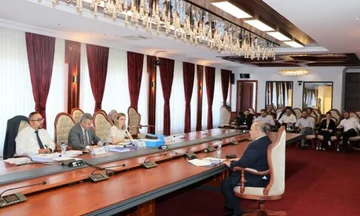
(an hour ago)Zulfaj lives, Kosovo's chief negotiator with the European Union and Valentina Supert, Director for the Western Balkans at the Directorate General of the European Commission for Enlargement and Eastern Neighborhood (DP ENEST), opened the 7th Stabilisation and Association Committee meeting between Kosovo and the European Union yesterday in Pristina, announced in a joint communique of the Office of the Prime Minister and Directorate for European Commission Enlargement and East Neighborship.
The committee, co-chaired by Arben Krasniqi, Secretary-General at the Office of the Prime Minister, and Jiri Plecity, chief of the DPS Unit responsible for Kosovo, examined the main political developments over the past period and made an assessment of the state of implementation of political and economic criteria, approaching EU legislation and standards, as well as implementing obligations stemming from the Stabilisation and Association Agreement (MSA).
“Dictations focused on reform priorities in a wide range of areas, supporting and adopting the results of sectoral subcommittee meetings and separate groups held within the seventh cycle of the Stabilisation-Association Dialogue”, the report said.
Recognising “progress achieved in several areas”, the EU underlined the importance of fully functional institutions for the necessary acceleration of the reform process.
“The EU stressed that Kosovo's European future remains the effort of the entire society, supported by a broad and sustainable public consensus. In this context, added co-operation among political parties, meaningful consultation with civil society and commitment with local government remain important factors for advancing the European agenda of Kosovo”.
According to the communiqué, The EU welcomed progress in areas related to competitiveness and inclusive growth, particularly in social policies and employment, digital transformation, taxes, economic and monetary policies, education and culture, and customs.
“Recognising recent advances in democracy and rule of law, the EU stressed the need to accelerate and prioritise pending reforms, especially in public administration, freedom of expression, rule of law, protection of fundamental rights and the rights of persons belonging to non-communal communities”.
Meanwhile, the Kosovo government highlighted the “progress achieved and reaffirmed its commitment to advancing reform agenda, implementation of obligations stemming from the SAA and the full use of opportunities the EU Growth Plan provides for the Western Balkans to accelerate socioeconomic development and progress on the European path”.
Both sides agreed to continue their commitment to the benefit of Kosovo's reform process and its European aspirations.
As Kosovo's most powerful and reliable partner and largest financial assistance provider, which has invested more than 3.7 billion euros in Kosovo since 1999, the EU said it confirmed its commitment to supporting Kosovo's progress on its European path.