27 minutes ago
O B S.: Uncertain food causes 866 million diseases and 1.5 million deaths annually
Periskopi(20 days ago)
(20 days ago)Uncertain food continues to be one of the world's greatest public health threats.
According to new estimates published by the World Health Organization (OBSH), about 866 million cases of disease and 1.5 million deaths related to food consumption are recorded annually, writes abcnews. alReport the clancosova.tv.
Children Under Five, the Most Dangerous Group
According to the report, children under five years of age are almost three times more likely to be sick of unsafe food compared with older adults and children.
Although they make up only about 9% of the global population, they make up about one third of all food - borne diseases. The most frequent are diarrheal diseases that can be fatal in this fragile age group.
In addition to infections, the danger comes from exposure to chemicals such as marble and lead that can harm brain development and cause long - term neurological and developmental problems.
Global Causes and Influence
O BSH estimates that most diseases come from bacteria, viruses, and parasites transmitted through food (about 860 million cases in 2021). Meanwhile, chemical pollution is responsible for a disproportionate portion of death.
In 2021 about 73% of food deaths are related to chemicals. Among these, inorganic arsenic and lead are most fatal cases, as they increase the risk of heart disease and cancer.
Global Inequity
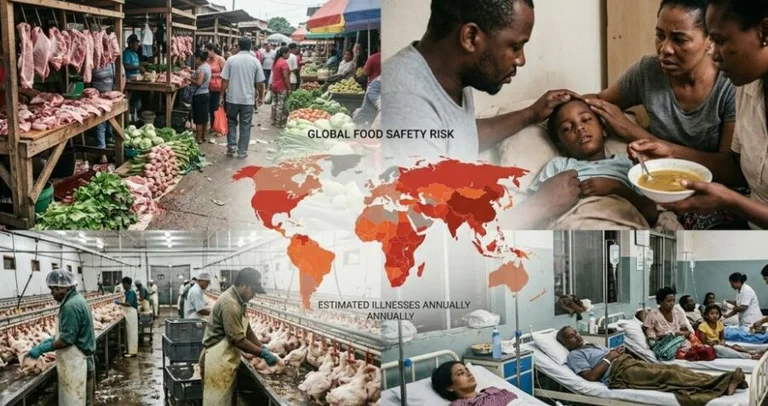
The report stresses that the largest burden of food disease falls on Africa and Southeast Asia, which together account for about 75% of global cases and 60% of deaths.
Children and low - income communities are the most affected because of the weaker conditions of hygiene, clean water, and the health system.
Economic costs and O call OVR
In addition to the impact on health, unsafe food has serious economic consequences. In 2021, productivity losses reached some $310 billion, while in view of changes in the cost of living in various countries, this figure amounts to up to $647 billion.
WHO Director General Dr. Tedros Adhanom Ghebrreesus stressed that food security affects every family and every meal.
He said countries now have more precise data to understand where the greatest burden is and to take concrete measures to protect public health.
Experts stress that improving drinking water, hygiene, food processing practices and access to health care are essential for reducing risk.
New O Report The BSH analyses 42 main food-transmitting risks in 194 countries during 2000-2021. It warns that climate change, globalisation and resistance to antibiotics are further exacerbating the situation.
Experts require an integrated approach “One Health”, connecting the health of people, animals and the environment, to prevent pollution in the source and to reduce the impact of this global problem.