an hour ago
Temporary holiday for Iran, Persian Gulf states
Periskopi(14 hours ago)
(14 hours ago)Four months of war have essentially changed relations between Iran and Gulf states. Disbelief increases, though they are dependent on one another.
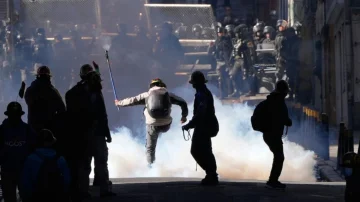
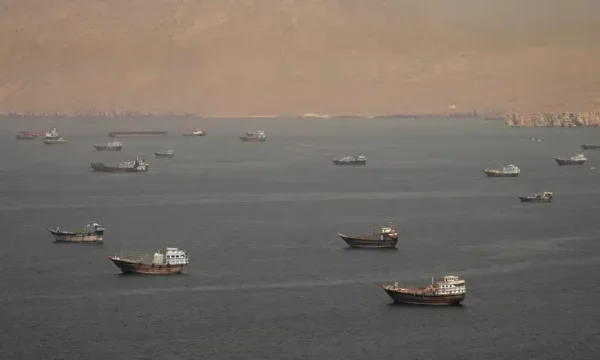
Temporary break in the Persian Gulf: the conflict between the US and Iran is over, at least at the moment. The two countries were in confrontation for almost four months. Later, other countries in the Gulf region were also involved in fighting. Iran had carried out several air strikes against Arab states. His targets were American institutions located there, especially military bases. Industrial targets in Gulf states were also targeted, especially those linked to the oil industry.
It becomes known that Gulf states now see their relationship with the US and also with Iran in another light. Confidence in the US defence shield is fading, Reuters news agency reports, citing anonymous sources from Gulf states. Iran considers itself a permanent regional power. Although any easing of tensions is welcome, the current situation is clearly worse than before the war, according to a senior government official from a Gulf state quoted by Reuters.
Even after the interim agreement, so far there has been no sign from Tehran of a fundamental change of course regarding his neighbours. On the contrary, Iranian leaders stress that they have emerged from the war politically intact. According to diplomats and analysts from Gulf states, Iran has emerged from the economically and militarily weakened war, but politically untouched. The country has maintained its political structures and continues to have the capacity to exert pressure on Gulf states as well as on global energy flows. The message from Tehran is this: Iran continues to consider itself a major regional player, with whom Gulf states must account in the future.
No Interest in a New Face
Neither Gulf States nor Iran appear to have any interest in further military escalation. At the same time, war has significantly deepened bilateral distrust.
In principle, this conflict has seriously damaged, if not destroyed, the process of mutual rapprochement,” says Sebastian Sons, expert for Gulf states at the Partnership Research Centre for the East (CARPO) in a DW interview. First and foremost, the approach of Saudi Arabia to Tehran has taken a step back.
In 2023 alone, after a seven - year break, the two states managed to normalise their diplomatic relations, thanks to Chinese mediation. Iran's “Frustration has increased significantly,” notes Sons.
Conrad Schetter, a researcher who specializes in peace and strife at the International Centre for Conflict Studies in Bonn (bicc), expresses a similar opinion. Although the attacks were a shock to many Gulf states, the common “interests will ensure that relations do not collapse completely, despite all conflicts,” says Schetter in an interview for DW. All states have an interest in economic prosperity and a stable political situation.
Iran: little effort, great influence
Iran has also drawn conclusions from the war. For Schetter, attacks on Gulf states were, above all, strategically motivated. “Iran wanted to make it clear: Well, the region doesn't work. The attacks had demonstrated that oil and gas exports, as well as trade and tourism in the region, remain vulnerable. Sebastian Sons supports this thought: the “Gulf States were a relatively easy target for Iran. ”
With a limited military effort, Tehran has achieved a considerable political and economic impact.
The British Research Centre Chatham House assumes that, in the future, Iran will address this kind of direct pressure to a greater extent. The war has highlighted the vulnerability of the Gulf monarchs to Iran. Tehran wants to remain a key player in regional power policy.
Gulf States becoming more pragmatic
At the same time, there are many signs that Gulf states will follow a more pragmatic policy towards Iran. “Debat swings between dialogue and content,” says Sebastian Sons. Saudi Arabia, which has Sunnite majority and is considered Iran's main rival, for example, has not interrupted diplomatic relations with Tehran despite the attacks. Oman and Qatar continue to maintain close contact with Iranian leaders. Gulf states are obliged to pursue a double strategy: containing where necessary and dialogue where possible.
And the view of the Gulf States of New American Administration has changed. These relations are now very contradictory,” says Sons. It is true that the US remains an important partner in security policy. At the same time, war has revealed the limit of US ability to protect the Gulf States. Schetter draws a similar conclusion: “Gulf States have been forced to admit that the US has not been able to protect effectively.” Therefore, it envisions an increase in reconstruction, investment in air defence and efforts to pave new land routes for oil and gas exports so that they are not dependent on Hormuz Strait.
Iran has grown stronger
Despite military attacks, the country has emerged stronger politically from this crisis,” says Conrad Schetter. It is possible to form new alliances in the region. What's certain is Tehran will act with more confidence.
In this context, experts agree that neither reconciliation nor open confrontation between Iran and its neighbours are possible. The most likely scenario is a prudent coexistence: more distrust than before, but even more dialogue; more fear, but at the same time greater efforts to achieve a consensus. Both sides were convinced how high the costs of an escalation would be. / DW/