6 minutes ago
Kurti challenges the alliance with the US, through Minister Rizvanolli sends a letter virtually rejecting the idea of gas
Periskopi(16 hours ago)
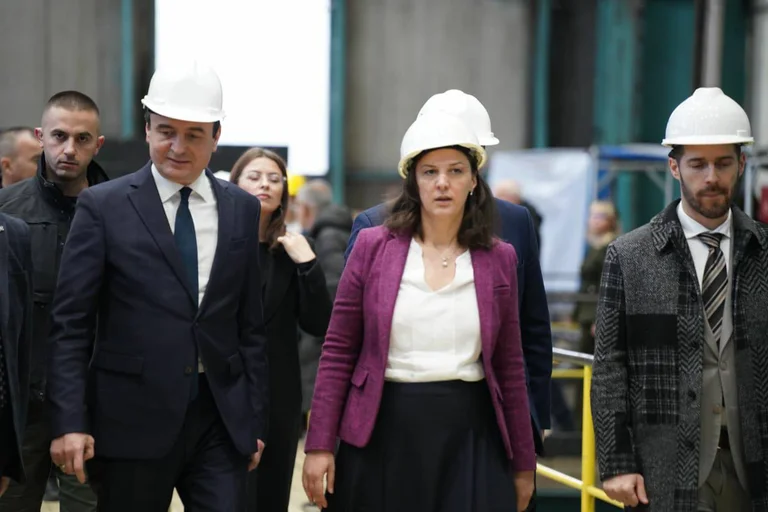
(16 hours ago)While the United States is demanding that Kosovo be included in the strategic regional project for American gas, Albin Kurti's incumbent government has chosen a completely other direction, openly challenging the country's most important ally recommendations in the field of energy.
Instead of engaging in Kosovo's integration into the regional natural gas network, Economy Minister Artane Rizvanolli has addressed the American Embassy with a request for technical support and investments in projects related to coal gasification. In a letter sent in April, as reported COHA, she has argued that Kosovo holds large reserves of lignite and has mentioned President Donald Trump's policies in support of the coal industry.
The move has raised serious questions about the government's energy orientation, especially at a time when the US is strongly promoting a regional natural gas supply network (LNG) in the Western Balkans. Instead of exploiting the possibility of becoming part of a project of strategic importance for energy security in the region, the Government appears to be returning to the table ideas related to old and economically questionable technologies.
In his letter to the charge worker at the American Embassy, Annu Prattipati, Rizvanolli has mentioned the former KEK gasification factory and has suggested considering the possibility of the revival of a project similar to that of the North Dakota in the US. She has also stressed that the initiative enjoys the full support of Prime Minister Albin Kurti.
Continued refusal to engage in regional gas infrastructure has also disturbed the business community. Economic talks have warned that such an approach can have consequences not only for the country's economic development but also for strategic reports with the United States.
The US aims to establish a new energy corridor in the Western Balkans through liquid natural gas, aimed at reducing dependence on Russian sources and strengthening energy security in the region. As neighbouring countries move towards integration on this network, Kosovo risks staying out of key regional processes due to the government's reluctance, Kurti.
At a time when the country continues to rely almost entirely on coal power plants and faces serious energy challenges, the Government's determination not to embrace the American project is seen by critics as a decision motivated by political calculations rather than by Kosovo's long-term strategic interests.