2 minutes ago
Supreme decisions on regulation of job systemisation in the Ministry of Health
Periskopi(a month ago)
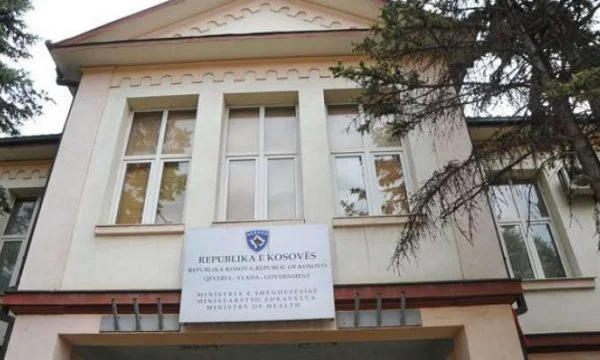
(a month ago)The Supreme Court of Kosovo has refused the request of the Centre for Social Information and Upgrade (QIPS) exercised against the Office of the Prime Minister, in terms of the partial abolition of Rule No. 15/2024 for Internal Organisation and Systemisation of Jobs at the Ministry of Health.
The indictment reportedly had asked the Supreme Court to declare illegal and abolish provisions of the 4146 articles of this regulation, claiming they were issued without legal basis and contrary to the Law on Health of Men, and the USKKKKU Constitution. According to the indictment, through these provisions the organisation and operation of the Special Institute in Zoom (ISSH) has been regulated, although this institution does not figure as an entity known to the relevant legislation.
After public judicial review, the analysis of the parties' claims, as well as the assessment of constitutional, legal and legal provisions relevant, the Supreme Court found that the prosecution is not based. The court estimated that the regulation was issued by the competent body, on the basis of constitutional and legal authorisations stemming from the Constitution of the Republic of Kosovo, the Law for Government, the Law for Organising and Function of State Administration and Independent Agencies, as well as relevant legislation in the field of health and mental health”, the report said.
The Supreme Court stresses that the contested provisions do not create a new legal subject outside the existing health system, but present organisational and functional regulation of an existing structure within the public health system.
The court also estimated that Article 18 of the Law on Mental Health provides sufficient legal grounds for the provision of the sublawing and functioning of residential institutions of social care and mental health services offered in them.
According to the Court, the controversial sublaw has not exceeded legal authorisations and violated the principle of legitimacy, as it has been issued under the competencies of the Ministry of Health and Government for organising the public health system.
The court also stressed that, although the regulation of the Special Institute in Progress may have been made through a separate sublegal act, this issue relates to nor does the legality of the provisions disputed.
Thus, the Supreme Court found that there is no legal basis for abolishing nines 4146 of the Order (ZKM) No. 15/2024 and flatly rejected the prosecution's demand as unfounded.