5 hours ago
Without the Peace Board, the Parliament decides to send KSF to Gaza
Periskopi(3 months ago)
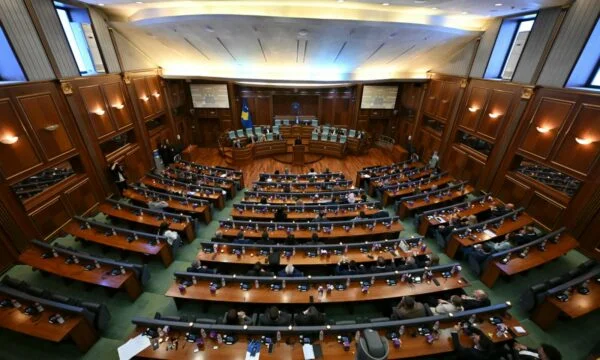
(3 months ago)MPs from the Kosovo Assembly have approved the Government's proposal Friday for sending members of the Kosovo Security Force to Gaza, under the International Stabilisation Force. The proposal for which a majority of votes of 2/3 were needed passed by 89 votes per, none against and no abstention. To [...]
The proposal for which a majority of votes of 2/3 were needed passed by 89 votes per, none against and no abstention.
To enter into force, this decision must now be signed by the president of Kosovo, in this case the applicant of the president's office, Albulen Haxhiu, who comes from the ruling party.
Defence Minister Ejup Macedonia said this decision further strengthens Kosovo's international profile, KSF professionalism and deploys the country among states, not only benefiting from international security but also contributing to preserving international peace and order.
“Along with this commitment, Kosovo testifies to being a reliable, responsible partner and ready to act side by side with allies in support of peace, security, civil protection and international mandates”, the minister said.
On March 30th, the Government approved the Defence Ministry's proposal for sending KSF members to Gaza.
Sending KSF troops forwards to take place under the International Stabilisation Force (FNS), a mechanism created as part of the so-called Peace Board initiative proposed by US President Donald Trump, for achieving world peace.
Kosovo is among the first five states along with Indonesia, Morocco, Kazakhstan and Albania that have pledged commitment to the mission, aimed at providing security and monitoring the ceasefire at the Gaza Strip.
Yet, it is still not known when exactly the number and number of troops will occur.
In addition to authorising troops, the Assembly should also approve the agreement for Kosovo's membership on the Peace Board.
Former Kosovo President Vjosa Osmani, who has been among the founders of the Peace Board, has publicly supported the initiative. Its presidential mandate ended on April 4th.
According to Israeli public broadcaster KAN reports, the International Stabilisation Force is expected to launch engagement in Gaza by May, including dozens of soldiers from Kosovo, although institutions in Pristina have not officially confirmed that deadline.
Defence Minister Ejup Macedonia has earlier stated that the sending of over 20 specialised soldiers to various fields, including facilities for demining and disposal of undisposed tools (EOD), special operations, planning and medical teams, are initially planned.
Ministry officials have announced that they are in constant co-ordination with the FNS structures and that a liaison military has been appointed to prepare the delocation.
The International Stabilising Force is expected to be tasked with stabilising the security situation in Gaza after the war began in October 2023, when Hamas declared terrorist organisation by the United States and the European Union attacked Israel, killing over 1,200 people and taking hostages.
The subsequent Israeli attacks on Gaza caused tens of thousands of victims, humanitarian crisis, and major material damage.
The plan to establish this force is part of a broader package for achieving peace, which has been accepted by the parties in the conflict.
This is not the first time the KSF has been dislocated abroad. In 2021, she participated in a mission to Kuwait in collaboration with American forces, and in 2022 in the Falkland Islands, in collaboration with the United Kingdom.
The KSF is currently in the process of becoming a full army, the process expected to be completed by 2028.
Both for these missions and for participation in the Gaza International Stabilisation Force, sending KSF abroad is done under the Law to send this force abroad.
This law, envisions sending the KSF on missions abroad under any bilateral agreement with the host state, or under an invitation from any international organisation, or any UN Security Council resolution.
The law envisions other aspects of KSF participation in missions abroad. For example, it says that before being sent into missions, the KSF must conduct training and preparation. Likewise, the law envisions coverage of expenditures being made from the country's budget, but also from international organisations and other states, on the basis of international or inter-institutional agreements.
Also, that's when the KSF pulls out of missions abroad. The retreat can be made whenever it is estimated that Kosovo's interests are protected by this decision. The KSF can withdraw even under extraordinary circumstances, the president of the state says in law, and that decision is taken.
In addition to missions abroad, the KSF has also participated in search-of-save operations and other humanitarian-type missions. The last case a contingent was sent abroad on humanitarian mission was in January of this year, where Kosovo soldiers were involved in seeking a person in Albania.
Also, KSF members participate in training abroad within the framework of co-operation with various states. Example, in December 2025, members of the KSF's special operations, in collaboration with the United Kingdom Army conducted training in the tropical jungles of the state of Belize.
The KSF also participates in various trainings with the American Army and has close partnership with the National Guard of the American State of Aeva.
Sadiku-VVV): You're giving enough information to name an anti-American, but I can tell you.