25 minutes ago
Former American Ambassador to O SBE: NATO renewing itself
Periskopi(2 hours ago)
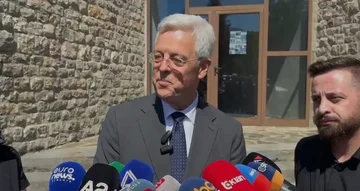
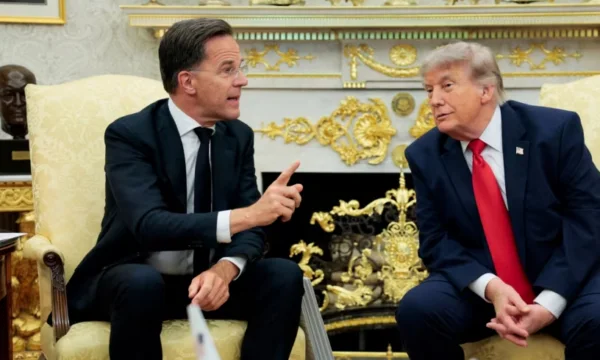
(2 hours ago)As NATO leaders prepare for the July 7th-8th summit in Ankara, amid Russia's war against Ukraine and renewed tensions in the Middle East, former US ambassador to the Organisation for Security and Co-operation in Europe (OSBE), James Gilmore, says the alliance is going through a difficult transformation but will eventually strengthen it and that it is not entering a period of weakening.
In an interview for Radio Free Europe, James Gillmore, who served during US President Donald Trump's first mandate, argues Trump's pressure on European allies has accelerated changes, insists Ukraine “cannot be allowed to fail” and says NATO remains necessary both for Europe's security and US national interests.
Radio Free Europe: We are approaching a summit that many describe as one of NATO's most important summits in recent years. President Trump has repeatedly called for a more balanced transatlantic partnership. From the U.S. perspective, what would indicate that this report is becoming more equal not only in financial but also in strategic terms?
James Gilmore: First, I am very optimistic about NATO's future and the future of the world. Granted, a restoration is taking place. Let us look at NATO's situation realistically. The alliance has expanded with the membership of Finland and Sweden. When I served as ambassador even earlier, when I was a soldier stationed in Germany, no one thought Sweden and Finland would join NATO.
The president's demands that NATO member states do more for their defence and increase defence spending are being implemented. This will take a long time, which shows why the president insisted on this from the beginning, but those countries will spend more.
And Russia is again creating a moment of unity for NATO countries because Moscow poses a threat. This is part of what I see as a global war currently raging.
I believe that the European countries of NATO are somewhat uncertain about how President Trump acts, but in my opinion, the final outcome of all of this is very positive.
Radio Free Europe: You argue President Trump's pressure is already producing results. As leaders gather in Ankara, do you believe Europe has acknowledged that it must take on a larger portion of the burden for its security, or is Washington still demanding more than Europe is willing to offer?
James Gilmore: First of all, Washington is not asking for a specific figure. I don't think this is the message being conveyed. What is being said is that NATO states should be prepared to defend themselves. I don't think so far it has been suggested that the US will withdraw from NATO or give up its leading role in the alliance.
There's an adaptation process going on, but once again, I'm convinced the alliance will do very well.
Frankly, we should thank Russian President Vladimir Putin for much of this because of his fascist aggression against Europe and its threats against the states of Baltic, Poland and other countries. It is creating a powerful impetus towards unity and greater cohesion within NATO.
Radio Free Europe: You describe Russia's aggression as the force uniting NATO. By turning to the Ukrainian issue, how would success in present - day circumstances really look, and what role should the United States continue to play?
James Gilmore: Much of this depends on Ukraine itself how much it can cope with the attacks and suffering caused by war criminals in Moscow. But, that said, Putin should not be allowed to succeed in Ukraine.
Ukrainians have developed some of the most modern methods of fighting with their fears. They are striking Russia within its territory, something Putin had never expected. They're isolating the crime. There has been a time when many people thought the loss of crime by Russia was a fact done. Today, that is no longer true. I think things are moving in the right direction.
It is a pity we are facing this conflict, because I believe Europe is important to US security. But the US is making it clear that it cannot benefit at its expense and I think that this is the positive change that is taking place now, as NATO countries are taking on more responsibility for their defence.
Radio Free Europe: This raises the question of who will carry the burden in the long - term sense. Some argue that Europe should now assume the main responsibility for Ukraine's security, while the United States focuses more attention on other global priorities. Is this balance proper, or does it endanger the prevention of Russia?
James Gilmore: Actually, you're asking two questions. European NATO members have already taken the lead role in supporting Ukraine. They're buying American weapons, supplying their weapons and sending these capabilities to Ukraine.
Weapons are important, but to be honest even more important is the message of European countries that they will not allow Russian invasion because they know who will be the next target. The target could be one or more European NATO member states.
As for the United States, it is true that America is responsible and faces global dangers.
But war in Europe is important because it also sends a powerful message to the Pacific region that conquest, aggression, and war crimes will not be tolerated by the civilized world. This is an important message.
I would also add that I believe that the conflict in the Middle East has somehow become a distraction from what I see as the main front of this global conflict. The main arenas are Europe and the Pacific region.
Radio Free Europe: You describe the Middle East as a distraction from what you consider the main theater of this global conflict. However, tensions there continue to compete for NATO's attention. How can alliances avoid weakening its focus on another crisis?
James Gilmore: The crisis in the Middle East is very real because of Iran's risk of taking control of the Hormuz Strait and due to the still unresolved issue of Iran's nuclear ambitions. These are serious challenges.
But I believe that they are also a distraction from the conflict in Europe, which remains the most active and important conflict in our day.
The US and NATO need a strategy that protects Europe's security, simultaneously addressing still unresolved issues in the Middle East.
Radio Free Europe: As for this issue, NATO leaders are expected to address Iran's nuclear ambitions, while simultaneously reaffirming their commitment to collective defence. Do these parallel messages strengthen the unity of the allies, or are they in danger of distributing the alliance's strategic attention?
James Gilmore: No, I don't think they distract NATO's focus at all. The summit must reaffirm the commitment of European NATO members to defend themselves and each other.
When I was a soldier stationed in Germany in the 1970 ' s, all Eastern Europe was under Soviet control. Look where we are today: Poland, Romania, Bulgaria, the Czech Republic, Lithuania, Latvia, Estonia... Now these countries are free and part of the West. That's where Ukraine will have to end.
Ukraine will not fall under Russian invasion again. I've been there. I talked to the Ukrainians. They know what would happen if Russia succeeded. They know that there would be large - scale massacres if Russia tried to devour Ukraine. I don't think that's gonna happen. On the contrary, I believe Ukraine will win this war.
Radio Free Europe: Throughout this conversation you have argued that NATO strengthens America's own security, not just Europe's. At a time when some Americans question the value of the alliance, what is the strongest argument for continuing the leading role of the US?
James Gilmore: As the United States marked its 250th anniversary of independence on 4 July, I believe America can continue to provide not only military and financial guidance but moral guidance as well.
No matter what anyone might think, this country continues to represent fundamental freedom and rights. He remains a beacon. So I believe America should continue to lead NATO, and frankly, continues to have a leading role even at the global level. We have loyal allies worldwide.
President Trump sometimes says and does things I personally wouldn't do and can disappoint our allies. But from my experience, America's allies continue to respect the United States and the values they represent. / REL