8 minutes ago
The ministry after the Muja meeting with the farmers: Consumers have the right to be informed correctly of the composition of products they buy
Periskopi(2 hours ago)
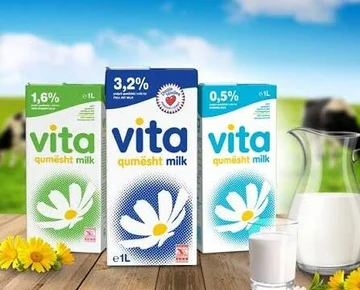
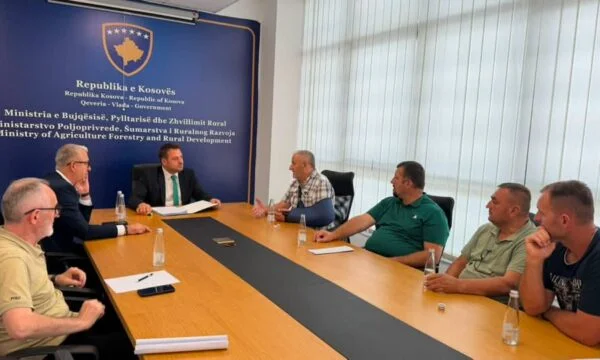
(2 hours ago)The Ministry of Agriculture, Forestry and Rural Development has reacted to the protests of milk sector farmers following the close of the Milkyse “Vita”. Farmers met with Minister Armendi Muja
The ministry said it respects their right to reaction, but that the measures taken do not mock primary producers.
According to the ministry, farmers remain key partners in the supply chain and are not subject to administrative procedures that are under way against food business operators.
The communique stresses that institutional actions are related to ensuring food safety, respecting standards and functioning of the market by law.
Full communication:
The Ministry of Agriculture, Forestry and Rural Development respects farmers' right to protest and understands their concern about cutting milk collection and lowering its price. Farmers are the base of local production and the most important partner of institutions in ensuring domestic food safety.
It is important to note that farmers are not the subject of the administrative procedures that are under way. These procedures are exclusively about respecting legal obligations by food business operators and do not violate farmers' work or contribution.
The ministry is working with all responsible institutions and sector representatives to ensure that the collection of fresh milk continues and that farmers do not suffer economic damage as a result of the actions or decisions of economic operators.
Actions taken in the milk sector are not measures against the processing industry. They are measures for strengthening food safety, consumer protection and creating equal conditions for all operators operating on the market. Respecting food safety standards is not only a legal obligation but also an economic imperative. The quality of products, the traceability of raw materials, the precise declaration of product composition and transparent labels are the basis on which consumer confidence is built, and the competitiveness of local production. For this reason, the ministry has strengthened official controls at the border and market, intensified laboratory analyses, and established mandatory reporting on the first materials used in the milk sector. These measures apply equally to all operators, and they intend that any product be in line with legislation in force. When products are produced and traded by regulations, consumer protection is protected, the farmer is protected, and honest competition is protected.
On the contrary, disrespecting standards could harm market trust, create unfair competition against producers who respect the law and put pressure on local production.
Farmers have the right to expect their milk to be assessed correctly and not to be unfairly replaced by alternatives that are not declared or used according to legal requirements.
Consumers also have the right to be informed correctly of the composition of products they buy. The ministry remains committed to protecting public interest, implementing the law equally and supporting a sector of milk that is stable, transparent and competitive. The administrative procedures will continue on the basis of law and evidence, without being influenced by any pressure, while institutions will continue to work to ensure that farmers do not bear the consequences.
The ministry calls on all sector operators to respect legal obligations, co-operate with responsible institutions and contribute to a solution that simultaneously protects farmers, consumers, the processing industry and local production. Only through lawlessness, transparency and common responsibility can a sector of milk that enjoys citizens' trust and creates long-term prospects for all participants in the chain of value./ Periscope.