10 minutes ago
EU says Lajcak's mediation is failure, blames Kosovo and Serbia for keeping their word
Periskopi(2 years ago)
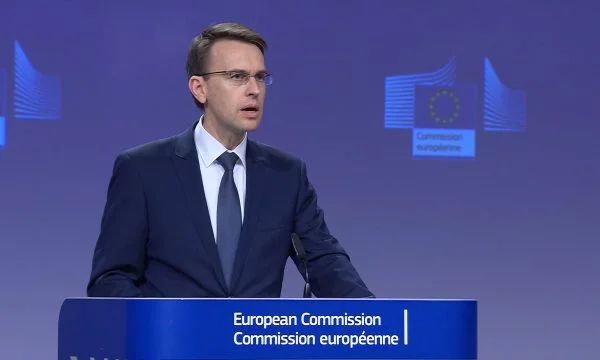
(2 years ago)The European Union (BE), says the emissary for the Kosovo dialogue -- Serbia, Miroslav Lajcak -- has done the job properly and that its commitment to the issue cannot be called failure. EU spokesman Peter Stano, in a statement to the media, said their role is not to force parties to behave [...]
EU spokesman Peter Stano, in a statement to the media, said their role is not to force parties to behave as Europeans, but only to facilitate that. He said the blame is Kosovo's and Serbia's why the required rather than EU results were not achieved.
“What are the lessons we learned? There's a clear lesson, if the parties don't want to move, no one will be able to force them. Our role as facilitator in the Pristina-Belgrade dialogue is to facilitate, help become Europeans, help start to behave in a European way and find compromise solutions on important issues for their citizens. The fact that they were unable to do so so far and move forward in the normalisation process is not due to the EU's alleged failure as a facilitator, but because of their failure to keep their word. We'll get there, beyond the mandate of a special emissary”, he said.
Stano stressed that Lajcak did his best and that he had the support of 27 EU nations.
According to him, the Ohrid Agreement is not a failure just because it has not been signed, until it reiterated the EU's stance that it is legally binding for both countries.
Stano stressed that unless steps of implementation are taken, Kosovo and Serbia harms themselves and their citizens.
The “is actually not correct to say it was a failure, for the fact that the two sides have not signed the Ohrid Agreement. We've explained dozens of times that there were no questions about the signing. This agreement is legally binding, and there is no better explanation of the fact that it is legally binding, since it has become an integral part of the path to membership for both Kosovo and Serbia. So they do not take steps towards implementation, they hurt themselves, the European future and the benefits their citizens could enjoy”, he said.
Among other things, he said the EU will continue efforts to advance the question of dialogue.
“So we will continue, the EU has a defined international mandate, the EU High Representative is the facilitator, whether the name will be Joseph Borrell or whoever will come. The Special Emissar, we are still with his ongoing mandate and continuing his efforts, and there is no better example of how he does the job, as he is devoting his time and energy to a number of meetings, to resolve the last issue (the dinar) in the continuation of unilateral issues that are bringing dialogue into continued management of crisis”, he said.