40 minutes ago
What lies behind the request of the Serbian List that Serbia declare the Kosovo Police a terrorist organisation?
Periskopi(3 years ago)
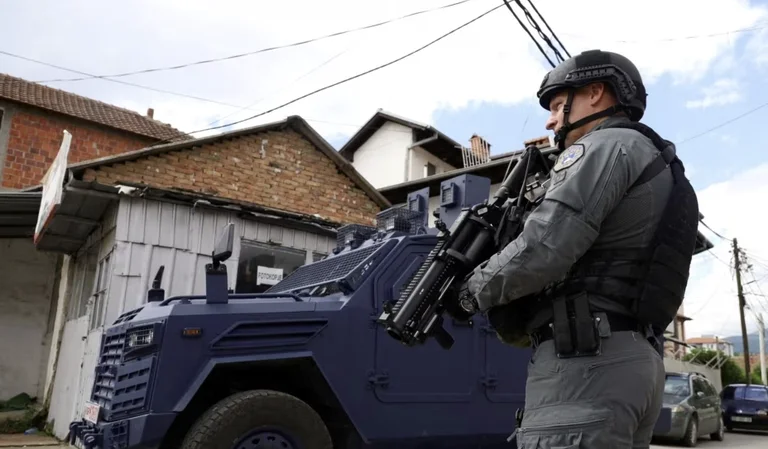
(3 years ago)For Kosovo it is “absurd”, for Serbia it is “political message that requires answers from the state”. These are the untiltal reactions of the two state officials to the request of the Serbian List, the leading party of Kosovo Serbs, so that the government of Serbia will declare Kosovo Police a terrorist organisation. The request of the Serbian List was published a few days after [...]
These are the untiltal reactions of the two state officials to the request of the Serbian List, the leading party of Kosovo Serbs, so that the government of Serbia will declare Kosovo Police a terrorist organisation.
The request of the Serbian List was published a few days after the Kosovo Government, June 29th, declared the terrorist “Civil Assistance” and “North Brigade”, two organisations believed to operate in northern Kosovo.
The charges of terrorism were made at the time of increasing tensions in northern Kosovo, but also at the time when the international community expects implementation of the agreement and dialogue between Kosovo and Serbia.
What have Kosovo and Serbian officials said?
Kosovo Prime Minister Albin Kurti has called “absurde” the request of the Serbian List on 5 July.
For Serbia's Foreign Minister, Ivica Dacic, this request is a political message requiring Serbia's state response.
On July 3rd, Daciq told B92 television that Pristina's goal is for organisations designated by the north of Kosovo to be declared <x0-terrorist”, to cause fear and displacement of Serbs from that space.
Kosovo proclaims “Civil Assistance” and “North Brigade” terrorist organisation
Daciq asked whether Belgrade should publish the names of all Albanians who, according to him, “over the years demonstrated against Serbia”, as well as that “Serbs have the right to express their political views”.
Naim Leo Beshiri, from the nongovernmental Institute for European Affairs in Belgrade, estimates that after the Dacic minister's statements there is not Serbia's clear foreign policy strategy and that they serve “the goals of daily policy”.
“Dacic is sending message to the international community that the way Kurti (Kosovo Prime Minister) is leading politics in recent months is jeopardising dialogue”, he says.
Serbian List request, “portunism
The Serbian List, on 3 July, has asked the Government of Serbia that “special” of the Kosovo Police, intelligence structures and all “co-workers of those structures” declare the terrorist “because they threaten peace in these” spaces.
Serbian List Seeks Serbia to Declare Kosovo Police Terrorist Organisation
The Serbian list did not answer the question of whether it has received answers from the Government of Serbia regarding its request.
Otherwise, the withdrawal of Kosovo Police Special Units from northern Kosovo is one of the demands of Kosovo Serbs, in order to, as they stress, reduce tensions.
But Bojan Elek from the nongovernmental Security Policy Centre in Belgrade believes that the Serbian List, with such actions, is trying to capitalise on the situation and further escalate the situation, when Kosovo is “under great international pressure”.
It's political opportunism that has no effect. Even if the Government of Serbia agrees, Serbia has no executive powers in Kosovo”, Elek said.
Kosovo, currently, is facing punishment measures imposed by the EU due to, as it has been said, failure to meet the requirements for breaking the situation in the country's north.
The EU temporarily suspended the work of all working groups for the Stabilisation and Association Agreement, which is the first step towards Kosovo's membership in the bloc, as well as calls for Kosovo's participation in high-level meetings.
Kurti reacts after EU punitive measures
Also, the EU suspended certain funds, planned for Kosovo.
Naim Leo Beshiri, from the Institute for European Affairs in Belgrade, says there is no basis for such a request of the Serbian List, the political party operating within the “Kosovo Constitutional Council”.
“This is their populist response to the proclamation of organisations in northern Kosovo as terrorists. It's nothing unexpected, but it certainly doesn't contribute to calming tensions”, he says.
Beshiri, too, stresses that Serbia, in a non-x0-technical way” could declare Kosovo's special terrorist organisation, but that would cause ridicule by international organisations.
“What effect would this have on Kosovo forces? Almost no effect”, he says.
Even Kosovo decision “without effect”
Beshiri adds that even Kosovo's decision to declare organisations in northern Kosovo as terrorists does not produce particular effect in Serbia.
Those groups of people receive support from Belgrade, not only politically, but certainly from security services”, he says.
Parasely, “Civil Protection” and “North Brigade” in Kosovo have been declared terrorist.
“Civil Protection” has been officially disbanded in northern Kosovo in 2015/16, based on the Brussels Agreement under dialogue between Pristina and Belgrade.
US: Statement of two organisations in the north as terrorists, uncoordinated decision · Global Voices
The workers of that organisation were later integrated into Kosovo institutions. According to data from the Kosovar Centre for Security Studies, “Civil Protection” in Kosovo consisted of members who had passed military training, as well as considered very dangerous for the security of Kosovo.
Can't confirm whether after the official break-up, the “Civil Protection” has operated secretly or renewed.
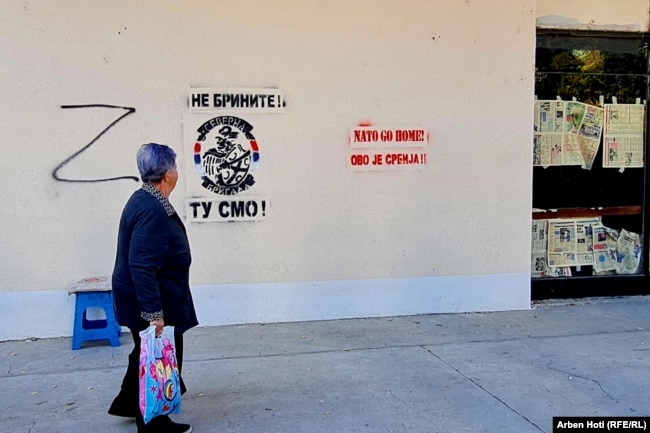
The “North Brigade”, since late last year, has signed X-rays north of Kosovo. Some of them are: “Don't worry! We're here! We're waiting. In some cases, it also established as “Brigada North”.
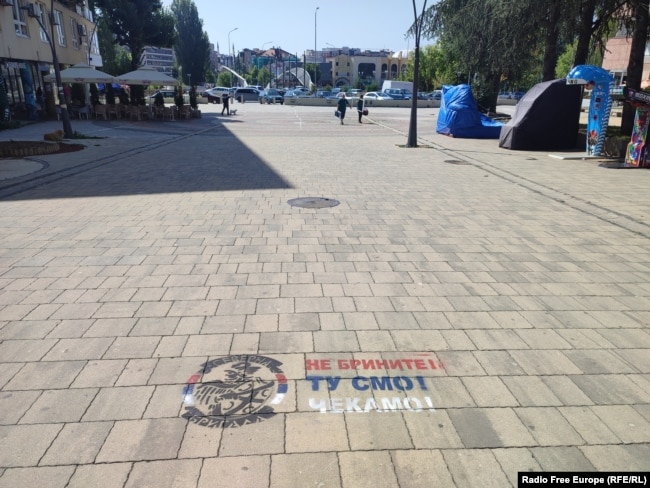
It is not known who is behind it, nor if it comes to any formal organization.
Kosovo Prime Minister Albin Kurti said these organisations have conducted shares “with terrorist elements”, such as armed attacks on Kosovo Police members, members of the European Union Mission for Rule of Law (EULEX) and Mission soldiers NATO in Kosovo (KFOR).
The United States of America (SHBA) estimated that the government in Pristina, the decision for terrorist organisations has not co-ordinated with them and other international partners.
What is terrorism in Serbian regulations?
The criminal act of terrorism, in Serbia's Penal Code, refers to “fear of population” and the threat of <x2 basic constitutional, political, economic or social structures of Serbia, foreign countries or international organisation”.
It involves several criminal acts such as kidnapping, the destruction of a state or public object, the use of nuclear, biological, or chemical weapons.
Serbia's Penal Code also mentions the terrorist union as a criminal offence.
The measure of punishment is different, depending on the kind of criminal acts committed.
Bojan Elek of the Centre for Security Policy in Belgrade says there should be an indictment for criminal acts before Serbia names any organisations as terrorists.
Elec says Serbia adheres to the list of terrorist organisations approved by the UN Security Council. These are organizations like I The SIS (the extremist Islamic State group), which, he says, are under international community sanctions.
The charges on the road to Kosovo dialogue- Serbia
Naim Leo Beshiri believes Kosovo and Serbia officials are behaving contrary to what the European Union currently expects.
“There is great pressure on Belgrade and Pristina to reach a legally binding agreement by the end of the year, and it seems that Belgrade and Pristina are trying to do everything to present the other side as antagonist so as to preserve tensions that could prevent the signing of such a” agreement, Beshiri says.
Kosovo, Serbia blame each other for tensions in the north
He emphasises that the two sides seem to want to enter next year, which is the “election year in the EU and the US”.
“This meant that for another two years there will be no visible progress in the dialogue, because formation of the political majority in the EU will be expected, but also to see who will win the US presidential elections”, Beshiri points out.
Kosovo and Serbia have been dialogueing with EU mediation for more than ten years, under which more than 30 agreements have been signed. However, most of them were not implemented in the field.
In Brussels, on February 27th, they reached the agreement towards normalising relations, while on March 18th in Ohrid they agreed to Anex for its implementation.
However, in late May there was tension in northern Kosovo when the young Albanian mayors of Zvecan, Leposaviqi and Zubin Potok entered municipal buildings with police assistance, despite local Serbs who boycotted the elections.
Brussels has repeatedly urged Kosovo and Serbia to take steps to reduce tensions and return to dialogue in order to normalise relations. / REL