CNN: Netanyahu seeks emergency meeting with Trump amid mounting tensions over negotiations with Iran
 17 minutes ago
 (3 years ago)
In the first week of an amnesty after the mass shooting shocked their country, Serbs delivered more than 13,500 weapons from small arms, hand grenades and antitank shells and hundreds of thousands of bullets. But in a nation deeply divided with deadly weapons, where war criminals are praised,... many [...]
In the first week of an amnesty after the mass shooting shocked their country, Serbs delivered more than 13,500 weapons from small arms, hand grenades and antitank shells and hundreds of thousands of bullets.
But in a nation deeply divided with deadly weapons, where war criminals are praised, many doubt whether the president's promise to the “disarm the country will suffice, writes the prestigious British medium The Guardian.
Otherwise, 18 people were killed and 21 injured this month in two separate shooting cases in just as many days.
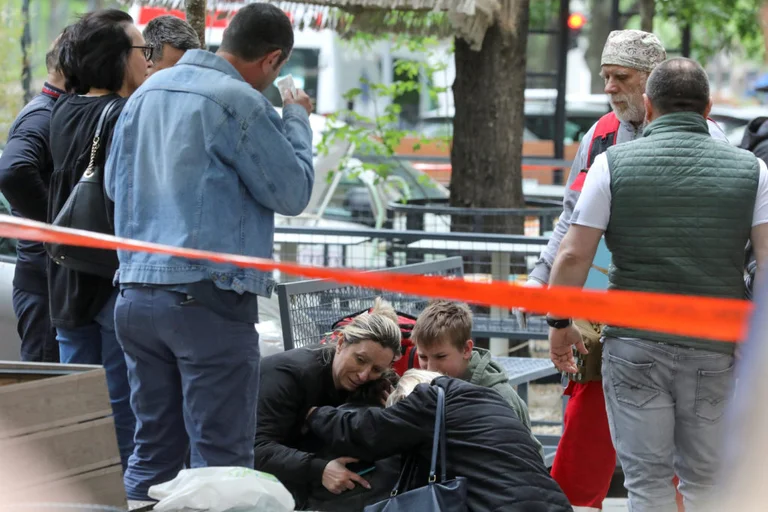
In Belgrade, an attacker allegedly a 13-year-old student using his father's two pistols shot eight students and a security guard to death.
A 10-year-old girl injured passed away Monday, bringing the number to 10. Six other children and a teacher have been injured.
The suspect is in custody and subject to psychological evaluation, but is too young to be held accountable.
His father is accused of training his teenager to use weapons and of failing to secure the weapons.
Meanwhile the next day, a man who <x0undte” a assault rifle and a gun killed eight people and injured 14 others in two villages about 50 km south of the capital.
A 21-year-old suspect is on hold.
The president, Aleksandar Vuciq, a pro-Kremlin populist, whose political roots are in the nationalism of the rightist extreme, who was briefly minister of information under Serbian leader Slobodan Milosevic, who died during his war crimes trial, described as “an attack on our entire country”.
After that, Vuciq declared a month's amnesty of arms, promising that people could hand over illegal weapons, ammunition and ammunition, as well as legitimate-owned weapons they no longer wanted, anonymously and without fear of prosecution, The Guardian recalls.
For this action, Vuchic received some praise, especially abroad.
He has further pledged a two-year rhetoric for new arms licenses, a review of current licenses, more psychological checks, 1,200 additional police officers in schools and longer detentions for weapons crimes and unlicensed weapons.
But while their president was promising a sharp response, urgent measures and heavy sentences” to tackle armed crime, many Serbs were asking what else could be hidden behind him and how far away Vuciq, who has been in power since 2014, may have contributed to excessive domestic violence via politics and television, points out the British media.
In this direction, The Guardian points out, some support government measures.
There's a lot of violence. I don't know how they haven't handled this issue so far”, Ivan Petrovic, a pensioner, has said.
But others are not relaxed.
I don't know what to think. I have a child and I don't feel safe...”, says Vesna Dragispic.
Thousands of people took to the streets of Belgrade on Friday in a second protest march led by the opposition “Serbia against violence”, demanding the resignation of Interior Minister ʹ the education minister has already resigned and demand an end to what many see as a culture of violence promoted by the media and politicians of the ruling party.
Vucic has accused his opponents of trying to exploit tragedies for political purposes and has announced plans for his rally in late May.
On Sunday, he said he would withdraw “soon” as leader of his ruling Serbian Progressive Party, promising new parliamentary elections before the end of September.
Despite that, The Guardian further writes, no one knows how many weapons there are in Serbia, a country that allegedly has about 6.8 million people.
Maja Bjelos, a researcher at the Belgrade Centre for Security Policy, says it was unclear how many weapons were registered, and let alone how many were held illegally.
Police have said that there are over 900,000 firearms held legally by citizens... The president said there were 400,000, then two days later 700,000. We have government sanitizers. But estimates of total legal and illegal amounts range from 1.5 million to 3 million. This is scary”
According to her, the remaining weapons of the Yugoslav wars of the 1990s constituted only part of the arsenal.
“There is a tradition of firearms in the house, past generation after generation, of shooting in the air during the” holidays, she said.
In addition, a role, according to her, is the poor “security in weapons factories and police stocks... And criminal networks, both inside and outside Serbia”.
She estimates that even the depressing and kneeling measures would not help.
Serbia has among the most per capita police officers in Europe, but this has not allowed citizens to feel more secure or solve the problem of violence”.
Despite access to weapons, mass shooting was rare in Serbia earlier this month; the last major incident was in 2013, notes The Guardian.
But amid difficulties, the legacy of war, the cosmic corruption and high levels of violence in society, politics and the media, experts have long warned that the presence of so many weapons posed a threat.
Zoran Gavrilovic, a sociologist at the Bureau for Social Research, stresses that the shooting had not surprised him.
The social climate was leading this direction. We have a violent society. It was only a matter of time for it to explode”, he said.
Many blame Vuciqi, if not directly, accusing the president of deliberately maintaining a climate of violence, writes The Guardian.
“indirect, Vuciq is the chief guilty ] he is the one who created this atmosphere of hatred and all attacks on his media”, thinks Marinika Tepiq, a senior opposition politician.
Vuciq and his ruling party regularly look down on their political opponents and foreign rivals as “um”, <x2Hedids” and “pedofil”, while parliamentary sessions are dominated by harsh and aggressive insults.
“We will not recover, even if all weapons are removed and all sociopaths are thrown behind bars, as long as our fate is shaped by the one who unblocked and passed that evil”, the opposition leader Zdravko Ponos wrote on Twitter.
According to The Guardian, nearly 450,000 people have signed a petition demanding that two pro-government public television stations be obtained their licenses due to violent reality shows that, according to some estimates, have made up 60% of their latest programmes.
Mafias, war criminals and notorious violent football hooligans regularly appear on scenes that have included beating women and gun threats, running alongside political programmes featuring Vucinqiqi and his allies that molest their opponents.
“There is a range of populism in Serbia designed to promote Vuciqi and denigrate its opponents”, according to Gavrilovic. “The love of reality shows serves to legitimise aggressive political vocabulary. The hate speech, by Serbia's leading social and political actors and through its mainstream media, has become the country's number one language”.
Since Vuciq came to power, Serbia has fallen from 54th to 93rd place from 180 countries in the World Reporters' Freedom Reporters Without Borders index. Independent media have been suppressed progressively, and journalists have been attacked.
In theory, a candidate for EU membership, estimates The Guardian, the country is divided between the West and its historic political and economic ties with Russia, a Christian Slavic and Orthodox ally.
In a tough report last week, the European Parliament highlighted several obstacles to accession, including Belgrade's refusal to join EU sanctions on Russia and its reluctance to recognise Kosovo as an independent state.
Violet von Cromon, a German eurodeputte and parliament rapporteur for Kosovo, said rule of law, media freedom and relations with Kosovo and Moscow were the main issues.
Serbia must clearly show that it wants to join the EU”, she said. “The time of lullaby on two chairs and balance between west and Russia has ended”.
While Clemen Groselj, a Slovenian eurodeput, stressed the lack of progress in an independent judiciary and media that were not independent “s and no targets”.
“I'm very pessimistic”, he said. “When I visited after Milosevic's fall, it was a positive energy. Unfortunately, it faded; there is no real and honest political will for changes to be part of the EU. Serbia will soon have to make a” election. /Telegraph
an hour ago