CNN: Netanyahu seeks emergency meeting with Trump amid mounting tensions over negotiations with Iran
 18 minutes ago
 (3 years ago)
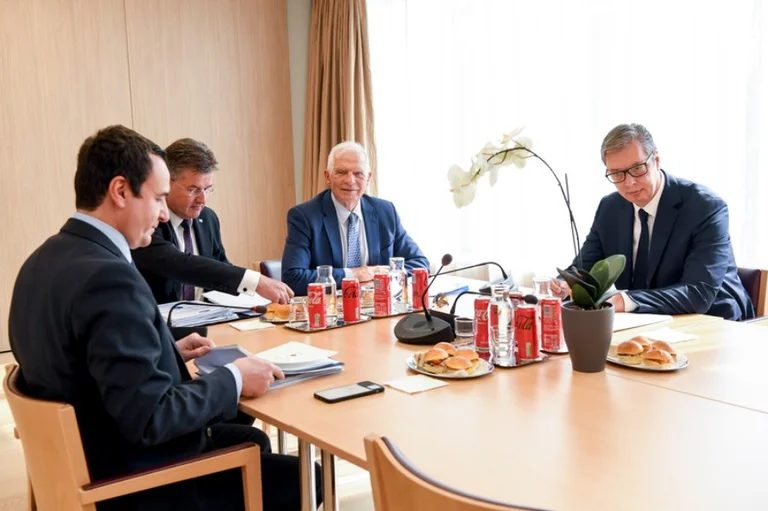
Just days after the European Union trumpeted an agreement between leaders of former wartime enemy states Serbia and Kosovo, it seems that all sides agree on one thing: the truth is that no agreement has been reached, Reuters writes. After organising talks between Serbian President Aleksandar Vuciq and Kosovo Prime Minister [...]
Following the organisation of talks between Serbian President Aleksandar Vuciq and Kosovo Prime Minister Albin Kurti, EU foreign policy chief Josep Borrell, said on Monday he was pleased to announce that they “have agreed that no further talks are needed” on an EU proposal to establish their relations on the road to normalisation.
Borrell warned that the pair should agree to an annex on implementation of the plan, but the EU diplomatic service continued and published the text of the basic agreement that night, adding the feeling to a historic moment.
Any agreement on normalisation of reports between Belgrade and Pristina would be an incentive for EU ambitions to become a larger geopolitical player and reduce the risk of renewed violence between the two Balkan neighbours.
The text was not signed by leaders, however, and since then it has become clear that neither of the main players sees it set up yet.
The two sides have agreed to such an attitude (not to continue discussing the basic text), but that does not mean that the parties have officially accepted the agreement. The accession takes place only with the signing of both sides”, Kurti said in the Kosovo Assembly on Thursday.
Vuciqi stressed on Tuesday that he will not sign any text until he is satisfied with the annex. He also stated that he would not sign anything that recognises Kosovo “officially or informally” and would never be reconciled with its membership in the United Nations, the Reporter broadcasts in Albanian.
Leaders now face new international pressure to reconcile the entire agreement when they meet in the North Macedonia Lake of Ohrid on March 18th, with the EU once again comforting.
The EU plan does not force Serbia to recognise independent Kosovo, but it would recognise documents such as passports, diplomas and license plates and would not block Kosovo's membership in any international organisation.
Difficult Issue
Officials say the most difficult issue to address in talks on the implementation annex is a proposed association of Serb majority municipalities in Kosovo.
Kosovo's ethnic Albanian majority leaders have argued that such an organ would give Belgrade a major impact on their country, while Serbs say it is necessary to protect their rights.
Kurti said Tuesday that he would not agree with any official organ that violates the Constitution of Kosovo, is monoethnic or gives Serbia “ ” to intervene in Kosovo issues.
Despite emphasising their red lines, Vucinqi and Kurti seem to be leaving room for maneuvering.
While Vuciqi says that neither “officially” will recognise Kosovo, such a definition is ultimately a matter of interpretation.
When it comes to UN membership, only Security Council members can block the application. Serbia's traditional ally, Russia, could undermine Kosovo, but single Belgrade cannot decide whether his neighbour joins the UN.
For a majority Serb association in Kosovo, officials from the EU and the United States have also put pressure on Belgrade and Pristina to reach a HINA agreement that it could be legally established and without giving Serbia unnecessary influence.
A senior EU official said that a general agreement would be final only “when we also know exactly how to apply HINA within what deadlines, from which”.
This document as it stands, without the implementation part, is a political statement. And we've had a lot in the past that haven't been implemented”, the official said, speaking on condition of anonymity.
The official said that both sides had made significant progress, but the last “killometer is always the most difficult”.
an hour ago