28 minutes ago
Weapons factory in Serbia acknowledges grenade launcher confiscated in Banjska are in its production archives
Periskopi(3 years ago)
(3 years ago)Two M93-type grenade launchers, confiscated after the armed attack on Zvecan Banjsk, are part of the Zastava weapons factory production archive in Kragujevc. That is what Balkan Radio Service Europe Free from this arms producer in Serbia said after request for access to information [...]
Two M93-type grenade launchers, confiscated after the armed attack on Zvecan Banjsk, are part of the Zastava weapons factory production archive in Kragujevc.
Thus said the Balkan Radio Service Europe Free from this arms producer in Serbia, following demand for access to information of public importance.
This is the first time that the largest Serbian arms factory confirms information released earlier by authorities in Kosovo that the group of armed men who attacked the Kosovo Police had weapons produced in Serbia.
However, what remains unknown even after the response sent by Zastava is that when two cited grenade launchers were produced, who were sold, and how they ended up in the hands of masked attackers who clashed with the Kosovo Police, where sergeant Africa Bunnjak was killed during the attack. Three Serb attackers were also killed during the shootout.
Separate investigations are under way in Kosovo and Serbia.
The responsibility for the attack has been taken over by Milan Radojic, former deputy chairman of the Serbian List, the main party of Serbs in Kosovo, who enjoys Belgrade's support.
In the days following the attack, authorities in Kosovo displayed confiscated weapons. According to weapons that were exposed, REL identified serial numbers of grenade launchers and later November 2nd addressed Zastava for additional information, whether these weapons were produced in the factory of this company, and if so, who had been sold to.
After the company didn't answer the question, REL on October 20th submitted a request to Zastava for access to information of public importance and Zastava returned after two weeks.
The Zastava weapons factory, which has produced identified grenade launchers, refused to provide information about when and who were delivered to grenade launchers.
Zastava argued he refuses to show more detailed data because “this would seriously jeopardise state protection and national or public security”.
He also said that this would jeopardise “international reports” and constitute “violation of international arbitrage law rules”.
But why such danger exists, the Serbian arms factory does not explain.
Under the Law for arms production and trade in Serbia, the producer of weapons and military equipment is obliged to keep permanent evidence of the weapons it produces. Among these data include data on type, quantity, serial number, customers, and delivery dates.
After the seizure of weapons in the Zvecan Banisca, REL identified the Black Arrow M93 sniper with a serial number.
At the request sent to the Zastava factory, there were also questions about this sniper, but Zastava said he does not exist in our “archive.
Another weapon, the M69 type mortar used in the attack, was said to be not part of the Zastava weapons factory's production programme.
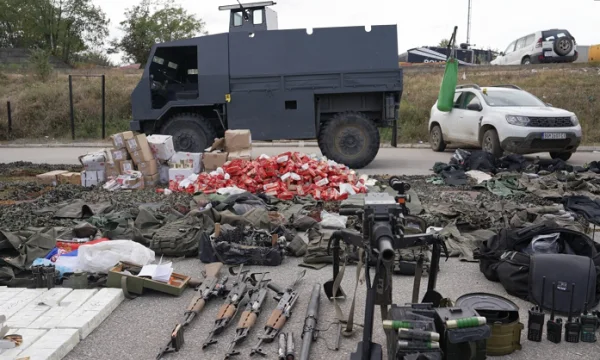
Following the September 24th attack, Kosovo Police exposed rocket launchers, grenade launchers, numerous automatic rifles, snipers, military vehicles, explosives, detonators, ammunition and other weapons, which said they were confiscated in Banjska.
Authorities in Kosovo have blamed Serbia for standing behind the group that carried out the attack, both in terms of gun support, but also by offering training at military bases in Serbia.
Serbia has denied any involvement in the attack, which Kosovo considers a terrorist attack. / REL/