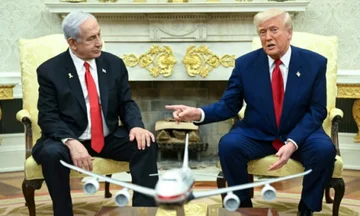
CNN: Netanyahu seeks emergency meeting with Trump amid mounting tensions over negotiations with Iran
 19 minutes ago
 (3 years ago)
While Israeli forces are continuing the military campaign against Hamas at the Gaza Strip and calls for ceasefire are increasing, analysts say pressure is already under way on Israel to propose a solution for post-war Gaza. In an interview for Voice of America, Alon Pinkas, Israeli diplomat and foreign policy adviser [...]
While Israeli forces are continuing the military campaign against Hamas at the Gaza Strip and calls for ceasefire are increasing, analysts say pressure is already under way on Israel to propose a solution for post-war Gaza.
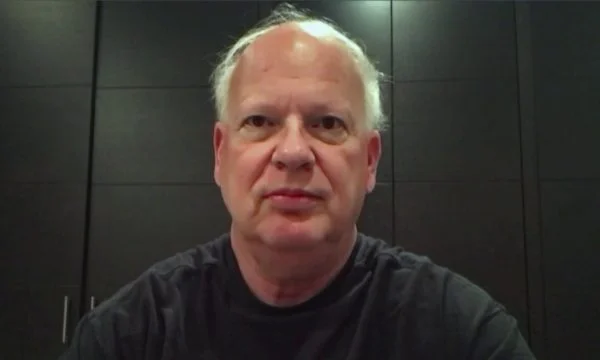
In an interview for Voice of America, Alon Pinkas, Israeli diplomat and foreign policy adviser to several Israeli ministers and prime ministers, said an international presence in Gaza, similar to international post-war administration in Kosovo, could lay the foundations of a new political process as a way out of the conflict in the Middle East.
Voice of America: Mr. Pinkas, in a recent letter, you note that there are differences between Israel and the United States regarding the period after the war ended in Gaza. What are these differences, you think?
Alon Pinkas: Yes, there are differences in access between the United States and Israel. In the first week (of conflict), the United States sent aircraft carriers, President Biden and Secretary of State three times visited Israel before differences were seen. For the United States at that time, the main concern was to prevent escalation. But it's been a month and the emphasis now is not on escalation, but on how Americans see it, unlike Israel, the post-war plan. Americans are really telling Israel how in every war, as Carl von Clessewitz teaches us, war is a continuation of politics, but by other means, which means a political goal is needed, which serves military resources. What we are now seeing is a lack of strategic thinking. We're looking at what the reconciliation is about shooting Hamas, destroying Hamas and taking Hamas down. But what happens the next day? And there are two-three main points where there is a difference between Israel and the United States actually. The US is asking who will rule Gaza after the war ends. Surely it will not be Israel. It's probably not the Palestinian Authority. It certainly will not be Egypt. And it's pretty sure it won't be the United States. The U.S. are asking Israel if they thought about it? The answer is no. The second question is, how long do you plan on staying in Gaza? If Israel intends to take over the Gaza Strip again, then that changes the whole dynamic of the post-war conversation. And third, how long will military operation last? The number of victims is such, which will impact the final solution, or the post-war scenario.
Voice of America: However, Prime Minister Netanyah said Israel would oversee Gaza for an unlimited period of time after the war. You personally have warned against such a solution and have proposed alternative solutions, including a model of international presence, as in Kosovo, that would rebuild and govern before transferring competencies to local institutions. Can you explain how such a pattern would function?
Alon Pinkas: In interviews with American televisions, Mr. Netaynah made a very unclear comment that Israel will shoulder general security responsibility for an indefinite deadline. I'd like to know what that means and I don't believe President Biden has any idea what that means. I don't believe that in the UN or NATO, they know what the overall responsibility for security means. If Netanyah plans to stay in Gaza, he has to say that clearly. What I'm proposing is something I've seen lure Americans into as an idea. They're calling it international force, international intervention. The model is Kosovo, only for the fact that Kosovo is the last example. East Timor is also another example. But Kosovo is the case people still remember. The idea of a protectorate, a new model, different from the old one after World War II when Africa, Asia and Southeast Asia were decolonising. What is clear is that Israel cannot rule and Palestinians cannot govern, and for this reason, an intermediate period is needed during which an international force to form a protectorate of the model that would build, operate and transfer (compets). It could start in Gaza, but it could expand to include the West Coast and create the foundations of a process, which I don't want to call a peaceful process, but at least the foundations of a political process. Israel and Palestinians must agree to this, while the United States has given signs that agree with the British. To become acceptable to Palestinians, there must be an Arab component so that Russia and China do not use veto rights, if such a plan reaches the Security Council.
Voice of America: What organization, or institution, would such international intervention be required? In 1999, in the case of Kosovo, geopolitical reality was different. Regional structures such as the European Union and NATO were ready to intervene. Where would the building of consensus take place today?
Alon Pinkas: It's true and I'm not making a complete comparison and ending up comparing both Gaza and the West Coast and Kosovo. It was about Yugoslavia, ethnic conflicts in the region, regional powers, and other powers. At that time, the European Union was consolidating, Russia was weak, China was far from being world power, and the United States during the late 1990s were taking over in the single-pollar system. So I'm not comparing the two. What I'm saying is that this can happen if there is reconciliation, which means whether the Palestinian Authority agrees and Saudi Arabia helps finance an international mission, if the United Arab Emirates assist in creating it, if NATO is willing to listen to civil experts, because no one expects military force for now. It can also be the strength of the United Nations that operates under United Nations supervision. If you tell me there are 27 good reasons why this won't work, I'll agree with you. But I have 28 reasons why nothing else worked. We must be open-minded. I'm telling Palestinians to be open to a peace process whose end would result in the birth of their country. They should be involved in the process and not be rejected. Don't say no, don't say it won't work unless they want a new wave of violence after two, three or four years.
Voice of America: What is the political situation in Israel and Palestinian territories today, and how would you describe it?
Alon Pinkas: There's a complete gap, an entire vacuum. Despite all the differences between Israel, which is a functional state, the Palestinian Authority, which is an almost dysfunctional entity and Gaza under Hamas, which is totally dysfunctional, there is a common denominator, their political leadership has fallen into a routine, with no imagination, without a new approach, thinking only about today, not tomorrow. So October 7 occurred. So there are very clear weaknesses in the political leadership of both countries. In the case of Palestinians, we know their political weaknesses and attributes. But in Israel at the moment we have an extreme right government, which I don't think will survive the war, this failure and this crisis. The government will be disbanded within months, if not before. Without entering speculating discussions, in Israel at this moment in power there is a government that refuses to seriously discuss such an idea. The Palestinian side needs clarity. They want to know how things will end up in Gaza before they get into a political process.
Voice of America: Do you think there is still a danger of regional escalation and the expansion of this conflict in a comprehensive regional war?
Alon Pinkas: Absolutely. There are two types of escalation. The first, the planned, deliberate escalation of Hezbollah, the rainy militant group in Lebanon, which is highly armed, supported, financed and armed by Iran, which would make a deliberate decision to escalate the conflict to save Hamas and create difficulties for Israel. But another equally dangerous form of escalation is accidental escalation. This kind of escalation that would be the result of a miscalculation of the parties' goals, with attacks and revenges that unwittingly trigger sweeping war. In Lebanon, the conflict is even broader, which is why the United States brought reinforcements here.
Voice of America: What do you think will happen in the future with the region, Israel, Palestinians? What's the epilogue?
Alon Pinkas: It is difficult to look beyond the destruction, shock, distrust of what happened October 7th. But if there's luck in the disaster, then this event of this magnitude will force the parties to do so. It will take them a few months to realize that such a situation is unstable, that it can happen again another October 7th... Saudi Arabia realizes that something like that can happen to them and the U.S. won't want them back into this situation. So I see an opportunity I wouldn't bet on, but I still see a possibility that both sides start thinking differently.
an hour ago