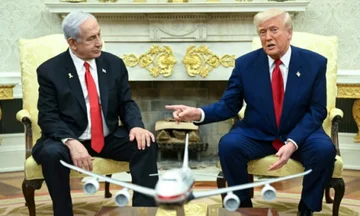
CNN: Netanyahu seeks emergency meeting with Trump amid mounting tensions over negotiations with Iran
 23 minutes ago
 (3 years ago)
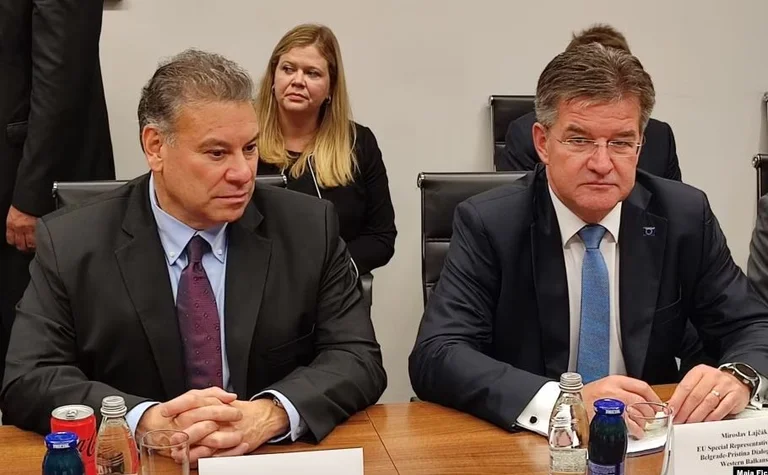
The European Union's charge for Kosovo-Serbia dialogue, Miroslav Lajcak, accompanied by senior advisers of the leaders of Germany, France and Italy and American envoy for the Balkans Gabriel Escobar, remain in Kosovo and Serbia on Saturday 21 October. They meet the two leaders of the two countries, Kosovo Prime Minister Albin Kurti and [...]
The aim of this visit is to achieve a concrete progress in implementing the Agreement on the road to normalisation and extension following recent developments”, said EU spokesman Peter Stano. According to him, the European Union and the United States are major supporters of the process of normalising Kosovo-Serbia relations and the European future of the entire region. spokesperson Stano said the EU has “clear expectations by the parties to continue the normalisation process and meet their obligations unconditionally and unconditionally”.
Kosovo no longer trusts dialogue in previous format
On the Kosovo side, trust in the previous format of dialogue appears to be lacking. Kosovo President Vjosa Osmani said, that the dialogue process with Serbia should be “ridized” following the September 24th attack, re-evaluating the official Pristina call “for Serbia's sanction and the priority to be given security in Kosovo.
“The whole process of dialogue should be re-enlisted, if I can call it that way, in the way September 24 is considered. If the September 24th is ignored, the violation of Article 3 of the agreement, which requires that neither side use violence as a tool or commit acts of aggression against the other, then, indeed, the greatest damage is done to the dialogue process itself. The biggest damage is done to peace and stability in the region”, President Osmani has said in an interview for local media KTV.
Even Prime Minister Kurti says that in terms of dialogue, “ai cannot continue as if nothing happened on September 24th”. Following a meeting held with German Parliament's Foreign Affairs Commission Chief Michael Roth, under the Berlin Process Summit that was held in Tirana, Albin Kurti, said the next “dialogue chapter for normalisation should take into account Serbia's aggressive action through the September 24th” terrorist attack. The ongoing “should be balanced, respected and implemented in full of the Bazic Agreement and its annex. Serbia is driven by the public and actual rejection of parts of the Basic Agreement, which concerns Kosovo's dephacto recognition and our territorial integrity”, Prime Minister Kurti has said.
In this regard the German government's envoy for the Balkans, Manuel Sarazin, has said that the “agreement on Brussels and the annex of Ohrid are legally functional, but a political redeployment of Kosovo and Serbia is needed for their implementation”.
“We strongly believe that it is not a good idea to focus solely on de-progress, on the same side, we should also try to implement the Ohrid Agreement again, and make a further push to get back the overall positive result there. And this is what you can expect from Germany and the European Union, that even now, and especially now, we will try to make a new push for the implementation of the Ohrid Agreement on the ground on both sides, and we call on both sides to be constructive and positive in this” process, Sarrazin has been expressed for local Kosovo Press.
“Dialolog doesn't make sense without a clear stance on Serbia”
The visit of Western Ethiopians to Kosovo and Serbia is positively assessed in Kosovo. Political affairs acquaintance Blerim Burjani told DW that he hopes Westerners will come with a new proposal to meet the Ohrid” agreement. “The situation and circumstances call for urgency in finding a final solution to mutual recognition. After the event that September 24th, dialogue has no meaning without a clear stance on Serbia -- recognition de jure of Kosovo -- that is, a new package to complete the Ohrid Agreement. If nothing new happens and no clear and final proposal makes no sense anymore. Kosovo has been very easily able to slip into a broad conflict -- thus open with major consequences” -- says Blerim Burjani.
Conjufca: The dialogue for the photograph is unnecessary
From their US side through Ambassador to Pristina Jeff Hovenier said that “implementation of the agreement on normalising relations with Serbia is one of the ways to boost Kosovo's security”, and that the September 24th attack showed there is no time to lose.
Kosovo authorities accuse Serbia of organising the September 24th attack on police in the village of Banjska in the north, where a police officer and three of the attackers were killed. Belgrade authorities have denied any link to the armed group that carried out the attack, which was claimed by Milan Radojcic, former deputy chairman of the Serbian List. But Kosovo Prime Minister Albin Kurti says that Serbian criminal structures are aimed at destabilising the country”. / DW
an hour ago