a minute ago
Tensions between Kosovo and Serbia, Washington Post: Why is NATO prepared to intervene?
Periskopi(4 years ago)
(4 years ago)Kosovo and Serbia ʹ two Balkan countries that carried out a bloody war in the 1990s and have lived in a difficult co-existence since then are at odds again, this time for Kosovo's movements to force ethnic Serbs living in its northern regions to receive license plates, issued by authorities [...]
The movement concerns the status of ethnic Serbs living near the border between Serbia and Kosovo, which is the focus of a prolonged conflict between the two governments. Kosovo declared its independence from Serbia in February 2008, but Serbia still considers Kosovo its province.
The overall security situation in northern Kosovo municipalities is tense”, the NATO peacekeeping force in Kosovo said in a statement Sunday.
Serbian President Aleksandar Vuciq on the other hand said: “we have never been in a more difficult situation”.
But what are tensions in Kosovo for?
The recent outbreak of tensions is linked to new regulations on license plates and cross-border travel documents.
Under new regulations that were to be enacted on 1 August, ethnic Serbs living in villages in northern Kosovo would have to apply for plates issued by Kosovo authorities for their vehicles. Since the 1998-99 war, some in that population had used Serbian license plates with different status. Authorities in Kosovo tolerated the dual system to maintain peace, but said last year they would no longer do so.
Another rule would force Serbian citizens travelling to Kosovo to receive an additional entry document from Kosovo authorities at the border. Previously, they could enter without him. Serbia sets a similar rule for Kosovars seeking to cross its borders.
The government in Kosovo's capital, Pristina, has been trying for years to exercise full institutional control over ethnic Serb areas in northern Kosovo, but it has faced fierce resistance from residents still considering their communities part of Serbia.
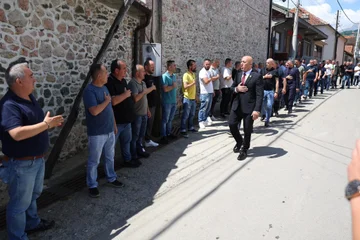
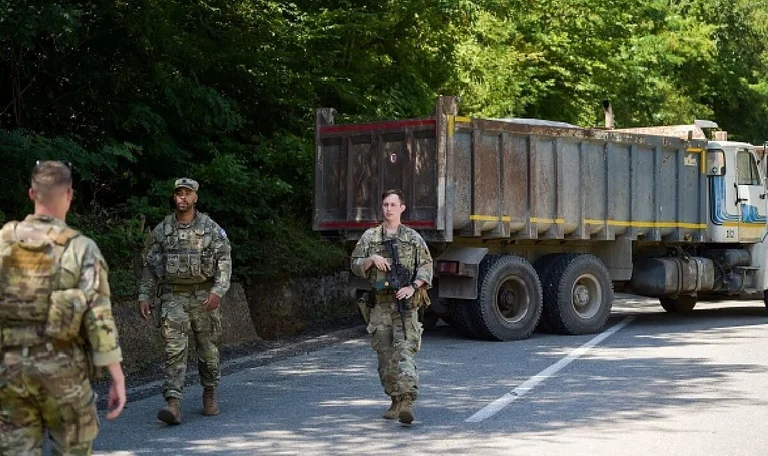
On Sunday, ethnic Serbs blocked roads in northern Kosovo to protest new rules, forcing Kosovo authorities to close two border checkpoints -- Jarinje and Brnjak. Kosovo police said that during the protests they were shot in their direction, although no one was hurt.
Belgrade argues the new rules violate a 2011 agreement on freedom of movement between Kosovo and Serbia.
Kosovo allies, including the United States and the European Union, called for calm and urged Pristina to delay implementation of new rules. Late Sunday, Kosovo agreed to a 30-day extension if all obstacles are removed. Albin Kurti, Kosovo prime minister, accused protesters of trying to “destabilise” Kosovo and charged that Serbia was orchestrating “aggressive” during the protests.
Josep Borrell, the EU's top diplomat, welcomed Kosovo's decision to postpone the new measures by September 1st and said he expects the “s to be removed immediately”.
How does this relate to the Serbia-Kosovo conflict?
Roots of the conflict between Serbia and Kosovo return to the breakup of Yugoslavia in the early 2000s, which itself followed a prolonged period of ethnic conflicts between the Yugoslav republics in the 1990s. Serbia and Kosovo fought a brutal war between 1998 and 1999, which ended with NATO involvement in a US-backed bombing campaign against Serbian terror.
Serbia is a majority Orthodox Christian nation, but Kosovo is formerly dominated by ethnic Albanians, who are mostly Muslims, besides a minority of ethnic Serbs. Tensions flared among the groups, especially for moves in 1989 by Yugoslav President Slobodan Milosevic, a nationalist Serb, to abolish Kosovo's autonomy sanctioned in the Yugoslav constitution.
In response, Kosovo militants formed the Kosovo Liberation Army and organised attacks against Serbia in the years to come, while pushing for the creation of a new state involving the region's ethnic Albanian minorities. Members of the Kosovo Liberation Army were also accused of committing war crimes against ethnic Serbs in Kosovo and what they saw as collaborators.
Authorities in Belgrade violently hit the Kosovo Albanian population, viewing them as supporters of the KLA and its separatist attacks. More than 1 million Kosovo Albanians were expelled from their homes.
Western and NATO countries were involved, joining the parties in France in February 1999 to negotiate a ceasefire. While the Kosovo side agreed to a ceasefire, Yugoslavia, which until then involved only Serbia and Montenegro, did not. The atrocities committed against Kosovo Albanians continued in what the US State Department at the time called a <x0-systemic” of “forts and Serb paramilitaries” for Kosovo's ethnic cleansing”.
In response, NATO launched a devastating 11-week bombing campaign against Yugoslavia that ended in June 1999, when the country signed an agreement with NATO to allow a peacekeeping force in Kosovo.
Why is NATO in Kosovo, and what is its mandate?
NATO has a peacekeeping force in Kosovo -- the Kosovo Force, or KFOR since June 1999. Establishment of force was adopted with a UN Security Council resolution.
KFOR's initial goal was to prevent the resumption of conflict between ethnic Serbs and Albanians after NATO and Yugoslavia signed a peace agreement allowing the return of ethnic Albanians displaced by war.
Since then, the force has gradually decreased, from approximately 50,000 troops to less than 4,000 today. In its own words, it works to preserve security and stability in the region, to support humanitarian groups and civil society, to train and support the Kosovo Security Force and “support the development of a stable, democratic, multiethnic and peaceful Kosovo”.
In his statement on protests in Kosovo on Sunday, KFOR said it was “moniating” and it was “prepared to intervene if stability is jeopardised”.
How does this relate to the Russia-Ukrainian war?
The Balkans have not escaped the war echo in Ukraine.
Kosovo has supported Ukraine since Russia's invasion, which Kurti called “the attack against all of us at”. Ukraine has not recognised Kosovo's independence.
Russia has been blaming the government in Pristina for renewed tensions in northern Kosovo.
Maria Zakharova, a spokesperson for Russia's Foreign Ministry, accused Kosovo Sunday of using new license laws and identity documents to discriminate against the Serbian population.
“We call on Pristina and the United States and the European Union to support it prevent provocation and respect the rights of Serbs in Kosovo”, she said, according to Russian news agency Tass.
Russian President Vladimir Putin has mentioned Kosovo to justify its recognition of two separatist provinces in the Donba region of eastern Ukraine. Many Western states recognised [Kosovo] as an independent state,”, Putin told UN chief António Guterres when both met in April. “We did the same thing about the Sodom republics”. /Washingtonpost/