CNN: Netanyahu seeks emergency meeting with Trump amid mounting tensions over negotiations with Iran
 20 minutes ago
 (4 years ago)
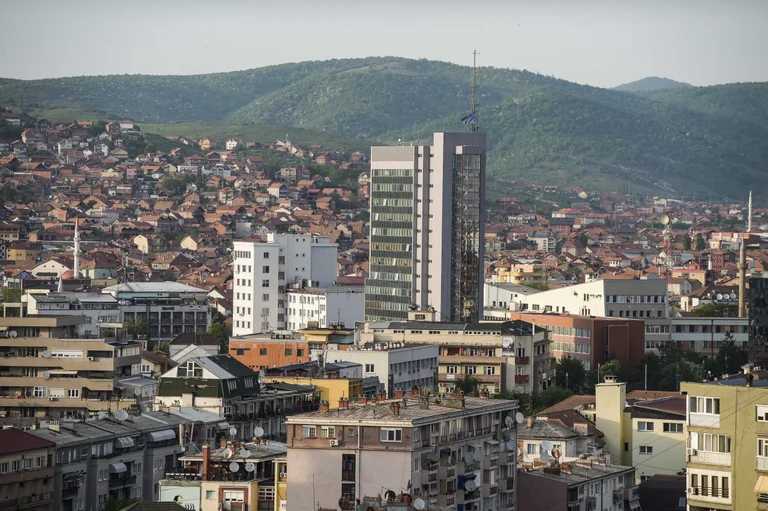
Letafette Latifi, environmental expert, MFK based on data from the Agency for Protection of the Environment of Kosovo (AMMK), more than 50% of airtime in Pristina, is unhealthy and dangerous. But how has air quality changed in Kosovo over the years? Is the most polluted air now in [...]
Based on data from the Kosovo Environment Protection Agency (AMMK), more than 50% of the airtime in Pristina is unhealthy and dangerous. But how has air quality changed in Kosovo over the years? Is the air more polluted now than before?
Supported by the Millennium Foundation of Kosovo (MFK) and the Millennium Challenge Corporation (MCC), the Kosovo Hydrometerological Institute (IHMK) has developed the national air quality monitoring network and communication network by offering real-time data on air quality through the Air Quality mobile app in Kosovo in Android and IOS, the official air quality portal in Kosovo, as well as the official website of the Hydromeorological Institute of Kosovo <3x>.
Letafette Latifi, environmental expert at the MFK, speaks more about the matter.
1. From your long experience in the field of environment, namely monitoring and air quality management, can you tell us what the air quality trend is like in Kosovo and what is the most polluted area?
From my current experience in this field has been noted that the quality of the air in Kosovo makes high concentrations of dust particles weak PM10 and PM2.5, but in recent years, these concentrations have a tendency in the heat and you see a trend of air quality improvement compared to the early 2013-2018. However, the issue of air quality in Kosovo is still problematic, especially in the winter season and urban areas, where the contribution of air emissions is higher and when weather conditions are unfavourable for the distribution of pollutants into the air.
The emphasis is on PM10 and PM2.5 parameters (particial materials with aeroxinal diameter <10 microna and <2.5 microna), as air pollution problem comes mainly from the high concentrations of these two parameters in our country. As for the air concentrations of other pollutants that have been monitored during this period, such as SO2 (a sulfur dioxide dioxide), NO2 (iron dioxide dioxide), CO (tron dioxide) and O3 (Ozone) have had no apparent overpasses except for some sporical case of exceeded the value of NO2 in specific areas of activities added to the vicinity of monitoring stations, as well as rare cases of overestimating the value (Ozone) in the low atmosphere of summer.
If we assess the quality of air in different areas of Kosovo, it has been noted that Pristina region, including Pristina, F. Kosovo and Obilic are the areas with the highest air pollution. This stems from the fact that this area is more industrialized and with a higher population density and intense traffic.
2. Is there enough information for citizens to understand and be informed in time about the quality of air in Kosovo?
In recent years citizens are well informed and in real time of air quality thanks to investments made both on the part of donors, but on the part of government institutions in increasing performance in the field of information and transparency of air quality data.
Currently, citizens can be informed about the quality of air for the area where they live through various apps for smart phones developed by government institutions, but also by the civil society sector. All are based on data from the national air quality monitoring network managed by the Kosovo Hydrometeorology Institute. It's developed/created the national air quality portal through which citizens but even institutions can access air quality information in real time. In the same sources of information (the application for smart phones and the air quality web) citizens can also be informed of three - day forecasts of air quality, which will enable them to plan open - air activities and reduce exposure to contaminated air, as a precautionary measure for health preservation and changing their behavior to air quality.
3. Has it been done enough to improve the quality of air in Kosovo and what do you think should be done in the future in this respect?
I think more needs to be done in terms of improving air quality, despite some actions that have been taken so far.
As the National Air Quality Action Plan exists, on which a certain number of air quality improvements are listed, it is time for these measures to be concrete, to take concrete action from both local and economic operators.
The municipalities must design local plans for Air Quality in order to identify specific measures for each municipality and create a good basis for contributing investments to pollution prevention and air quality improvement, which means investments in realisation of projects that will directly or indirectly affect the reduction of emissions of pollutants into the air and air quality improvement. To invest in energy efficiency and in the use of pure energy for heating of the interior environment in institutions and residential homes, then in public transportation organization and many other measures, which, as I said before, are also listed in the National Air Quality Action Plan.
an hour ago