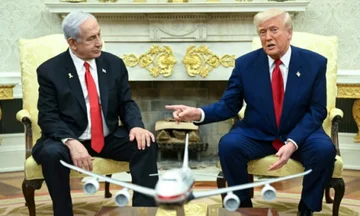
CNN: Netanyahu seeks emergency meeting with Trump amid mounting tensions over negotiations with Iran
 a minute ago
 (4 years ago)
Adoption of the law itself constitutes a positive step to regulate financial markets in terms of virtual transactions, but today there have been no offers from subjects interested in licensing in accordance with the law on exercise of activity. Still today, there are no subjects licensed for the DLT scholarships [...]
It seems that the virtual means exchange phenomenon continues to be realised in informality, which casts doubt into being a means of money laundering undeclared.
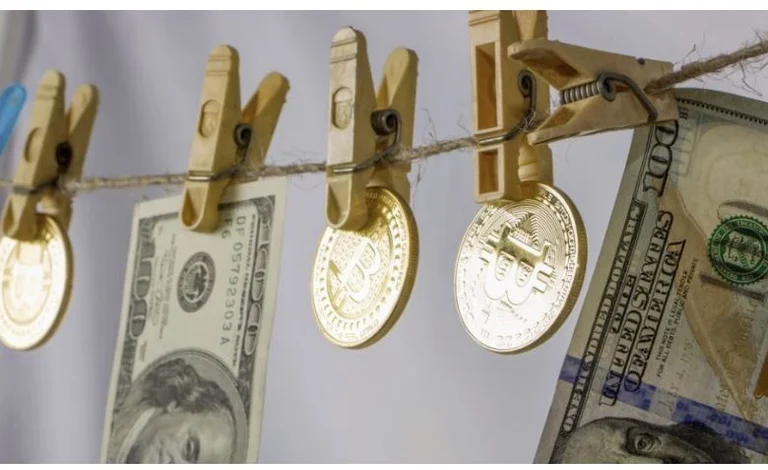
Money Laundering
Money laundering is related to the process of converting illegally obtained money into legitimate sources. Legally, this process is attempted to be prevented by sanctions envisioned at the Money Laundering Act (MLCA), which prohibits people from getting involved in financial transactions using criminal-related incomes, perhaps promoting criminal activities or violating tax laws.
The relevant authorities have taken different measures to curb this illegal process without results. The cleaning process has turned into one of the biggest financial problems of the time. Fenomen has contributed to bilateral co-operation between nations and financial institutions to impose technological countermatures and artificial intelligence to stem the threat of cleaning.
There are many forms of money laundering, and they range from simple to complex, where lawlessness has increased by interlocking with the technological age.
Since evolution has spread to many other sectors, the money laundering scheme has not been left out. Awakening technological advances has seen the birth of electronic money laundering, which has brought a new turn to old crime.
Through evolution, crime has been opened up to money laundering. Kriptovaluts were the youngest front used in blackmail schemes. Criminals have seen this as a simpler approach because of increased anonymity, unlike other conventional forms of currency. Despite the existence of anti-money laundering laws, the latter have so far failed to include cyber crimes, as they are still based on the discovery of dirty money schemes initiated through traditional banking channels.
Crytovalata
Kriptomoneda, commonly known through its cut-off form “crypt”, is a currency that exists virtual or digitally and uses cryptography to provide transactions.
Kriptomoneda has been invented as an advanced technology, as a solution to many shortcomings that have the actual banking transaction process, seen as the future of a decentralised banking system, thus eliminating large costs of the centralized banking system with the human input.
The main criticism of these coins is the absence of a central regulatory or emissional authority; instead, they have a decentralised system that releases new units and registers transactions. Despite this is their distinctive factor from other wave forms, the lack of a central regulatory point increases the chances for illegal activities.
Their rapid expansion in the market and ease of access to coins through technological equipment has given money launderers a faster and safer opportunity to launder their illegal money. There is no doubt that these coins are a useful innovation that facilitates easier and faster rating of services and financial products, but the main challenge lies in creating them as an alternative transfer tool of value and investment, giving space to illegal money laundering practices.
Saltomonedma Legality
The legal status involving cryptomonedone is fundamentally different from one country to another.
Its use has raised concerns for many governments worldwide because of the lack of international uniform laws regulating currency use. Use of the currency has been allowed in most developed countries, including the United Kingdom Canada and the United States.
In most other countries, by FinCEN (The Financial Crimes Implementation Network) the currency is considered a non-legal course, but its exchanges are considered a substitute currency. In lands where cryptos are legal, rules have been established and measures have been taken to regulate its use.
In Albania, cryptos are not yet a legal course, not named or guaranteed by a state organ. In an effort to regulate financial markets based on the technology of distributed records, including virtual coins, digital land of services, payments, titles and assets, as well as the DLT scholarships, the No.66/2020 law has been passed, which regulates activities and subjects that exercise activities under this law. To materialize and make functional in practice the law provides for the licensing of these subjects and sets rules for the practice of these activities, what makes subjects controlled and monitored by law enforcement authorities.
Adoption of the law itself constitutes a positive step to regulate financial markets in terms of virtual transactions, but today there have been no offers from subjects interested in licensing in accordance with the law on exercise of activity. Still in Albania, no subjects licensed for stock exchanges Decentralised DLT for offering virtual services.
It seems that the virtual means exchange phenomenon continues to be realised in informality, which casts doubt into being a means of money laundering undeclared.
Meanwhile, the popularity of cryptomoneds is growing rapidly, but not all are reregistered. Currently, there are more than 5,000 cryptovalus known worldwide. However, the legalisation of krytos in some countries and illegal consideration in others bring a mixed reaction that leaves a large space for money launderers to conduct illegal transactions. The ease of conducting internet exchange through the latest technologies without strict rules has given crime a chance to complete their illicit relations.
There are different methods of money laundering through crypto notes. In practice, money laundering with crypto notes involves one or more methods - sometimes one - at times combined.
The increasing use of cryptomonedma, as well as its unregulated or less regulated nature in many jurisdictions, means that the financial world has much to worry about this phenomenon.
Inevitably, knowledge of the methods of money laundering with cryptocles is of great benefit for revealing irregular activities and building internal protective measures to protect against the risk of money laundering through it.
1.Internal Nickname
The nickname refers to the anonymous state in which someone uses a consistent identification that is contrary to his real name and details. Use of names allows users to complete communications with other parties anonymously, since their real names are hidden. These names are usually chosen by users and allow user privacy to be maintained and allow free speech without security concerns. Usually, true names are available only on the user pages. In the case of illegal transactions, people are identified and traced using their actual and official data. That means it's anonymous for criminals to be traced when using nicknames.
2. Anonymous on the Cripto Rocks
Most of the countries -- Australia, Great Britain, New Zealand, Canada and the United States -- are guided by KYC regulations demanding that cryptists recognize customers who conduct exchanges. The main purpose of these regulations is to help prevent the use of banks and financial institutions from criminal elements to carry out fraudulent activities. Despite politics, however, there are several bidders and exchange states of cryptos that do not adhere to these requirements.
For example, Beanance is one of the largest global exchanges of crypto that does not have strict COC verification measures. This and many others are considered open to random investors seeking to own small quantities of crypto-assets to be used freely. Besides these contradictions that create anonymity in the crypto exchange center, they complicate the entire process, especially when it comes to tracking individuals who use exchanges for illicit activities. As to the anonymity of crypto assets, it is clear that some cryptovatluta, such as Bitcoin, are created with the ability to track down. Others like Monero, Beam, Green and Zash are designed with anonymitys. In another case, most transactions are evidence of unknown origin and beneficiary.
3. Decentralised payment Peer-to-Peer
Peer to Peer, commonly known as P2P, is a transferred system where two persons or subjects are allowed to conduct interactions directly without a third party acting as mediator. As such, with P2P, the buyer and seller conduct transactions directly. Legally, large and cross-border transactions must be carried out through a third party or a transparency provider between the two sides. Adoption of this method in financial systems has done much harm. The removal of third parties creates the risk that service provider fails to provide services as agreed upon or not to produce a product with the expected quality. Moreover, there is also the possibility that the buyer will not pay after receiving the product. This means that with P2P, there is a growing risk of one side taking advantage of the other because of asymmetric information.
Although the method has the advantage of reduced costs and faster transactions, it has many risks. A key disadvantage is lack of supervision because of the lack of government authorities to monitor transactions and provide a legal framework. More than thirty percent of the crypto assets lost by criminals are carried out under this form of transfer.
4. cryptomonedma's smurfing scheme
Smurfing is a kind of money laundering carried out through the accounts of various persons who are specifically used for this purpose, which, in this particular case, are also called “smurfs”: Money launderers receive illegal funds. They divide the funds digital or physical ʹ to amounts just below the range of statements, reporting or alarm, distributing them to different accounts.
They usually do this in four very simple steps:
The first step is the opening of accounts verified in the crypto exchanges. The Cleaner opens numerous accounts using various money laundering individuals, with false documents to exceed identification and verification to return funds.
The second step is to transfer the dirty cryptomone from the addresses of the crypto or exchange wallets. Then money launderers transfer the crypto notes to the verified account open in an exchange (exchange) you generate with false identification documents.
The third step is to open bank accounts using Smurfs- money laundering subjects. These subjects open several bank accounts in a third country with false foreign identification documents. All documentation related to the opening of these bank accounts is then handed over to the principal money launderer.
The last step is transfer of cryptomone from Exchange to local bank accounts opened by the Smurfs- charged money laundering subjects to this stage, since criminal money was already separated from their source. The money launderer may then use the money for whatever purpose. Usually, these bank accounts are used for short periods, and their situation does not usually exceed 30,000 euros.
6. Parapaid crypton notes
This approach is quite simple and involves using prepaid cards. Nowadays, prepaid debit cards can be loaded with cryptovatluta. After the prepaid debit card is loaded, funds can then finance various types of illegal activities. They may be traded for other coins or handed over to third parties.
7. Kumar Online
Another method of money laundering is also quite simple and includes online luck games. There are many websites of luck games and online games that accept cryptodollars. Cryptonmoneda may be used to buy loans or virtual chips. Usually, money launderers played for several rounds and then took money after just a few small transactions. By doing so, the money launderer immediately has an explanation for the origin of funds. He can simply claim that funds are the revenue from online play.
8. Kryptonite ATMs
The eighth method of krytomonade money laundering is slightly more sophisticated and includes automatized collection machines or ATMs. Since September 2019, there were 5,457 ATM Bitcoin across the world. Bitcoin's ATMs are constantly connected to the internet, allowing anyone with a credit card or debit card to buy Bitcoin. Moreover, they can possess dual functionality by allowing users to trade Bitcoin for money using a spaced portfolio.
Bitcoin's ATMs can also accept deposits in cash, providing a QR code scanned in a traditional Exchange (translation) and used to attract Bitcoi or other cryptovalus. The regulations used by financial institutions to make a recording of customers and transactions for these machines change according to the country and often are poorly implemented. Criminals can exploit the gaps and weaknesses in the management of the Kryptonite ATMs to overcome the dangers of money laundering Bitcoin.
Money launderers are increasingly using Bitcoin's ATMs to launder illegally obtained money. While bank transfers or services like Western Union or MoneyGram were used earlier, criminals now instruct their money launderers to withdraw money from compromised bank accounts and use it to buy Bitcoi through an ATM Bitcoin. To avoid any identification procedure, criminal depositors would apply smurfing techniques to divide funds into groups below 1,000 euros.
The status of cryptocles as a common means of exchange of value in the digital age is gradually changing, and the year 2021 saw an extraordinary increase in the salt currency world, resulting in an increase in illegal activity. Many large corporations now accept digital currency as payment for goods and services, and many banks are considering using Blockchain technology.
In saying this, cryptocle has the potential to fully replace paper and plastic money. As a result, it is essential to investigate shortcomings that allow these coins to be used for money laundering and to develop adequate countertechnology to fight crime.
It is very important to take state and interstate measures to ensure that there is a common legal framework to prevent money laundering.
At first, appropriate legal interventions should be made in internal legislation in proportion to the factors that are recorded in the market as the main bridges of money laundering, turning them simultaneously into tools of money laundering. Further co-operation needs to take on size at the interstate level to make the unification of legislation, to uniformise preventative rules in terms of money laundering through technology or crypto notes.
Changes to international and local regulations
Data analysis begins with knowing that regulators and policy makers from different traditions may have very different initial positions with some who view crypto-asses as a fundamental threat to national security and others have been deeply invested in their potential to promote innovation. Consequently, we need to focus on the principles governments need to guide in creating their regulatory frameworks for cryptics, instead of describing specific policy results that they need to achieve.
The main principles include:
Clearly
It is expected to add clarity about the regulatory treatment of different types of crypto-esque and related activities, especially in payments.
Endurance
Sustainability in regulatory treatment of crypto-states and activities in markets, in different industries and business models to reinforce an equal playing field and prevent regulatory arbitration.
Proportionality
A principled approach based on risk analysis to regulate crypto-ates should be supported, with the aim of achieving the same regulatory results that respond to risk, providing sufficient regulatory flexibility to adapt as technology evolves.
Security/Resistence
To implement safety principles and flexibility in protective measures for any payment system, including crypto-esthets and blockchain technology, to maintain and strengthen payment trust.
Consumer Protection
To build regulations meant to ensure strong consumer protection, including safety and credibility of payments, as well as protection against losses under certain circumstances.
Responsible Innovation
We believe that Kryptonal regulation should balance consumer damage prevention and financial instability with the promotion of innovation, for example by providing clear rules, expectations, safe systems and risk management framework. /Monitor. al
* He has held the position of Chairman of the Office of Counseling and the Arbitrazhi Office in the State Bar and Today Adviser at the SPAK Leader's Cabinet. Opinions are personal and do not constitute magazine attitude
29 minutes ago