3 minutes ago
Other blow for Putin: China Abandons Investments in Russia
Periskopi(4 years ago)
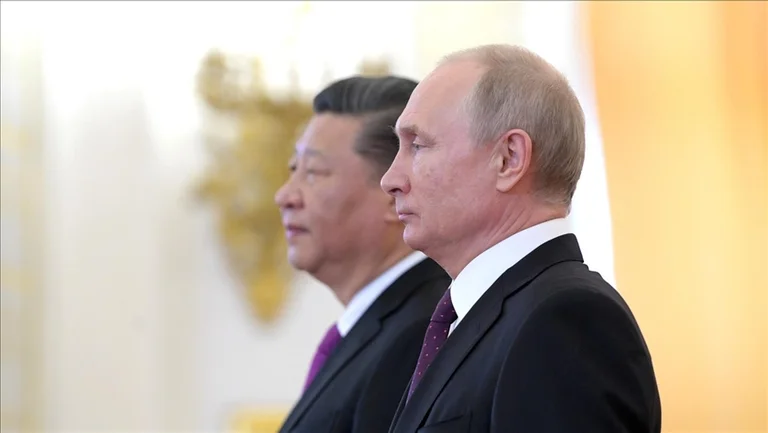
(4 years ago)China has not financed new infrastructure projects in Russia for months, as Beijing is preoccupied with preventing a financial crisis in the country, writes Sky News. Funding and investments through projects under the World Belt Initiative and China Road (BRI) dropped to 28.4 billion dollars in the six months [...]
Funding and investments through projects under the World Belt and Street Initiative of China (BRI) dropped to 28.4 billion dollars in the first six months of 2022, about $1 billion less than 29.4 billion spent in the same period last year, according to a report by Shanghai University.
During this period, there have been no new division of projects in Russia, Sri Lanka or Egypt, countries that have previously been the main beneficiaries of Chinese investments.
The lack of activity in Russia suggests that Chinese companies may fear that they will fall victim to secondary sanctions imposed against Moscow for its invasion in Ukraine, despite Russia and China insisting on the eve of the war that their friendship “does not recognise limits”.
BRU is a plan for a number of infrastructure projects China formally adopted in 2013 in an effort to expand Chinese influence in Asia, Africa, South America and parts of Eastern Europe.
As part of this, China has so far invested almost a trillion dollars in various projects in developing countries, creating jobs for its companies there and often providing ground in strategically important countries.
But after 2017, Chinese investments are on the decline, as a result of increasingly strict capital controls in China itself, as well as controversy over some of the challenging projects. China's investment in coal power plants has stalled, eliminating one of the latest major sources of fuel financing.
The report's authors say that more than half of the projects for the construction of coal power plants, as part of the BRI plan, have now been suspended, British Telegraph broadcast.
Slowing down Chinese investments has also become more pronounced as a result of the pandemic, which has caused many countries to have problems paying off credit installments for Chinese banks paid for projects. One is Sri Lanka, where the government fell due to explosive inflation growth. Total Chinese spending on the BRI dropped by 40% compared to the first half of 2019.
In the past six months, Beijing invested almost $11.8 billion in investments and $16.5 billion in construction contracts as part of the BRI projects. Energy and transport are the sectors that have received most of the money, about 73% and everything contracted from January to June 2022.
Saudi Arabia received about $5.5 billion in new funds, while Iraq received about $1.5 billion. Since the start of the programme in 2013, Russia has been the second largest recipient of investments in the energy sector.
The report's authors say that Chinese investments abroad through the BRI programme will most likely continue to slow down in the second part of this year, mainly because of the war in Ukraine, strict block regulations in China, and the global uncertainty surrounding Avid 19.