CNN: Netanyahu seeks emergency meeting with Trump amid mounting tensions over negotiations with Iran
 26 minutes ago
 (4 years ago)
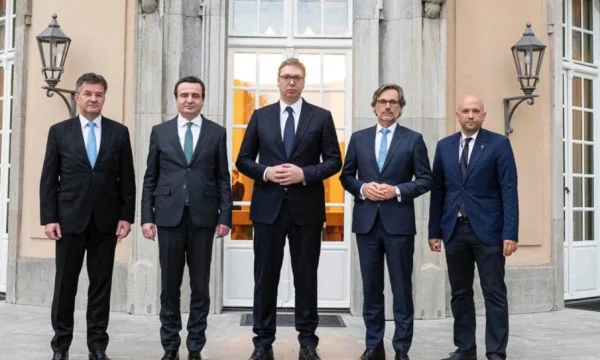
Kosovo Prime Minister Albin Kurti and Serbia's president, Aleksandar Vucic, met on Wednesday evening at an informal dinner in Berlin for the first time since July last year. “I welcomed the possibility of an informal dinner discussion about the dialogue with Prime Minister Kurti and President Vucic in Berlin. Grateful to the government [...]
“I welcomed the possibility of an informal dinner discussion about the dialogue with Prime Minister Kurti and President Vucic in Berlin. Grateful to the German government for the reception. We will continue discussions on the level of chief negotiators on 13 May”, European Union special envoy for Kosovo talks Miroslav Lajcak wrote on social networks.
The dinner followed the two leaders' separate meetings with German Chancellor Olaf Scholz, in which it was reportedly discussed, co-ordination of further reactions to Russia's aggression in Ukraine, as well as regional co-operation.
Chancellor Scholz had invited EU envoy for Kosovo talks to Berlin -- Serbia, Miroslav Lajcak. Germany's envoy for the Western Balkans, Manuel Sarrazin, had joined the meeting.
Western diplomats have long been trying to secure a high-level political meeting between Kosovo and Serbia, and Wednesday's meeting is seen as a breaking point that will help restore the process towards normalising relations between the parties.
German Chancellor Scholz said earlier after meeting with Kosovo Prime Minister Albin Kurti that an agreement on normalising Kosovo relations Serbia would pave the way for the two countries' integration into the European Union.
The goal of Brussels' talks is a comprehensive, stable agreement between the two countries, which opens to the two countries the prospect of membership in the European Union and contributes to regional stability, Chancellor Scholz said, under which the agreement would include many details, “but of course that includes what Germany has long done, so it is recognition of Kosovo”.
Prime Minister Kurti said the talks should be focused on mutual recognition “so not on recognition that comes to the end of a long process, but as dialogue for mutual recognition agreements at centre”.
Serbian President Aleksandar Vucic, meanwhile, said that “besson will have the power to advance in talks with Pristina”.
Early last week, US Assistant Secretary of State Karen Donfreed said normalisation is the way to counter Russia's efforts to destabilise the Balkans.
Serbia is the only country in the region that has not imposed sanctions on Russia due to its aggression in Ukraine.
German Chancellor said war is unacceptable, while “President Vucic even conveyed my concern for the situation in Bosnia. It's very important to maintain sustainability there”
Russian aggression in Ukraine has sparked concerns about the impacts of the conflict in the Western Balkans as well.
“I have promised Chancellor Scholz that Serbia will not be responsible for any problems, and we keep the word”, the Serbian president said. / VOA
an hour ago