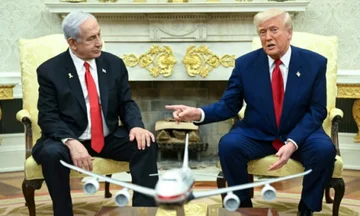
CNN: Netanyahu seeks emergency meeting with Trump amid mounting tensions over negotiations with Iran
 3 minutes ago
 (4 years ago)
Russian gas and oil are so far the most important goods Moscow sells to Germany. But other important materials are also in the spotlight. Almost the entire debate over Germany's economic ties with Russia, since the beginning of Russian aggression in Ukraine, has focused on gas and oil. With [...]
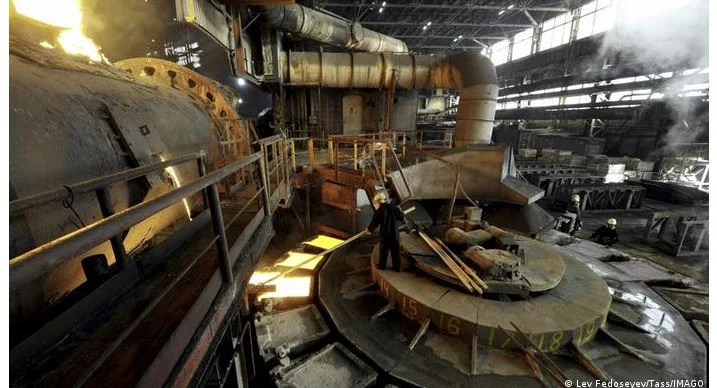
Almost the entire debate over Germany's economic ties with Russia, since the beginning of Russian aggression in Ukraine, has focused on gas and oil. Rightly, because Germany buys more oil and gas from Russia than any other European country, which represents a very serious source of profits for Russia. But many German companies import other goods and raw materials from Russia, especially raw materials such as eel, palladium, copper, and chromium.
Nickel is used in steel production, but it's also an important component for lithium-on batteries that are needed for electric vehicles. Paladium is also vital for car producers, since it is an important component in the production of catalytic converters, who clean up the smoke of gasoline vehicles and hybrid vehicles.
In 2020, Russia was the largest German provider of raw nicotine, representing 39% of the country's supply, according to economic complexity Observatory data MlT.
From Russia come to Germany about 25% of the palladium as well and between 15% and 20% of heavy metals, chromium and cadmium, which are used in a variety of industries. From Russia came an 11% of refined copper imports, as it was in 2020, as well as 10.9% of the Platini and 8.5% of the iron mineral.
The Importance of niel
A recent study by the German Economic Institute (IW) identified some of the first materials imported from Russia, which would be difficult to replace for Germany.
Nickel is especially important. Germany's second largest import partner for raw eel in 2020 was the Netherlands with 29%. But Russia is the leader in the market. The demand for clean nickels has increased in particular after the increase in the production of electric vehicles.
First-class nicotine prices have doubled over the past two years. While Russian aggression in Ukraine has intensified fears that Moscow could impose an export ban. At the beginning of March, prices reached record levels.nikel prices have increased 400% in 2022 alone.
Export and Import
Uncertainty over the first Russian classes will continue to shock the market. Some analysts predict that only the nicotine crisis will add at least $1000 (19 euros) to the costs of a new electric vehicle to consumers. Not only car manufacturers are affected. And therefore, in 2018, the German chemical giant BASF joined forces with Russia's Norilsk Nickel, the world's largest producer of refined niel.
Although Moscow did not place materials such as nikli on the export ban it issued in March, there is the possibility that sanctions from Moscow or Brussels end the course of such raw materials in Europe.
On Friday, the EU announced the import ban on several Russian products, including coal, avjar, wood, rubber, cement and vodka. However, nikli and other goods exported in large quantities to countries such as Germany were left off the list.
But even if the sale of the Russian nikel in Europe is not legally forbidden, pressure on German companies to sever business ties with Russia continues to grow in virtually every sector. Many business experts and executives have argued that Germany's economic development in recent decades has been built mainly on the basis and supply of free energy from Russia. While serious debates over the full ban on Russian energy imports show that everything is now on the table and that everything is being treated as an opportunity to counter Russian aggression.
31 minutes ago