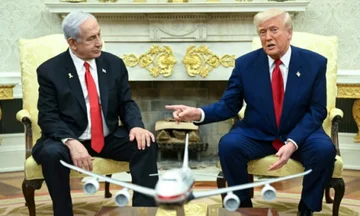
CNN: Netanyahu seeks emergency meeting with Trump amid mounting tensions over negotiations with Iran
 a minute ago
 (4 years ago)
The distribution of electricity, the fraud of MPs at travel expense, the fraud of President Vjosa Osmani with travel money, the Printment of Princeton, the attempt of VVU for the retour of history, Ukraine, the abandoned country by Kosovars, the recognition of patent guests from Germany, were some of the news that dominated the week after the public debate. But [...]
The week we left behind was filled with dramatic news.
Finally, what was expected happened. The joint venture government ? Z. THREE CHASCO, in spite of the great inadequacy and opposition of citizens, succeeded in costing electricity
The supply of energy was somewhat clouded by the fraud of our deputies at the expense of travel from other municipalities.
The surprise from these frauds that were published was that most MPs who had abused public money were from the Vetevendosje Movement, once the most vocal party against such abuses.
As if that were not enough, it later turned out that even Kosovo's current president, Vjosa Osmani, had cheated on these expenses, claiming he had lived in Mitrovica, but in fact lived in Pristina and received afternoons.
The publication of her fraud greatly angered her husband,don Sadriu, who launched a frontal attack against the media.
Sadriu with special Court terminology called “joint criminal enterprise”. This quality of the President's husband sparked strong reactions from local media, civil society, international organisations, to Eurodeputa Violet von Cremon.
But nothing convinced him or his wife, Vjosa, to apologize for the media's indifference, which employs thousands of journalists.
Later, Osman acknowledged to himself that for several years she had received 80 euros a month but reasoned that she had not noticed them and that the money was being made in her bank account.
Public duties also awakened the commemoration of the VVA demonstration on February 10th 2007 against Pako of Ahtisaari, which paved the way for Kosovo independence.
Two demonstrators, Mon Balaj and Arben Xalden, had also been killed in that protest. The two deaths of that protest, President Vjosa Osmani, decorated them with the Presidential Medal of Meritas, which sparked great reactions as an attempt by Albin Kurti and Vjosa Osmani, as was called by renowned publicist Halil Matoshi, for the <x0ndulist <x0ndrum of Kosovo's newest history. ”
In that spirit, the week continued with two uncoordinated statements by VV) officials about Kosovo's declaration of independence on February 17, 2008.
The first, disgruntled philosopher from Tirana, Elvis Hoxha, said Kosovo's independence was declared on February 10th 2007, while then Salih Zyba from the Bukishi of Suhareka said Kosovo's independence declaration was hasty, and was declared by the wrong man (Hashim Thaci, v.j)
With few reactions, the statements of the two described as statements by two people who had been eaten and disgruntled political souls.
There was also little talk about the mass migration of Kosovars to Western countries, while the only good news of the week was the recognition of Kosovo's license-passes from Germany.
In the absence of any concrete result for a year of government, everyone rushed into credit for this recognition, eventually not to know who the teacher was for this German Bundestag decision.
But the news that should also be our chief concern went unnoticed.
It's about a report of Online Economics with the director of the Onkoliga Clinic, Ilir Kurtishi, who showed the alarming numbers of cancer patients.
According to Kurtish, in January alone this year, within 25 days, 115 new cases have been diagnosed with cancer.
A little who, or at all, got caught up with this subject. That fearful figure impressed no one.
Kosovo citizens live in the more toxic environment on the continent, perhaps even wider. Kosovars absorb the world's most polluted air, and often with polluted water, they drink water that they do not know about quality, consume trees and vegetables for which there is no control, and the quality of food available on the market does not control it.
The degradation of the living environment in Kosovo, as a direct factor affecting the emergence of many diseases, has also been criticised by international mechanisms. In their reports, Kosovo was ranked at the lowest level of environmental standards in the Western Balkans and in Europe.
Meanwhile, successive governments, including this of Kurt, repeatedly point out that they remain committed to applying the requirements for environmental protection.
But beyond the verbal stock, they have not gone further./Periscopi
29 minutes ago