CNN: Netanyahu seeks emergency meeting with Trump amid mounting tensions over negotiations with Iran
 28 minutes ago
 (4 years ago)
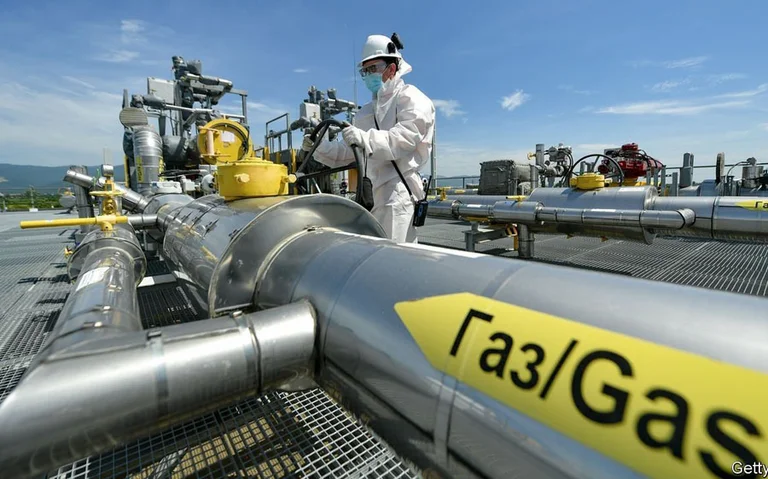
Natural gas flowing from Russia's pipelines warms houses and facilities in most of Europe. In contrast, Russia is Europe's largest supplier with this subject. A third of the gas, reaching the continent, runs through Ukraine. Now, when fear of the invasion of Ukraine from Russia has increased, [...]
Now, when fear of Russia's invasion of Ukraine has increased, so have concerns about the reduction or disruption of Russian gas in Europe.
The United States, but other Western countries, have threatened Russia with devastating sanctions if it attacks Ukraine.
Russian policymakers have warned that if their country is cut off from the international banking system, as has been warned, then Russian gas will not flow.
If Russia secedes from SWIFT, then we won't have the money in circulation. And our buyers, the first of all European countries, will not take our goods: oil, gas, metals and other important components of their imports”, Russian Federation Council deputy chairman Nikolay Zhuravlev said of the Tass news agency.
These warnings have prompted the European Union and the United States to seek alternative supplies.
In a joint statement issued late last month, US President Joe Biden, and European Commission President Ursula von der Leyeen have said that “The US and the EU are working together to ensure the EU's continued and adequate natural gas supply from various sources across the globe”.
Von der Leyen has been discussing gas purchases with Qatar emir. EU Energy Commissioner Kadri Simson has focused on talks with Azerbaijan, while the US-EU Energy Council has also met on February 7th to discuss options.
Some analysts say that despite efforts, Russian gas will be difficult to replace, at least for 10 to 15 years. Nikos Tsafos, energy security expert at the Centre for Strategic and International Studies, speaks of the Free Radio Expos program Free Europe:
Russian “Gazi is critical of Europe. It covers about 40 to 45 percent of Europe's imports. For some places it is more important than others. The reality is, for now and for the near future, Europe cannot function without Russian gas”.
What may be the alternative?
Tsafos says small disruptions of Russian supplies would burden him, but would not disrupt the system. The complete break, according to him, would be something else.
If only the gas passing through Ukraine were stopped, it would be painful, but manageable. If we talk about zero reduction of Russian gas in Europe, it would be a disaster. It would be extremely difficult for Europe to adjust for a short time with such a large loss”, Tsafos says.
Outside Ukraine, Russia uses several direct pipelines to send gas to Europe, among them -- the North Stream pipeline that takes gas directly to Germany.
Tsafos says that last year, Russia has exported about 180 billion cubic metres of gas to Europe, while only 40 billion have passed through Ukraine. In addition to Russia, a quantity of gas for the European continent provides Norway, Algeria, and Qatar.
Speaking of Expose, Thierry Bros, European gas market specialist at Sciences Yes University in Paris, says he does not believe Russia will completely cut off gas in Europe.
If it comes to shortages, he says that an option to keep Europe supplied is the liquid natural gas, which is transported in oceanic tanks instead of pipelines.
We can't expect more gas from Norway, we can't expect more gas from Algeria and other countries. The only solution is the liquid natural gas”, Bros says.
Russian gas runs in reverse
The liquid natural gas is natural gas that is converted into liquid, to be stored and transported more easily. In the event of complete Russian gas disruption, there is not enough liquid natural gas. The amount cannot be increased overnight, and export terminals cost billions of dollars. Professor Bros says Europe has been shown <x0naire” highly dependent on Russia.
We need to see what gas market we want with Russia. We need Russia for some of our volumes. But we need to look at and try to reduce this dependence on Russia in the years to come. That should be the result of this” crisis, Bros says.
What is Europe doing to solve the gas crisis?
Nikos Tsafos, from the Centre for Strategic and International Studies in Washington, likewise thinks. According to him, Europe should think in the long run, and dependence on Russia decreases by using less gas.
Europe's best protected <x0). We should not have illusions that this will be easy or will solve all problems. The point is that these problems Europe faces are directly linked to the hydrocarbon system that Europe has. If passed into clean energy sources, some of these problems would become less obvious”, Tsafos says.
According to the EU statistical agency Eurostat's latest data, EU dependence on natural gas was 83.5% in 2020. In 2019 it was 89.5%.
The world's electricity prices have increased since last year, and my two co-talkers say they will grow further if Europe is forced to find alternatives to gas supply.
Natural gas can be preserved, but reserves are already smaller than usual, because Russia reportedly has reduced exports to Europe late last year. International Energy Agency head Fatih Birol has said last month that Russian gas company Gazprom has lowered exports to Europe by 25% in the last quarter of 2021, compared to the same period in the preceding year. Gazprom, on the other hand, has said he is respecting the contracts.
Reserves May Last until April
An analysis conducted by the Bruegel Institute in Brussels, which deals with researching economic issues, shows that if Russia stops sending gas to the European Union in February, the bloc's reserves could last until April.
Yes, would cutting off gas for Europe be Russia's interest? This is about the Agery Bros, from Science University.
“Gazprom earns about $6 billion a month for gas he sells in Europe. So, I think it wouldn't be a good scenario for gas pumps to reduce the flow of gas. I think the possible scenario is that Russia just reduces supply, because that's how gas flows into Europe and Russia wins euros or dollars. And so, by reducing the gas, Russia could create further divisions among European countries, because some would be better treated than others”.
According to Eurostat, the biggest Russian gas importers in the European Union are Germany and Italy, while outside the EU are Turkey and Belarus.
Russian gas flows into Europe now, and many decades, has flowed into crisis periods, even during the breakup of the Soviet Union. Fear is now due to Russian President Vladimir Putin, who is not rarely described as unpredictable. The American newspaper, New York Times, had a letter entitled " “Putin" on February 3rd, saved for this day”.
According to the newspaper, Putin, “over the past few years, has restructured his country's economy with the specific goal of resisting Western financial pressure”.
Russia has drastically reduced the use of the dollar, and thus the Washington string” has written, among other things, New York Times. / REL/
an hour ago