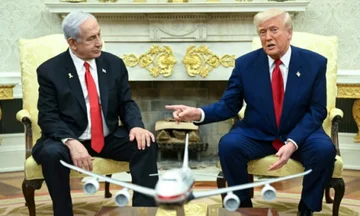
CNN: Netanyahu seeks emergency meeting with Trump amid mounting tensions over negotiations with Iran
 8 minutes ago
 (4 years ago)
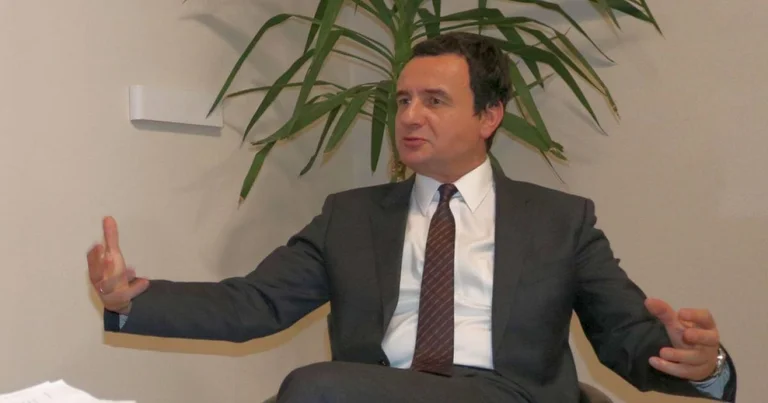
Kosovo Prime Minister Albin Kurti has participated in the scientific table today dedicated to researchers of albanology, professor and long-year-old chairman of the Pristina Albanlogical Institute, Sadri Fetiu, on the occasion of his 80th birthday, while in his long speech, a sentence by Kurti was strange, saying “How important [...]
Today, Prime Minister Kurti has given a long speech dedicated to the professor and long-term chairman of the Pristina Albanology Institute, Sadri Fetiu, on the occasion of his 80th birthday.
But what happened was a Kurt sentence that doesn't understand what he really meant.
The importance of a parent is as important as that of a parent who is not a grandfather. Before I had my teacher, I had teachers of my parent, who was Sadri Fetiu”, wrote Kurti among others.
Full word of Prime Minister Kurti:
Dear family of prof.dr. Sadri Fetiu, Mrs. Fetije, Shkelzen, Albanian, Life,
Dear academic professor Rexhep Qosja,
Honored Director of the Albanology Institute, Mr. Hysen Matoshi,
Dear friends, fellow students of Professor Fetiu,
Honored MPs from the Parliament and activists, Avni Dehari, Hyseni and Gani Krasniqi,
honoured ones,
Ladies and gentlemen,
Before I know him as a passionate student of folklore and long - term director of the Albanology Institute, Sadri Fetiu I have known him as a teacher and a patriot. With great admiration my father spoke to me about his beloved English - language professor.
He was described as a wise teacher who was radiant among students of kindness, humanity, culture, sincerity. Ever natural in conversation, never threatening, extremely kind, never frustrated, and always ready to help each one. Above all, he imposed respect on his undisputed intellectual and scientific personality. That would last a lifetime.
Professor Fetiu had started to legalise the Albanian language subject yet without completing his studies, as did many Albanian students of the day. There was a lack of educated Albanian quadros, and most subjects were legalised by Serbian professors. This situation had to change, and teachers and educators needed bread and water.
It was the 1965/66 school year when at Pristina technical high school, the professor started teaching, who with his approach to legalisation changed the students' views and achieved in them the highest feelings for the national ideal and the importance of education of Albanians.
He spoke with passion and pride about the reborns and their works. By means of poetry, he enlivened the homeland and the curiosity about literature, art, and beauty. His nature of a wise and quiet person did not allow rudeness or authority over students. He gently offered them when he wanted to test the learned knowledge. A “trocution” with a fist on their shoulder was the way he asked them to stand up to recital poetry or explain the last teaching unit. The students found both the defender and the greatest defender for any injustice done to them by school or power authorities.
I as a child, before I encountered Evgenia on ancient literature and mythology, Euripide and Lucreci, and later on to Dante and Ceve, I learned the Evgenia of Andon Zako Chajupi in poetry “Vaje”. But before I go to school, I remember my father reciting this poem, which I thought was called “Evgenia”, not “Vaje” At the time, not only did I think it's called “Evgenia” not “Vaje”, but I thought Sadri Fetiu wrote it, because Dad would recite the poem and say that Sadri Fetiu taught him. And I believed that the one who taught him even wrote it. It's taken me years to find out that poetry is not named “Evgenia”, but it's called “Vaje” and that Sadri Fetiu didn't write it, but Anton Zacho Chajupi wrote it. Just as important is the parent who is not the grandfather. Before I had my teacher, I had teachers of my parent who was Sadri Fetiu.
Professor Fetiu was the inspirer and promoter of his former students organising the 1968 student demonstrations: Osman Dumosh, Africa Loja, Skender Mucholli and others. In the year of the big turn for political fate and the improvement of the position of Albanians in the former Yugoslavia, the professor, along with other intellectuals, was the promotors of the national movement for the realisation of Albanians' right to self-rule.
Big people tend to see themselves small. Professor Fettu lived and behaved with simplicity and humility toward everyone. He argued his decisions calmly and calmly and accepted the other person's thoughts with understanding. He acted with consistency and without compulsion, just as a deep river follows its course without a sound. His generous, tolerant nature did not make him less courageous. On the contrary. When the interest of the people and the society was to be protected, he was invincible in character. Especially in resisting Serbian invaders.
Surely, that you family and fellow workers of that time know better, and you remember more clearly the professor's opposition to the violent intervention of the Serb regime at the Albanological Institute in March 1994.
I'm bringing it here to memory for the younger generations to better recognize the sacrifice of our intellectuals to protect our national and cultural values.
When the building of Pristina's Albanological Institute was surrounded by major Serb police forces, Professor Fetiu, with calm and intellectual courage, had tried to convince the regime's representatives that violent interference of politics in a scientific institution is unacceptable. His resistance and the resistance of the Institute's co-workers had been forced. They were bleeding out of these offices, where they had been melting for years, you might have known about advancing albanology.
In a statement given to international human rights organisations, Professor Fetiu would describe the event this way:
“... There were about 40 people in the building. Between the floors I encountered the prison director. I raised my hands and shouted that the warden was me here and asked them to give me answers about who they are, what their orders are. He insulted my Albanian mother, shouted he'd kill us all, because we don't know who we're dealing with. At that moment someone hit me in my mouth and in my back. I fell down. M'you broke your glasses. I didn't mean to get out. I called out loud to kill me. I was pushed to a mosque, hit with my head, washed in blood. They got me out...”
The will and perseverance of Albanian scholars as prof.dr. Fetiu was stronger than the challenge imposed by the conqueror. They had succeeded in again being organized to continue their studies, research, and publication of books in the interest of students, creators, and preservation of our linguistic and ethnologic heritage.
After the end of the liberation war, Professor Fetiu, as a student of literature folklore, teacher, and director of the Albanological Institute, devoted himself entirely to raising albanological studies and developing the scientific framework. Although he never joined any political subject, he never stopped engaging in improving irregularities and injustices, which engulfed our post-war education and society.
Doctored at “Albanian popular ballet poet”, in the prof.dr bibliography mirror. Fetiu, dozens of professional and scientific works are involved. Besides working on collecting folklore materials, it has published a number of studies from the Albanian folklore field. Some of his studies have also been published in French scientific magazines and in those in Tirana.
Among his most distinguished works are “Albanian war hero”, “Ninula”, “Kinga and children's games”, “Albanian People's Ballade Poetica”, “Crescrenic Cheng II”, “Rizah BLah Billa I and II”, “ > Albanian People's Ballad ) Comparative Aspects”, “Kosovo Crossroads”, “Popular historical song” in five volumes, “Folkritic”, and “Aspects of Albanology studies”
In the field of prof.dr. Fetitus, of great importance, also have translations of works of albanology and poets.
Among the most remarkable translations is the latest work of Illyrian Aleksandar Stipchevic, “The traditional Cult of the Zara Arbeesh”.
Professor Fetiu himself, the rare work he had given his gift to Albanian readers, would be a model for all those who intend to deal seriously with humanitarian science, especially with studies in cultural anthropology, folklore, and albanology in general.
In his passion for research and scientific research, our uncommpromo albanologist would surely enrich his bibliography and our culture with numerous other publications and studies if death did not overtake us on May 10, last year.
Dear Professor's family,
Dear friends and associates,
A dedicated scholar on the language, literature, culture, and tradition of his people can best be remembered except by putting them together at the table of scholars, so that, with discussion and words, they can illuminate a part of his scientific, intellectual, and homeland activity.
We would like today, on our 80th birthday, the professor was here with us, to enrich us with this table of bright thoughts or with the latest collections from our rich folklore. And we were going to express to him closely all the honor and thanks for the generous contribution to the nation, the education of many generations, and the progress of albanological studies.
Rest in peace and tranquillity the proficious love, and proud of the family and academic heritage you left behind. We will always be remembered as a special personality in the fields of albanology and folklore, dear friend and respected professor for students and students who have had the destiny of having a teacher. You will always remain the model of the intellectual and the man of precious moral and secular qualities.
36 minutes ago