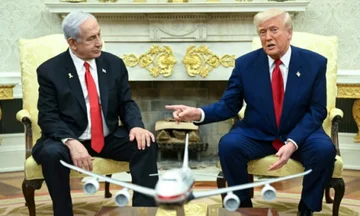
CNN: Netanyahu seeks emergency meeting with Trump amid mounting tensions over negotiations with Iran
 22 minutes ago
 (4 years ago)
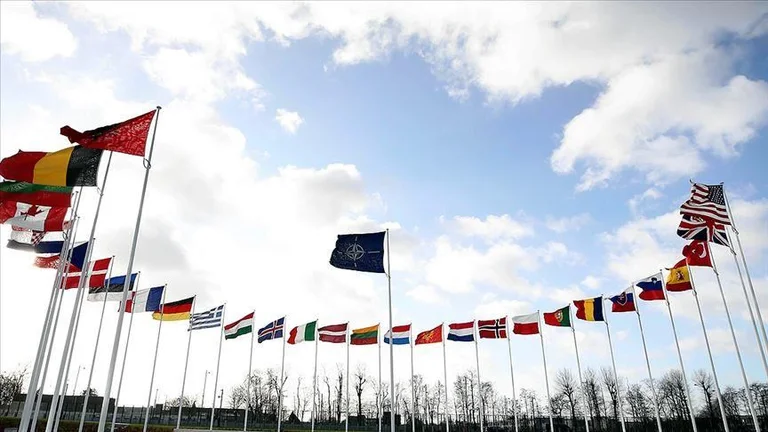
NATO has said that through the process of expanding this military alliance, it does not pressure specific states to become members, but that more enlargement is a process based on the principle of “doors being opened to all those who want to join and are willing to meet the criteria. Russia has [...]
NATO has said that through the process of expanding this military alliance, it does not pressure specific states to become members, but that more enlargement is a process based on the principle of “doors being opened to all those who want to join and are willing to meet the criteria.
Russia has said that recently the NATO enlargement process is an example of aggressiveness and increasing the scope of interests at the expense of Russia.
These allegations are being made by Moscow at the time it has gathered over 100,000 troops along Ukraine's borders and is demanding that Kiev never become part of the military alliance. This gathering is viewed from the West as preparing the Kremlin to invade Ukraine.
Responding to Moscow's accusations, NATO has said that the Western Balkan region is an example of the success of the policy of “openers”.
The Balkan states, such as Albania, Northern Macedonia and Montenegro, have shown aspirations for membership, have met the criteria and are now members of the alliance.
But Serbia, which has decided not to become a member, according to the alliance, is not obliged to change its mind. Lately, Secretary - General NATO, Jens Stoltenberg, has reiterated his stance that he respects Belgrade's decision of military neutrality.
Stoltenberg has said that NATO does not force the states to join the alliance, but keeps the doors open for states that, by their own will and sovereign decision, without interference from anyone, decide to membership.
Because of this policy, NATO has rejected Russia's request that, in addition to Ukraine's NATO membership, it will not expand eastward.
Several clarifications aimed at rejecting Moscow's claims have been published on the NATO website. Among other things, the alliance has reiterated that there has never been any guarantee that it will not expand.
Currently, there are three countries of the Western Balkan region, Kosovo, Serbia and Bosnia and Herzegovina, which are not members of NATO, but these three states have their own specifications.
Serbia has decided not to become a NATO member, but it is a partner of this alliance. Belgrade is involved in NATO's Partnership for Peace programme and co-operates with the alliance.
As one of 20 Partnership for Peace states, Serbia is also a member of the Euro-Atlantic Co-operation Council (EAPC), which has 50 member states. This is a forum of political co-operation between 30 NATO states and 20 Partnership for Peace states. Russia and Ukraine are also members on this council.
Bosnia and Herzegovina is also a member of the Partnership for Peace, while NATO in this state has an additional role through its mission. Sarajevo has also launched with NATO the so-called Membership Action Plan, which is recognised in the alliance by the MAP acronym.
But, due to domestic political compositions, Bosnia and Herzegovina still does not have the stance on NATO membership in the future as clear as possible. Membership in the alliance publicly opposes leadership in the entity of Republika Srpska.
In formal reports with NATO, the biggest obstacles in terms of the possibility of integration are Kosovo. In Kosovo, NATO has its military mission, and in this state the alliance had intervened to end the war and ethnic cleansing from Serbia in 1999.
Because four NATO member states Greece, Romania, Spain and Slovakia have not yet recognised Kosovo's independence, Pristina has failed to formally start its journey towards membership.
But, Kosovo consistently expresses its will and willingness to become a NATO member, following the journey like other countries, thus starting from the Partnership for Peace to full membership.
We have formal barriers, but we have found several ways to help Kosovo gradually prepare for integration. This is done through the individual engagement of several member states, where NATO cannot be collectively engaged”, a NATO state diplomat has told Radio Free Europe.
This diplomat, as an example, has cited assistance that some states, such as the United States, the United Kingdom, Albania, Croatia and others, provide to Kosovo to establish its military.
The military has been a highly sensitive topic, as NATO had not backed the decision to transform the Kosovo Security Force into the military, arguing that such a “transformation has not been made according to existing rules”.
In 2018, the Kosovo Assembly adopted various legal amendments to the transformation of KSF into Armed Forces, which is expected to last ten years.
Kosovo has also been invited to the quality of the observer state in the Adriatic Charter initiative. This US initiative was initially meant to help Albania, Northern Macedonia and Croatia prepare for NATO membership, but the same assistance Washington has later offered to Montenegro, which has also been members of NATO.
NATO members, such as Albania, Northern Macedonia, Croatia and Montenegro, are also part of the Adriatic Charter. But in this US initiative is also a member of Bosnia and Herzegovina, meanwhile, Kosovo, in the quality of the observer state, is often invited to joint meetings and exercises. Also, this initiative is open to Serbia, as a state in the quality of observers.
There has also been criticism against the European Union that “indirectly has conditioned Eastern European states first to join NATO and then to the EU”. But the European bloc has dismissed these accusations.
It is a fact that by this moment, all Eastern European countries have entered NATO and the EU in parallel, so the process has been called Euro-Atlantic integrations. But this has never been a condition. Those states themselves have thought that NATO offers EU security and stability additional value as prosperity”, an EU diplomat has said.
This diplomat also mentioned Serbia, which has candidate status for EU membership but has no aspirations for NATO membership.
Even diplomats in Brussels have stressed that Serbia in negotiations with the EU is ahead of Albania and Northern Macedonia, which are already NATO member”.
No matter whether the Western Balkan states are members of NATO or not, the alliance has said it is committed to the stability and prosperity of the Balkan states. At NATO headquarters, they have reiterated the position that it is up to states to decide whether they want to become members and if they have such aspirations and meet the criteria, the alliance's doors will be open.
an hour ago