CNN: Netanyahu seeks emergency meeting with Trump amid mounting tensions over negotiations with Iran
 13 minutes ago
 (4 years ago)
The faster a country's commitment to scraping coal, the higher its share in the right transition Fund for the Western Balkan countries (BP), is said in an analysis by The Green Tank (Astonine) and CE Bankwatch Network (Prague) two networks consisting [...]
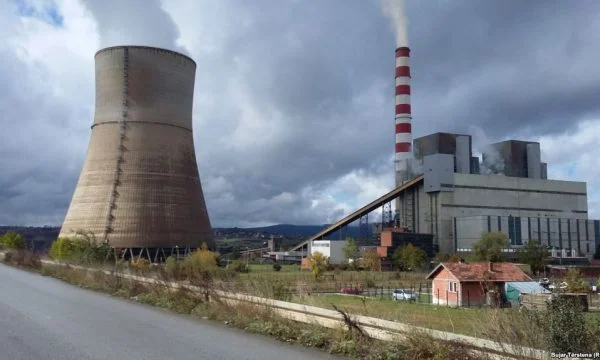
As far as electricity is concerned, most Western Balkan countries have long relied on coal. But as the international community mobilizes to deal with the climate crisis, coal is becoming uneconomic and the region's outdated thermal power plants will have to be shut down in the years to come. Also, the new EU climate policies designed to make the coal energy more expensive and eventually outdated from EU climate targets for 2030 to the planned carbon Border Set Mechanism will affect the coal-based electricity imported from the Western Balkans and lead to a gradual reduction of coal production in the region.
However, a transition from coal to region should in itself be made in a managed, comprehensive and fair manner, especially by those most affected by it - coal workers and neighboring mining communities. Such a process also calls for considerable mobilization of public resources.
Green Tank and Bankwatch's new report, titled “A fair transition fund for Western Balkan countries”, underscores the need for a Transitional Law Fund for the Western Balkans and uses a specially developed model to explore how such a fund can be divided in the best possible way.
The proposed distribution model uses five criteria that determine each country's dependence on coal and oil, climate ambition of each country as reflected in known commitments in phases, pollution levels derived from coal use, and each country's financial capacity to cope with transition challenges from fossil fuels. Six scenarios of coal removal were analyzed using the model, as well as a variety of different compensations for the adlocation criteria.
The main result of the analysis is that commitment to an early coal ban will significantly increase the share of the fund a country will receive.
• Serbia takes the most of the earliest coal evacuation in five of the six analysed scenarios, taking up 45.4 per cent of the Fund.
• Bosnia and Herzegovina ( BiH could receive up to 34.6 per cent and exceed Serbia's share in the scenario in which BiH gives up coal by 2030, and Serbia and Kosovo continue with the coal-based electricity model by 2050 and 2050, respectively.
• Kosovo can get up to 23.8 per cent on condition that it engages in coal removal by 2030.
• The fact that North Macedonia has pledged a coal removal date in 2027 increases its share to 13 percent of the fund, almost double the 7.36 percent stake it would have received if it had decided to extend its dependence on coal by 2050.
• Montenegro could potentially triple its share of almost 4 percent of the fund if it decides to give up its only coal plant, which currently operates beyond 20,000 legal hours of operation, by 2022 instead of its promised closing date in 2035.
Furthermore, differences between the smaller and larger share of each country's potential for the six scenarios of the removal of coal increase when the speed criterion of transition has greater weight, while calculating the financial capacity of the Western Balkan countries in drafting the Law Transition Fund favours the weaker countries (Kosovo, BiH and Albania).
To avoid major challenges of an unexpected transition such as the one currently occurring in Greece's lignite regions, Western Balkan countries must start planning immediately to transition their coal regions. The EU should provide technical and financial support to the development of a Transitional Law Fund for the Western Balkans, while the speed of transition must certainly be included in the anchoring criteria to accurately assess the urgency of transition in each country, Nikos Mantzaris, senior Green Tank Policy analyst, an Athens-based expert group, said.
“Transition away from fossil fuels in the Western Balkans is coming much faster than governments expect, and a Transitional Law Fund is much needed to support this process. This winter, most of the region has been struggling with power plant failures and the difficulties of coal supply. The outdated coal thermos in northern Macedonia, Serbia and Kosovo came out offline, underlining the need to accelerate investments in energy efficiency measures and sustainable forms of renewable energy production”, said Ioana Citata from the CEE Bankwatch Network.
41 minutes ago