16 minutes ago
The organisation denies Kosovo's independence with “Decani Manicer”: Kurti e Osmani writes letters

Periskopi(5 years ago)
(5 years ago)Prime Minister Albin Kurti and President Vjosa Osmani have sent a letter to the organisation “Europepa Nostra” that deals with cultural heritage on the issue of the Decani Monastery”. Kurti and Osmani have expressed deep concern over the most endangered “7 programme” monuments in Europe, and where the Decani Monastery is nominated. They have disputed the report [...]
Kurti and Osmani have expressed deep concern about the most endangered “7 programme” monuments in Europe, and where the Decani Monastery has been nominated.
They have contested this organisation's report, viewing it as “entiosis”, Pryscopi conveys.
Kurti and Osmani have denied that the Decani Monastery is at risk and have disputed the language used in this report.
Full letter:
PRESIDENTES ' LAST OSMAN AND KEYMINISTRY WHEN YOU OGANIZA EUROPA NOSTRA
Letter to the European Organisation Nostra by President Vjosa Osmani and Prime Minister Albin Kurti of March 18th 2021, where arguments have been unveiled why the Decani Monastery does not meet the criteria for entering the “programme. The seven most endangered monuments”.
Dear Mr. Hermann Parzinger, Executive President of Europe Nostra,
Honored members of the Europe Board Nostra,
Honored Members of Programme Adviser Panel “7 Most Enangered”,
We have the special satisfaction that on behalf of the institutions of the Republic of Kosovo, we address the organisation Europe Nostra, which in its decades-old activity has provided countless examples of commitment to the protection of Europe's cultural and natural heritage. Your work and success in the realm of cultural heritage are a special motivation for all of us who believe in the European project as a platform of lasting peace and prosperity.
On behalf of the institutions of the Republic of Kosovo, we wish to offer additional clarifications regarding the nomination of the Decani Monastery for the “Europe programme, Sven Most Edangered Monuments”. From the publication of your organisation on December 10, 2020, we have been announced that the Decani Monastery has been nominated as one of the monuments to be included in this programme. After assessing the arguments displayed in the nomination text, we have identified a number of unstable findings. For this reason, we wish to equip you with official information to argue our deep conviction that the Decani Monastery does not meet the conditions for selecting as one of the monuments of the final list “7 Most Enangered”.
Judged by the selection criteria to be included in your list, we believe in universal values, which include the Decani Monastery in itself. Within the cultural heritage system, the monument has exceptional importance and exceptional cultural values. However, this nomination does not meet the most important criterion of your program, one related to the argumenting of the monument's impending serious danger. The following are revealing our arguments, which are based on official information from the state institutions of the Republic of Kosovo and relevant international reports.
In the alleged attacks on the monastery, the nominator's language is incorrect, being also biased and unacceptable. The term “local examiners” is excessive quality purpose, while the attack claimed by terrorist organisation I The SIS is completely unfounded in fact. This language makes us believe that the nomination text has not followed professional argument lines, and has deviated from content with political and propaganda charges. The best evidence is the lack of reliable resources on which these biased findings are based.
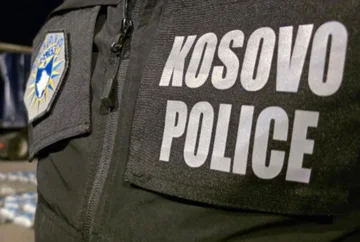
To your knowledge, the official reports of the Kosovo Police speak of a drastic decline in the number of interethnic incidents in the last decade in our country. In particular, we rejoice that no serious incident in Orthodox churches has been reported in the last decade. This for years is also consistent with the international loan reports, while our country continues to cultivate very special and subliment traditions of interreligious harmony. Our security institutions in co-operation with international peacekeeping forces for years have offered protection and security to Orthodox churches in Kosovo. Kosovo police own special units caring for these monuments. It is the independent and professional assessment of relevant order and security bodies that Orthodox churches in Kosovo enjoy high security levels and are not endangered. We are fully devoted to protecting all monuments in our country, and in particular Orthodox churches and monasteries, Orthodox clergy, practitioners of religion, non-communities. And that's why we've been giving permanent testimony for years.
Another issue that should be dealt with seriously and that stands out in the text of notation is the environment. We are aware that the overall environmental situation in Kosovo is not at the desirable level. Protected areas of nature and cultural heritage face a number of environmental challenges. However, state institutions are seriously committed to delaying the agenda of sustainable development. Therefore, there is no evidence involving any local or central institutions of the Republic of Kosovo in discriminatory practices against the Decani Monastery or other entities. To illustrate the situation with spatial and developmental planning, we inform you that in recent years Kosovo is in the process of functioning the new spatial system at the municipal level. All municipalities of the Republic of Kosovo, including the Decani municipality, are drafting space and development plans. For your information, the Decani Community has pledged that within these plans, the particular area of the Decani Monastery will address it with particular priority and added seriousness. This approach implies strict respect for local legislation, and in particular the protection rules and management defined by the U. NESTO.
The nomination text also refers to a local road that was built years ago. The quality of this path as the <x0-austrade International” is wrong we believe deliberately to unjustly increase risk potential. This situation has been misused by the state of Serbia, trying to make a project of military importance for the needs of the local community turn interethnic conflict into reasons. The institutions of the Republic of Kosovo, including the government and the Decani municipality, have been open to dialogue and dedicated to sustainable and acceptable solutions for all sides. We are encouraged by the until now achievements of the monastery's clergy, the municipality of Decani, the Kosovo government and top international officials in our country on the relevant issue. We assure you that in all the conflicting cases related to cultural heritage, the institutions of the Republic of Kosovo will do their best to find solutions in accordance with local and international legislation, without ever affecting the interests of the parties involved and those of the community.
Dear European officials Nostra,
We have acknowledged with deep concern the entirely wrong conclusion within the text of nomination that Kosovo's status is unresolved. Let us confirm that Kosovo has declared independence on February 17th 2008. This unanimous declaration of the will of the people of Kosovo through its elected representatives has also been confirmed by the International Court of Justice in July 2010. The JND decision has concluded that Kosovo's declaration of independence is in full compliance with international law.
With the declaration of independence, the state of Kosovo has bribed all constitutional, legal, institutional and political guarantees for the protection and advancement of the rights of all non-partisan communities in our country. These guarantees stem from a lengthy international process of determining Kosovo's status and are based on the most advanced international conventions and practices. Particularly and with constitutional and legal provisions that include in themselves affirmative measures, the state of Kosovo has built and implemented the framework of ensuring and protecting the Serbian community's cultural rights. In this context, our institutions have included in state legislation all provisions of the Ahtisaari Plan related to the protection of cultural and religious heritage. More precisely, the Serb Orthodox Church institution, as well as Orthodox monasteries and churches in Kosovo, enjoys all constitutional, legal and institutional guarantees that ensure full respect for their rights. It is of particular importance to recall here the provisions of the Ahtisaari Plan, which specifically requires that these rights, privileges and immunitys of the KOS come along with the obligation and responsibility to act in compliance with Kosovo legislation, as well as without violating the rights of others and our constitution.
Let us inform you that the Serbian Orthodox Church has only received rights from the Ahtisaari Pack, rejecting responsibilities. So she enjoys all the guarantees and privileges that come out of the Ahtisaari Package (and the Constitution of Kosovo), but refuses to recognise the state of Kosovo that is the precondition for enjoying rights. President Martti Ahtisaari himself as a special emissary and international mediator has recommended since March 2007 that world at UN Secretary General Mr. Kofi Annan, supervised independence for Kosovo. International oversight lasted four years until 2012. Furthermore, Kosovo cultural heritage institutions continue to have limited access to Orthodox churches, as Orthodox clergy in Kosovo have not shown necessary readiness for co-operation and integration. Serbia has openly lobbied against Kosovo's accession to U - What? E SCO in 2015 continues to conduct unjustly the stolen archaeological and ethnological collection of Kosovo, while the worst blow had taken during the 1998-1999 war, when Serbian forces had damaged and destroyed thousands of assets of Kosovo's cultural heritage. These destructions of Kosovo's cultural wealth in the condemned acts of The Hague Tribunal have been described as crimes against humanity. And after all that, no accountability, no apology, no compensation from Serbia. Rather, only rigging the battle with other means on one side and instrumentalising Orthodox churches to maintain the expansionist territorial aspirations on the other.
Among the many inaccuracies contained in the text of nomination is a paragraph that most laments the long - standing political purpose. The text is surprisingly an effort to establish a link between the need to protect the monastery and political talks between Kosovo and Serbia. Your “7 application Most Engangered” from the founding in 2013 has raised alarms for the danger posed to important monuments. However, we feel that this is the first case when the program can be used as a means to push forward a hidden, principled agenda that has nothing to do with cultural heritage. If you pass, this will be a very dangerous precedent. The extreme polytisation of cultural heritage does not serve righteous causes, but the particular interests of states that misuse European and international platforms of cultural co-operation in the service of peace and overall prosperity. The Decani Monastery is in good condition, with full constitutional and legal guarantees, with full security and no impending danger, is one of the monuments the state and the society of Kosovo boast of, and, as in history, we will continue to protect it with much love and dedication even in the future. So the Decani Monastery has no and should have no connection with political dialogue between Kosovo and Serbia. The attempt to build a link between these two is artificial and unstable, and as such must be refused. For the institutions of the Republic of Kosovo, the status, guarantees, rights and obligations of the Serbian Orthodox Church and Orthodox churches and monasteries in Kosovo are ultimately defined in the Ahtisaari Plan, included in the Constitution of Kosovo and rating in our state legislation. The Republic of Kosovo refuses to reopen this process, while the only obligation remaining is recognition of the state and Kosovo laws on the part of the KOS.
In conclusion to the arguments previously revealed, we express our deep conviction that the Decani Monastery in Kosovo does not meet the conditions and criteria to be included on the “Europe list Seven Most Engengered Montgomerys”. Aware of your organization's professional reputation and integrity, we have no doubt that the assessment panel's final decision will be based, impartial, professional, and fair. We urge you to read our letter in light of an additional contribution to the work of the selection panel.
In the end, we have the desire and satisfaction that the name of institutions of the Republic of Kosovo call for a joint meeting where we can discuss the possibilities of co-operation to advance the agenda of protecting our common cultural and natural heritage. We are happy that two non-governmental organisations from Kosovo are members of Europe Nostra and in co-operation with them are motivated to explore new possibilities of co-operation between the institutions of the Republic of Kosovo and the European organisation Nostra.
We will be at your disposal for explaining additional discussions on the matter in question. We are grateful for your consideration and hope to hear from you at a reasonable time.
Prime Minister nominated President on duty
Albin Kurti Vjosa Osmani