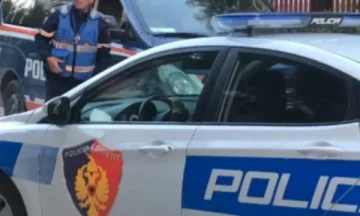
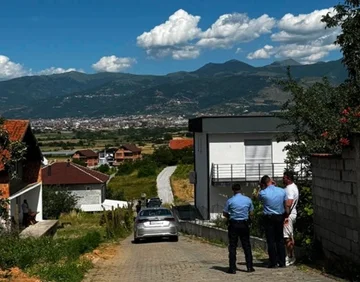
5 minutes ago
New arrests and arrests in the case of Donjeta Pajaziaj's mysterious murder

Periskopi(5 years ago)
(5 years ago)In 2015, one of the most mysterious post-war killings had taken place in a Kosovo Decani municipality village. A young girl, Donjeta Pajasitaj, had disappeared one day while she was going to work. Weeks passed, and it was not found until remains [...] were found in the mountains of Strellc village of Decani.
In 2015, one of the most mysterious post-war killings had taken place in a Kosovo Decani municipality village.
A young girl, Donjeta Pajasitaj, had disappeared one day while she was going to work. Weeks passed, and it was not found until remains of a body were found on the mountains of Strellc village of Decani.
After the police were notified and the expertise was established, the remains were found to be the 24 - year - old girl missing for weeks.
This is where the trial was going to start.
The case has been handled by all judicial steps in Kosovo and conflicting decisions on different levels have been made. The person who was later acquitted was sentenced to life imprisonment and later returned to the retrial again.
Now, six years after the trial began, the prosecution has discovered new and involved evidence that could change the course of this case again.
He went to a witness hearing, but he went in hand.
Hakki Pajasitaj, head of the village of Stralc, was detained at the prosecutor's order for criminal work “false statement”, following the session held Monday during the day.
This after Pajasitaj was invited by the prosecution to testify as witnesses, at the next hearing, at the Foundation Court in Ferizaj, about anonymous letters sent to various addresses within the family and beyond, with several “interpretations” about the motive of the assassination of Donjeta Pajaziaj, by already detained suspect Naser Pajasaj, in November 2015.
The case prosecutor Valbona Dishaj Hajosa confirmed Hakiu's arrest for Albanian Post, saying more detailed details about this development will be released in the media communiqué, which is expected to be published Tuesday.
Who and why did he send his anonymous letters?
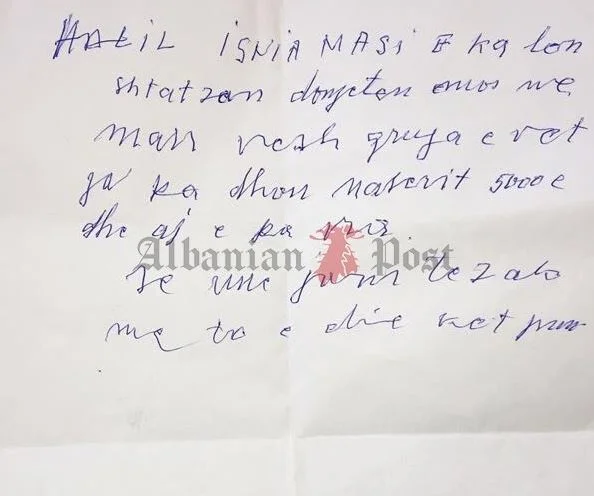
Without an address and no name, an envelope came to the house of Donkatta Pajaziaj's father, Halil.
Also unusual was the letter inside this envelope.
“Halil, Isnia massi has left Donnjata pregnant, don't let his wife know, gave it to Nasser 5,000 euros and he killed”, said a letter written in hand and made many mistakes.
The sender was anonymous, but the last line of short paper enabled a small investigative track to detect the sender.
That I'm just the one with them we know this work”, the letter said.
And in the envelope sent by mail, along with a stamp, only the receiver's data and residence address are written.
anonymous letters with similar scriptures were sent to several addresses within the family.
That's Hysni Pajazitji. He's out of town with Donjeta when he finds out he's not wearing a wife. Nasser killed”
Enter the Pajaziti mentioned in the letters of the mysterious mailman is the son of Naser Paazitaj's brother. A married man in his 40s, father of three.
Even in the house where the Pajazit family had lived, Donate and I, until a few weeks after the assassination of Doniata in November 2015, a letter has been delivered to the village of Strelc.
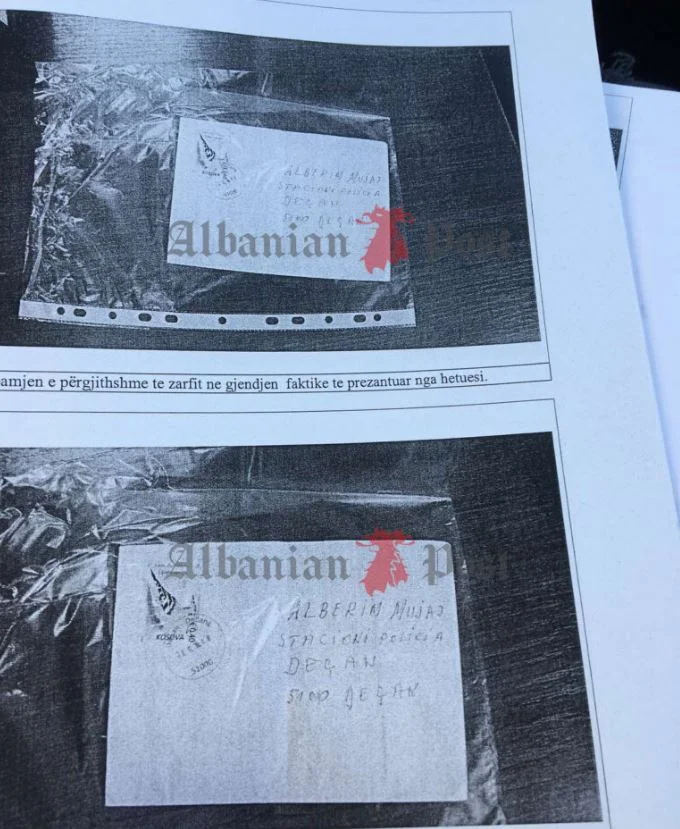
Also, the letter was sent to a show on public television “The Justice Trust” show dealing with court processes in Kosovo.
Honored Betim, the case of the assassination that Donjeta Pajasitaj from Strellci who was tried as the innocent is the word that there were 600,000 people who I have taken to Judge Syle Lokaj, prosecutor Ardian Hajdari and lawyer Guzim Kolqaku”, says the letter.
Just as anonymous, a letter went to the address of the prosecutor of the case Valbona Disha Hajosa, whose content is unknown, because the prosecutor did not want to talk about it.
Regarding the new evidence, Albanian Post has contacted case prosecutor Dishay Hajosa, who said even then they have not been able to prove whether the victim Donjeta Pajasitaj was pregnant or not, because her remains have remained in the open for seven weeks.
I said we didn't have the chance to prove the pregnancy, because the organs were soaking up”, Dishaj-Hajoja said about Albanian Post.
Seven weeks in the open. There is nothing new”
The chief prosecutor in Pec led by Prosecutor Valbona Deha Hajosa has been placed behind the sender “annim” of letters and have discovered that the Men of Letters is Hakki Pajasitaj, senior of the village of Strellc of the Low in Deccan.
In his first interview with police, Hakki Pajasitaj has denied sending these letters, but after securing images from postage cameras in Decani, from where letters “anonime” were distributed, he declared that he sent these letters himself.
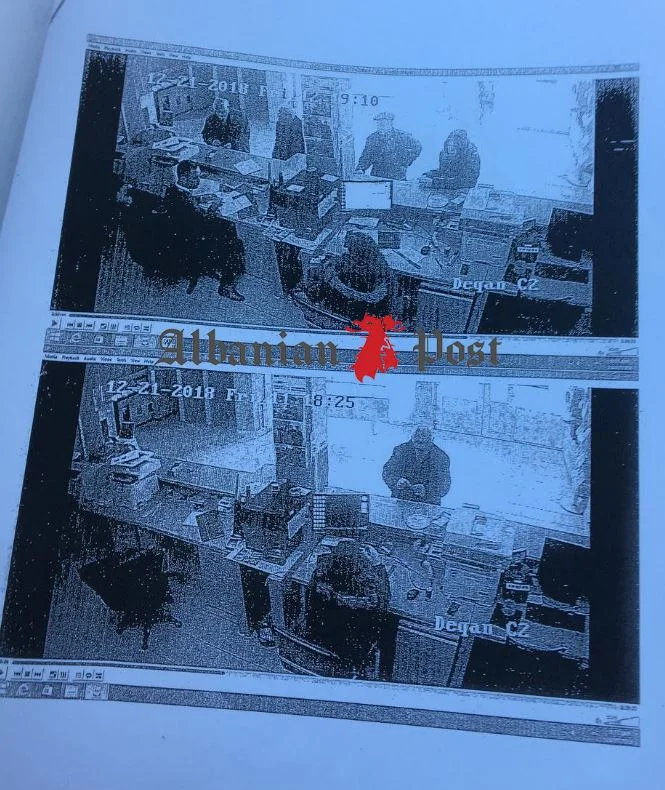
This is Hakki Pajasaj's interview without interference by police
Police officer: By the date 29.01.2019 we invited you to the police for a conversation about the letters in question, but your attitude was you didn't know about them. Why do you decide to state that you know about these letters?
Hakki Pajaziaj: At first I thought it wasn't important, but later I changed my mind and decided to say I touched them.
Police officer: Are you aware who put them in your car?
Hakki Pajaziaj: No, I'm not aware.
Police officer: Why do you think they put them in your car, not anywhere else?
Hakki Pajaziaj: I'm not aware.
Police officer: Why did you decide those cards by mail?
Hakki Pajaziaj: Because I wanted them to go away to where they were assigned.
Police officer: Did you personally deliver the envelopes and are they all delivered on the same day?
Hakki Pajaziaj: But I delivered them personally, but not on the same day, I first handed the envelopes to Pec in the afternoon, and in Decani in two or three days, I bought them and put the stamp on them.
Police officer: One worker in the post office has declared that the envelope in Decan has been handed over by another person, are you aware?
Hakki Pajaziaj: I gave up the envelope and the point.
Police officer: How do you feel about the content of these texts on these letters that you have stated you have read?
Hakki Pajaziaj: I think the content of these texts is nothing but that complicates the situation in my opinion, those letters have no weight.
These letters have already become part of the process for the case of Donjeta Pajasitaj, which is taking place from the start at the Foundation Court in Ferizaj.
The prosecution examined their manuscript and also commissioned Hakki Pajazitain to write in certain forms, in position sitting on the table, standing with cards on the table, standing with paper on the wall classified as testimony 1, 2, 3 and 4, which were compared to evidence #Z1 and #Z2 (posted mailbox).
The expertise has found that “from writing testing on paper set in envelopes from #Z1 evidence and experimental evidence samples # DSH1 DSH2 DSH3 and # DSH4, general and individual characteristics that match” have been identified.
Matching characteristics are the technique and extension of writing, the letter reports and letters, the writing of certain letters, and the letter report in between.
Saga court against Naser Pajazitaj
According to the indictment filed on June 8th 2017 by the Pajë Founding Prosecutor, the Department of Serious Crimes, with case prosecutor Valbona Disa Hayjosa, Naser Pajasitaj was charged that on November 9, 2015, on the Sterlcit Mouna Decani Mountains, right in the place called at the “Crosson of Litia“, deliberately and with an unknown type of gun has deliberately deprived the victim of life of the same village.
On the critical day the victim has been going to work along with her uncle, and when they get to the village bunker they've been separated, so the victim has continued on its way to the Upper Stream and as it approaches approximately 150m near the house of Nedi Yusa, that's where defendant Naser Pajazitaj passes through with his Blue Chereke-type car car driver who stops taking the victim by car, then moves on to the mountains of Strrelcit, and when he reaches the “of Lajzohnohn, originally firing two shots at the back of his head, with the same traces of the scene and then moves back from the scene.
About seven weeks later, on December 27 of that same year, Donjat Pajaziaj's lifeless body has been found by random passersby.
In March 2018 Naser Pajazitaj was declared innocent of the Constitutional Court in Pec on charges of killing Donjeta Pajaziaj in 2015, while sentenced him to 2 years and 4 months in prison on the other charge “artim without permission”.
After the complaints the case went to trial on the second degree.
The Court of Appeals retrialed the case.
After reviewing new evidence, the Basic Court in Pec sentenced Naser Pajazitain to life imprisonment on March 25, 2019.
Here again, there were complaints, and the case went to the Second Court, which confirmed the first degree ruling, leaving the life sentence for Naser Pajazitaj sound.
After the defense side complaints, the case has gone to the third degree, to the Supreme Court.
On December 2, 2019, this court rejects the entire court process, demanding that the case be retriald, arguing that previous courts have committed substantial violations of criminal procedure provisions.
After that ruling, the Constitutional Court in Pec has been excluded from the trial of this case. Joy Muharnier, one of the judges on the court, had applied for the removal of this subject from the Peja Court, with the reasoning that in this case all judges from the Department of Serious Crimes were involved, and have demanded that the case be handled in another court.
By the decision of the Court of Appeals, the case has been sent to the Foundation Court in Ferizaj.
For the third time, Donjeta Pajasitaj's case is tried by a first-instance court.
At the Ferizaj Foundation Court, the process began in January 2020.
Donjeta Pajasitaj was killed on November 9th, 2015, and is suspected of being her cousin Naser Pajaziaj.
Currently, several witnesses are being interviewed in this process.
Part of these developments within this institution have now become anonymous letters.
In all this process the prosecutor of the case has remained the same.
The main suspect in the 24-year-old murder by Strellci, Donjeta Pajasitaj, Naser Pajasitaj, is currently in custody.
Until the outcome of the trial and final verdict on this case.