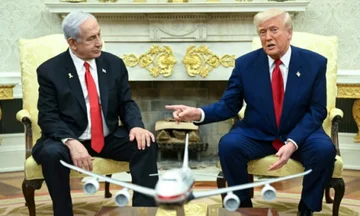
CNN: Netanyahu seeks emergency meeting with Trump amid mounting tensions over negotiations with Iran
 21 minutes ago
 (4 years ago)
Anni that this year there was an increase in exports to Kosovo, Kosovar producers recently are failing to deliver orders to European states, especially in Germany and Switzerland. That is because Serbia has imposed barriers on Kosovo producers for the transitation of goods to these European countries. For these barriers imposed by [...]
That is because Serbia has imposed barriers on Kosovo producers for the transitation of goods to these European countries.
For these barriers imposed by Serbian authorities, separately following Kosovo's demand for equality in CEFTA, it is still not known whether any mutual action will be taken by Kosovo authorities, as did Minister of the Ministry of Industry, Enterprise and Trade Roseta Hajdari, has warned of addressing these barriers to partners in Brussels.
On the other hand, former Trade and Industry Minister Ismet Mulaj has called for quick action by the Kosovo government to resolve barriers imposed by Serbia.
Mulaj also urges the current government to put more pressure on the neighbouring state, in this case Serbia for implementation of the CEFTA agreement.
“Not a problem these days, it is a problem, almost since Kosovo's independence because Serbia does not recognise official documentation, because Serbia does not recognise the official documentation of institutions, especially phyto-sanitary, sanitation certificates and other certificates that are with the seals of the Republic of Kosovo.
Every product required by the European Union automatically writes on their ticket the product comes from. And Serbia was left with these products and actually only the first subject that it gets from Kosovo, no matter what documentation it has, any other product that is an elaborate product or a final product in the destination of Serbia or the countries of the European Union have barriers, that in a way there is no way to outdo their businesses and exports realized... I congratulate the minister on the letter he sent to the CEFTA secretariat, but without the political will of the Government of Kosovo and of most members who are part of CEFTA, it is a problem to realise. But there are other opportunities for Kosovo to realise this right through pressure”, Mulaj stressed.
University professor Muhamet Sadiku tells Kosovo Press that Kosovo always faces major trade problems with other countries, especially in the realisation of exports through Serbia.
Until, according to him, Serbia has no problem implementing its export to the Kosovo market.
“Even in spite of clear goals and agreement, Kosovo always continues to face major trade problems with other countries, especially in the realisation of exports through Serbia. Because Serbia is not ready to submit to trade exchange rules. On the other hand, Serbia freely implements its exports to the Kosovo market. So Kosovo continues to be under the influence of the asimetic trade measures and, of course, these measures Serbia takes are a major obstacle to the penetration of Kosovo's exports to European countries. Therefore, without overcoming these problems, free trade cooperation cannot be discussed. Kosovo has always raised its voice at many meetings held in CEFTA over these obstacles. Nobody cries at the international level for these obstacles that Kosovo producers face almost every day. So Kosovo is willing to respect trade reports with all neighbouring countries, but on the other hand, Serbia continues with trade description that has become a major obstacle to the realisation of Kosovo trade exchange”, Sadiku says.
In the Ministry of Industry, entrepreneurship and trade have not shown when they are expected to address this issue in Brussels and what is the damage so far to businesses.
In Kosovo Customs, however, they have told Kosovo Press that this issue belongs to MINt.
Days earlier, the Joint CEFTA Committee has rejected Kosovo's request that the agreement be represented without UNMIK involvement.
an hour ago