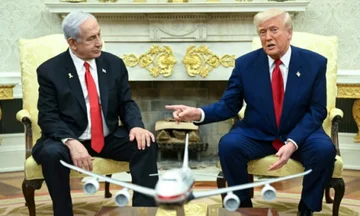
CNN: Netanyahu seeks emergency meeting with Trump amid mounting tensions over negotiations with Iran
 11 minutes ago
 (5 years ago)
Ten percent of the world's richest people have increased their wealth in the Corleone pandemic and now own more than half of the world's wealth, according to a study by the Paris Laboratory of Inequity in the World. Billions increased their wealth in 2020 since [...]
The billionaires increased their assets mostly in 2020 since the organisation started publishing reports, has found a group of economists gathered by the renowned French economist Thomas Pike.
At the same time, 100 million people have plunged into extreme poverty, according to the lab's annual survey on global inequality.
Paying permits and benefits in the richest countries in the pandemic played a key role, preventing more people from sinking into poverty.
The poorest countries had no resources to increase revenues and preserve jobs, says the World's Inequity Laboratory.
The richest ten per cent now generates 52 per cent of global income, and the poorest half of the population only eight percent, according to BBC results.
One percent of the world's richest owners own more than one third of the total accumulated wealth since 1995, while the poorest half of the global population has received only two percent.
After more than 18 months of pandemic, the world is even more polarized,” concluded Lucas Chancel, co-director of the World's Infertility Laboratory.
“While the wealth of billionaires has increased by more than 3600 billion euros, hundreds of millions more have been extremely joined by the poor”, Chance said, noting that extreme poverty has been declining over the past 25 years.
The report showed that an average adult earned 16,700 euros this year and owns assets worth an average of 72.900 euros. An individual from the ranks of 10 per cent of the richest earned 87,200 euros, and one out of the poorest half of the population was only 2,800 euros.
The poorest have almost no property, conclude at the World's Infertility Laboratory.
The survey found that 52 of the world's richest individuals have increased their wealth by 9.2 percent annually over the last 25 years.
! /A new face on the world's richest list: She's the youngest billionaire
The share of women in total global income from work was less than 35 percent and increased by five percentage points compared to 1990, but it speaks in favour of stubborn inequality with men.
Countries have become much richer in the past 40 years and their governments have become much poorer, the laboratory revealed. Thus, in rich countries, the share of public sector-owned wealth is close to zero or negative, which means that wealth is entirely in private hands, they explain.
COVID-19 crisis has further exacerbated this trend after private sector governments have borrowed the equivalent of 10 to 20 percent of GDP.
Pandora Documents: World Leaders' Wealth Discovered
The low level of government wealth will have significant implications for their capacity to address inequality in the future, but the main challenges of the 21st century, such as climate change, they warn.
Europe is the world's lowest level of inequality, they discovered in the Laborator, accounting for about 10 percent of the richest have 36 percent of total income. The highest rate of inequality was recorded in North Africa, where 10 percent of the richest had 58 percent of total income.
To ease inequality, economists are calling for a modest progressive “tack on the wealth of global multimillionrs” for reseparation and are proposing stricter measures to combat tax evasion.
In view of the high concentration of wealth, modest progressive taxes can generate considerable income for governments”, they stress.
39 minutes ago