CNN: Netanyahu seeks emergency meeting with Trump amid mounting tensions over negotiations with Iran
 25 minutes ago
 (5 years ago)
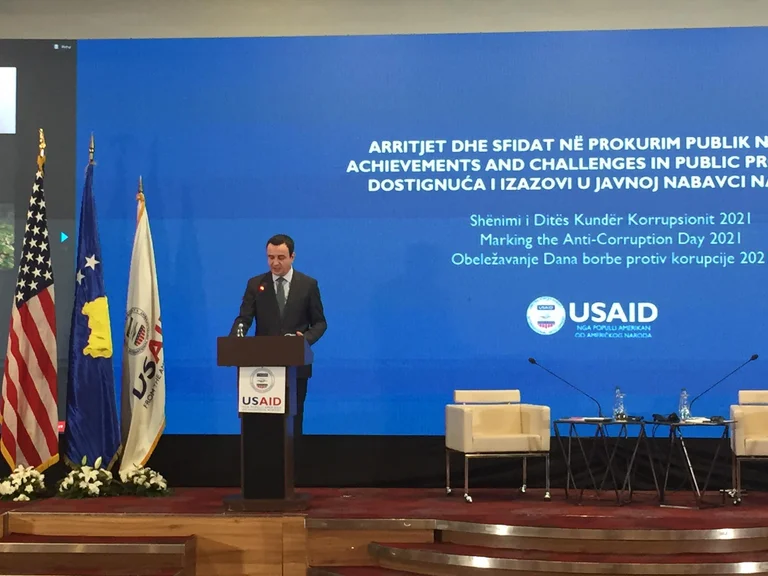
Kosovo Prime Minister Albin Kurti has said that after February 14th, corruption can be linked to Government, and if that happens, immediate measures will be taken. During his speech at the “Public ProcurationTransformation” on the case of International Anti-Corruption Day, Kurti further said corruption has been [...]
Kosovo Prime Minister Albin Kurti has said that after February 14th, corruption can be linked to Government, and if that happens, immediate measures will be taken.
During his speech at the “Public ProcurationTransformation” on the case of International Anti-Corruption Day, Kurti further said corruption has been concentrated around Government
$1 trillion pay businesses for world corruption. Good public procurement planned should be more official, professional. Corruption has been focused around Government, public procurement, state enterprises and private businesses, these have been the most corrupt. After February 14th, corruption cannot be linked to Government, if it happens, we will take immediate measures, tender theft is not simple. Citizens benefit because the budget is not being damaged by corruption, the three problems that need to be addressed are -- legal and professional structural structures, 180 contracting authorities that are too much for”.
We need to look, the more space we have to see for damage. Institutions, which are the ARBP agency, tax administration and the court must offer transparency of businesses because there may be numerous scandals, it has caused it to fall to O The E.P. The contracts should be open. There is no business secret that should not be published, although any may have editing. Many companies are registered in Geneva and Malta to hide in a fiscal paradise. No tender is given to companies that clearly exploit the freest bidder space. Nobody should win a tender that offers cheaper price for color printer than a black printer. All we know is that the black printer is cheaper than the color”, Kurti said.
The U.S. employee Nicholas Giacube and the director of the U. AID, Zeinah Salahi.
an hour ago