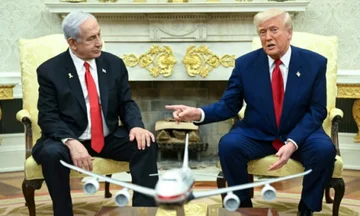
CNN: Netanyahu seeks emergency meeting with Trump amid mounting tensions over negotiations with Iran
 a minute ago
 (5 years ago)
Granit Kadolli, from Pristina, a symbolic “ ” of his money has invested five years ago in cryptovaluta, or, as is otherwise known, digital money. So far, he has not paid any taxes on them, since, as he says, this investment has not generated profits. I don't see this as a benefit, I see [...]
So far, he has not paid any taxes on them, since, as he says, this investment has not generated profits.
I don't see this as a benefit, I see it as an investment for the future. Since 2016, since I have invested until now, I have gained nothing. In the future, when I decide to extract some amount of tools, I will declare profits, therefore I will pay tax obligations”, Kadolli tells Radio Free Europe.
In Kosovo, about 10,000 operators identified as physical and legal persons are estimated to handle this activity, says Ferat Shala, chairman of the Commission for Economy, Industry, entrepreneurship and trade in the Kosovo Assembly.
He says that figure is of responsible institutions, but does not clarify which ones.
Shala adds that the information on the value of circulation does not.
Crytovalta is digital, decentralised money based on technology “blockchain” [v.j. In Albanian: chain block.
There are over 5,000 different cryptovalus in the world, but the most popular remain Bitcoin and Ethereum.
The person needs a <x0portoffo”, or an online app, through which it transfers real money to buy cryptovalutes.
Kriptovalts can be used to buy common goods and services, although many people invest in them as in other assets, such as valuable stocks or metals.
Investments in cryptovaluta, according to experts, are speculation and can result in great profits or losses.
Kosovo Tax Administration (ATK) has issued a communiqué for the media on 3 December, calling on all Kosovo citizens who generate revenues from cryptovaluts, declare them and pay taxes for them.
ATK has said that “will take measures against those who do not declare these revenues”.
With particular focus, The ATK will focus on identifying and treating the people who generate revenue from cryptovatluta”, said ATK.
So far, it has not specified that, under which law it will have to be paid on cryptovatluta taxes, what is the number of people dealing with the event and whether there are mechanisms for identifying those dealing with the event.
In Kosovo there is the Law on Personal Revenues, under which persons who achieve profits are obliged to declare tax on them.
According to this law, personal annual income tax is charged to four degrees.
For revenues of up to 960 euros a year, taxes are not paid. For incomes of 960 euros to 3,000 euros a year are paid 4 percent, incomes between 3,000 and 5,400 are paid 8 percent, and income for more than 5,400 euros (U.S.) 10 percent.
Granit Kadolli, who has invested in cryptovaluta, says it is not against paying tax obligations, but, according to him, additional clarifications are needed.
For now, until you get the money out of cryptovaluta and you don't take it to the bank, the Tax Administration won't be able to tax it, because it's an inappropriate value. Take, for example, if a painter sets the value of painting and doesn't sell it, then it can't be taxed, but if the painting is sold, then the tax starts”, says Kadolli, who heads a marketing company in Pristina.
Ali: Tax can only be paid if profits from cryptovalut are voluntarily declared
The professor of course “
He adds that ATK does not have mechanisms to identify the persons involved in this market. According to him, it remains in the individual will of citizens to declare profits and pay taxes.
The “The people who deal with this market are anonymous. This remains in their will for statements. If there is a space within a law or economic activity, where the physical and legal person may not pay taxes, he does not pay it. This is not the only case with cryptovaluta; there are numerous cases of”, Aliu says, without specifying the others.
But technology engineer Ermal Sadiku says competent authorities can identify those who invest in cryptovaluta.
“in a form, these [persons] are identified because they buy and sell in Kosovo even through banks in legal ways. That money comes up in Kosovo. The moment the money, acquired in the transaction, is issued, the tax must be paid. ATK can verify that. As for those who do not take them through banks or take them from foreign states, the ATK cannot observe and can't tax”, Sadiku says of Radio Free Europe.
In Kosovo there are no formalised financial institutions that recognise and accept cryptovatluta as payment tool, says Professor Aliu.
According to him, this sector is dangerous, for there is no central authority that manages cryptovatluts, nor the law regulating their case.
If invested in euros, it is the European Central Bank. If it's invested in dollars, it's the American Central Bank. If you want to invest in Tesla shares, it's the company back. If invested in state bonds, it is the state with its own budget that protects them. There is no mechanism in these [literates] that protects”, Aliu says.
Farm: Kosovo is establishing law on cryptovalut use rules
Kosovo is already preparing a law that will define the rules of using digital money within its territory. In addition to classifying cryptova peaces and tax forms, the law aims to create an accurate evidence of those operating with cryptovatluta in Kosovo, Ferati says, from the Commission for Economy, Industry, Undertaking and Trade in the Kosovo Assembly.
It does not provide any timetable for the adoption of this law in the Kosovo Assembly.
Albania has already regulated the use of cryptova peaces legally.
In the month of September last year, it has adopted the Law for Financial Markets based on the technology of distributed records.
The law regulates the digital and virtual currency market, ranging from the license of subjects that will exercise such activity to the terms of trading this currency.
29 minutes ago