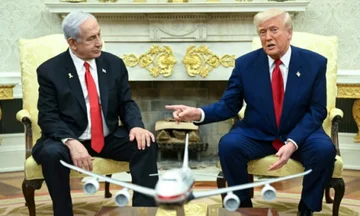
CNN: Netanyahu seeks emergency meeting with Trump amid mounting tensions over negotiations with Iran
 29 minutes ago
 (5 years ago)
Kosovo and Serbia are not committed to resolving disputes, so dialogue between them is in “the blind road”, Free Europe (REL) tells Radio Vesela Tcherneva, deputy director of the European Council for Foreign Relations. She thinks that due to internal developments in Pristina and Belgrade, respectively, local elections in Kosovo and those [...]
She thinks that due to internal developments in Pristina and Belgrade, respectively, local elections in Kosovo and those held next year in Serbia, the two sides will use dialogue for statements to the internal electorate.
According to her, there is the danger of incidents if the European Union and the United States do not make clear to leaders of both countries that violence is unacceptable.
It views as the promising “synal” the United States' commitment to Kosovo-Serbia dialogue.
“I think it is extremely important that the United States and the European Union agree on their policy towards the region and intensify co-operation and focus (to the Western Balkans)”, Tcherneva says.
The interview took place until expert Tcherneva attended the Belgrade Security Forum.
The European Council for Foreign Relations is a nongovernmental institution that explores European foreign and security policy.
REL: There are many voices, even here at the Forum for Security in Belgrade, which say dialogue between Kosovo and Serbia is blocked. How do you see this process?
Tchereneva: I don't think dialogue is blocked in a classic sense because the parties are still holding meetings in Brussels. During the summer we have had a meeting between Serbia's president, Aleksandar Vuciq and Kosovo Prime Minister Albin Kurti, and now there is information that they can meet again during November. They (officials) are satisfied with these meetings because they use rounds of dialogue in Brussels to send political messages to their audience, to possibly gain political points among voters in Kosovo and Serbia. Although dialogue has not stalled in the classic sense, it is in “the blind path” because the parties disagree over the disputes. We have heard that their meetings took place in an atmosphere where there were mutual insults and shouting. These aren't nice dates. Despite meeting they have disagreements on many points, they are doing nothing to resolve them and are not developing constructive dialogue. Their views are different. So even though it's not “that's blocked” this dialogue doesn't think it leads to something.
REL: You mention plans to have an appointment in November, but there is a problem with the agenda. Serbia insists that the topic of the upcoming meeting be the formation of the Serbian Communist Association in Kosovo, while the Kosovo side says it has nothing to discuss on this topic. How do you think things will flow?
Tchereneva: There are signals for a new meeting of officials in November. It is still not clear when it will be held, but we can soon learn about it. President Vuciq and Prime Minister Kurti have until today disagreed on the topics and dynamics of dialogue, so I think the agenda is in big trouble. I don't think we will see progress until both sides agree on the agenda of discussions. It is not clear whether the Association of Serbian municipalities will be in the agenda, because both sides have opposing positions on how the process should be conducted.
Is the EU silent about the agenda?
REL: If Vuciq and Kurti have such opposing views, what should be the role of the European Union in dialogue? We have not heard much of the EU officials on the agenda.
Tchereneva: We haven't heard the European Union, so we don't know. So we go back to the lack of transparency in dialogue. Many people mention this as a key issue. We should have more information. At the moment, it is not clear what will happen to the agenda. Unfortunately, I have no answer to your question. Maybe it would be a little inconsistent on my part to try to answer, because we don't know what's on the negotiating table.
REL: But do you think the European Union should put more pressure on both sides in dialogue?
Tchereneva: I think yes, maybe there should be a little more pressure. But even that way it didn't work. Even if there was more pressure from Brussels, I think we will continue to see the process drag.
Tchereneva: There are very promising signals, but I think the role of the United States should be more intense. Still early to become an assessment. I think it is extremely important that the United States and the European Union agree on their policy towards the region and intensify co-operation and focus (to the Western Balkans).
REL: The second round of local elections in Kosovo is held in November, then we have general elections in spring Serbia. Will the “be set in expectation” Brussels' dialogue due to election processes in both countries?
Tchereneva: I don't think so. I think dialogue will be used for domestic politics. There will be meetings (in Brussels) and statements by both sides will be directed to their electorate.
Within two months we had two incidents in northern Kosovo. Do you expect new incidents to occur?
Tchereneva: If there is no co-operation between the United States and the European Union for harmonisation of policies I see this danger. The first thing to deal with is to make it clear to leaders that violence will not be acceptable, and that it is a big “”. I hope that happens. Otherwise, any small spark could explode in the region. We've seen how the small dispute over the license plates has turned into military issues. I think that should be prevented.
REL: Earlier did you say that dialogue is not leading anywhere, what is the solution, what should be done?
Tchereneva: I think that since the beginning of 2011, dialogue has been flawed. Even in discussions at the Belgrade Security Forum on the future of relations between Kosovo and Serbia, we heard many arguments about the lack of transparency of Brussels dialogue. Citizens, who must have direct benefits from dialogue, do not know what is going on, what is negotiating or deciding for them. First, there must be more transparency. The second issue concerns failing to implement reached agreements. The process did not take place “from below”, but “from above”. So if leaders decide what to do and reach an agreement, citizens, even though they're not consulted, should apply it. Perhaps the entire format of negotiations should change and I think the European Union should become more involved in the political aspect. The EU must give more political weight to the process. We have seen that political support for the process came from Germany. But, I think other members of the European Union should stay behind dialogue and give political weight. The European Union should provide more political and focused support. We have already heard statements that it is important to support European-oriented leaders in the Western Balkan countries and that member states should be more clear about this. Also, I think there should be a serious investment plan, linked to progress in the rule of law.
an hour ago