CNN: Netanyahu seeks emergency meeting with Trump amid mounting tensions over negotiations with Iran
 10 minutes ago
 (5 years ago)
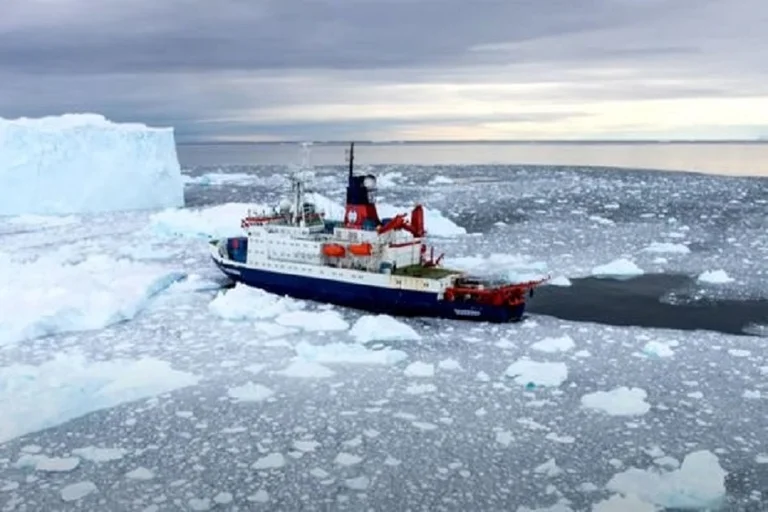
Antarctica has surprised scientists after they found evidence of an ancient forest deep within the continent's sea ice. With temperatures that often drop below 100 degrees Fahrenheit [90 ° C], Antarctica, earth's fifth largest continent, is one of the most inhospitable places on the planet. This, however, has not prevented people from going [...]
With temperatures that often drop below 100 degrees Fahrenheit [90 ° C], Antarctica, earth's fifth largest continent, is one of the most inhospitable places on the planet. Yet, this has not prevented people from going to the barren land, with some 1,000 and 5,000 inhabitants living there.
The wonders of adaptation have led to a thriving wildlife population, with some 235 different species calling Antarctica home.
While today's Antarctic is nothing more than an ice desert, previous studies suggest that the region was once a hearth of life and a soft forest.
The breakthrough was made after a mission found fossilized roots of underwater plants since the dinosaurs.
Explored during the short documentary of the science magazine Nature, “An ancient Antarctic rain forest”, the broadcaster noted: “It seems that this frozen landscape once was home to a lush forest”.
Johann Klages, a scientist from the Alfred Wegener Institute in Germany who led the research, said that 90 million years ago, a soft rain forest existed in the Western Antarctic just 900 kilometers from South Pole.
He and his team found the evidence after setting out to extract a core of material that stretched up to 100 feet [30 m] to the bottom of the sea in 2020.
The discovery was unprecedented: They found that the average annual temperature of a strip of Antarctica's west coast was 12 degrees. This would have created a landscape of swamp forests.
When we recovered the core, we could already see what was inside and that it was very unusual. And that's why we decided to scan them into a scanner. CT at home,” said Klages.
By studying the fossilized pollen and spores, more information was provided about the environment of the ancient rain forest.
It revealed a very warm temperature for this latitude and average annual temperatures similar to those of northern Italy. It would be very sure that dinosaurs and insects also lived in that environment, and in an environment that was dark for about four months during the year, because we have polar night”, Klages said.
This was one of the warmest periods in Earth's history. The carbon dioxide levels were several times higher than today.
Klages hopes that studying past extremes can potentially help us prepare for the future.
This is because it allows for a glimpse of what the planet might look like if it continues with excess carbon dioxide emissions.
38 minutes ago